Master a New Language: Fluency in 3 Months with Apps by 2026

Master a New Language: Fluency in 3 Months with Apps by 2026
In an increasingly interconnected world, the ability to communicate in multiple languages is no longer just a desirable skill; it’s a powerful asset. Whether for career advancement, travel, personal enrichment, or cultural understanding, learning a new language opens doors to countless opportunities. Historically, achieving fluency was a long, arduous journey, often spanning years of traditional classroom instruction and immersion. However, with the rapid advancements in artificial intelligence, machine learning, and mobile technology, the landscape of language acquisition is undergoing a revolutionary transformation. By 2026, the promise of gaining genuine fluency in a new language within a mere three months is not just a pipe dream but a tangible reality, thanks to the emergence of sophisticated language learning apps.
This comprehensive guide will delve into the cutting-edge of language learning apps, exploring how these innovative platforms are leveraging technology to accelerate the learning process, personalize instruction, and provide immersive experiences that mimic real-world interactions. We will examine the core features that define these next-generation apps, the scientific principles underpinning their effectiveness, and practical strategies you can employ to maximize your learning potential. If your goal is to speak a new language fluently in a quarter of a year, then understanding and utilizing these revolutionary tools is paramount.
The Evolution of Language Learning: From Textbooks to AI Tutors
For decades, language education relied heavily on textbooks, audio cassettes, and classroom settings. While these methods had their merits, they often lacked the dynamism, personalization, and immediate feedback necessary for rapid progress. The advent of the internet brought online dictionaries and translation tools, followed by early digital language programs. However, these were often glorified digital textbooks, still largely passive and lacking true interactivity.
The real shift began with the first wave of mobile language learning apps like Duolingo and Babbel, which gamified learning, made it accessible on the go, and introduced spaced repetition systems. These apps democratized language education, making it available to millions. Yet, even these popular platforms, while excellent for beginners and vocabulary building, often fell short of delivering true conversational fluency within a short timeframe. The challenge remained: how to replicate the immersive experience of living in a foreign country, complete with spontaneous conversations, cultural nuances, and real-time feedback, all within a digital environment?
By 2026, the answer lies in a new generation of language learning apps that integrate advanced AI, natural language processing (NLP), virtual reality (VR), and augmented reality (AR). These technologies are not just enhancing existing methods; they are fundamentally redefining what’s possible in language acquisition. They are moving beyond rote memorization to foster genuine understanding, spontaneous expression, and cultural competence.
Key Features of Next-Gen Language Learning Apps for Rapid Fluency
To achieve fluency in three months, the language learning apps you choose must offer a suite of advanced features designed for accelerated, effective learning. Here’s what to look for:
1. Hyper-Personalized Learning Paths Powered by AI
Gone are the days of one-size-fits-all curricula. Modern language learning apps leverage AI to analyze your learning style, strengths, weaknesses, and even your cognitive patterns. This allows them to dynamically adapt the curriculum, focusing on areas where you need the most improvement, adjusting the pace, and introducing new material at optimal intervals. AI algorithms can identify specific grammatical structures you struggle with, pinpoint pronunciation errors, and even suggest content based on your interests to keep you engaged.
- Adaptive Difficulty: Lessons adjust in real-time based on your performance.
- Targeted Practice: AI identifies and creates exercises for your specific weak points (e.g., verb conjugations, specific phonemes).
- Interest-Based Content: Recommends articles, videos, and podcasts in your target language that align with your hobbies and professions.
2. Advanced Conversational AI and Virtual Tutors
Perhaps the most significant breakthrough is the ability to practice speaking with highly sophisticated AI. These virtual tutors go far beyond simple speech recognition. They can engage in natural, free-form conversations, understand context, ask follow-up questions, and provide immediate, constructive feedback on grammar, vocabulary, and pronunciation. Some apps even simulate different accents and conversational speeds to prepare you for diverse real-world interactions.
- Realistic Dialogue Simulations: Practice ordering food, checking into a hotel, or discussing current events with an AI that responds intelligently.
- Pronunciation Analysis: AI provides visual and auditory feedback on your speech, comparing it to native speakers and highlighting areas for improvement.
- Role-Playing Scenarios: Engage in simulated conversations for job interviews, negotiations, or social gatherings.
3. Immersive VR/AR Environments for Contextual Learning
VR and AR are transforming passive learning into active immersion. Imagine stepping into a virtual Parisian cafe to order a coffee, or navigating a Japanese market, all while receiving real-time linguistic and cultural guidance. These immersive environments provide contextual cues that are crucial for language acquisition, helping you associate words and phrases directly with objects, actions, and situations, much like how children learn their first language.
- Virtual Field Trips: Explore famous landmarks or everyday scenes in the target country.
- Interactive Scenarios: Practice real-life situations with virtual characters.
- Augmented Reality Overlays: Point your phone at an object, and the app identifies it and provides its name in the target language.
4. Spaced Repetition Systems (SRS) and Intelligent Flashcards
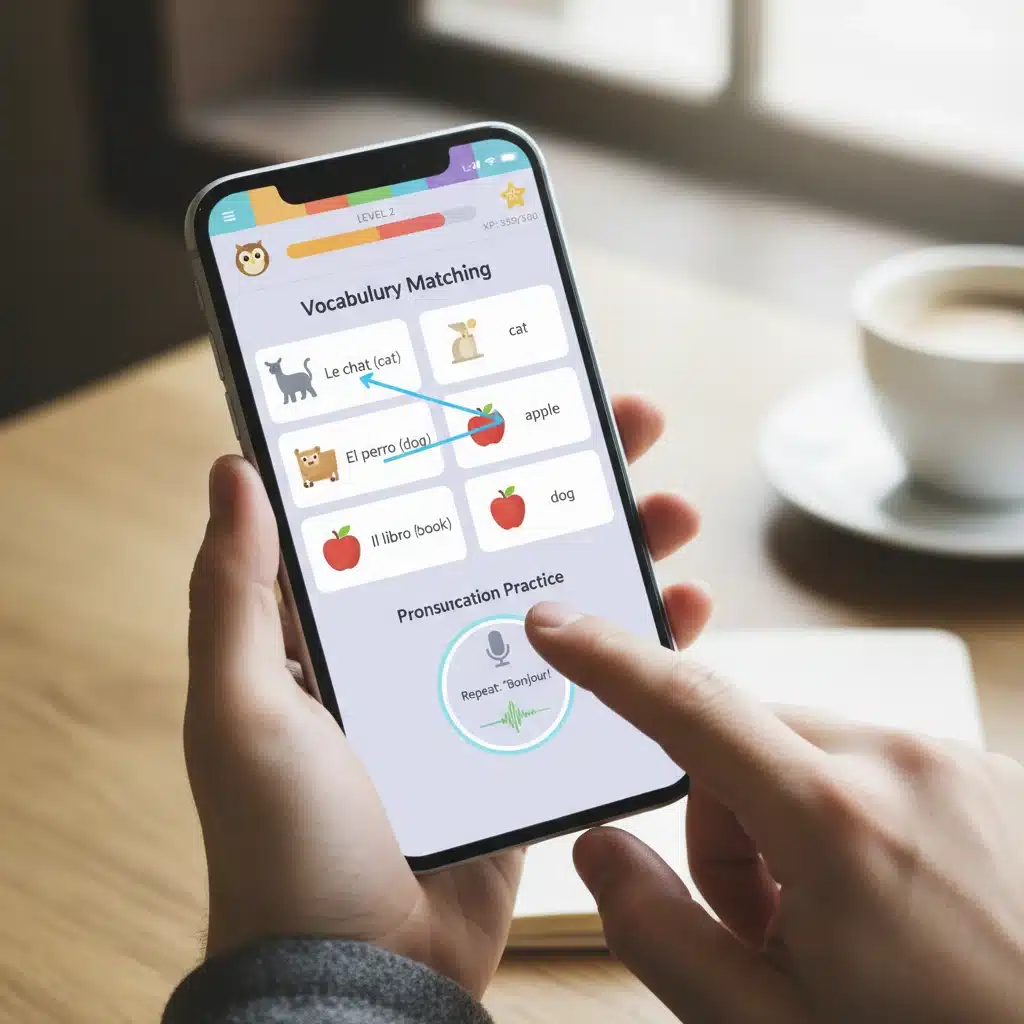
While not new, SRS has been supercharged by AI. These systems optimize the review schedule for vocabulary and grammar rules, presenting information just as you’re about to forget it, thereby maximizing retention. Next-gen apps integrate SRS with personalized content, ensuring the words and phrases you review are highly relevant to your learning path and interests.
- Dynamic Review Schedules: Algorithms determine the optimal time to re-expose you to material.
- Contextual Flashcards: Flashcards include example sentences, audio, and images to aid memory.
- Active Recall Practice: Encourages you to retrieve information rather than just recognize it.
5. Real-Time Human Interaction and Community Features
While AI is powerful, human interaction remains irreplaceable. The best language learning apps facilitate connections with native speakers, either through integrated video calls, text chat, or community forums. Some even offer direct access to certified human tutors for live, personalized sessions, blending the best of both worlds.
- Tandem Language Exchange: Connect with native speakers learning your language for reciprocal practice.
- Live Tutoring Sessions: Schedule one-on-one video calls with professional instructors.
- Community Forums: Ask questions, share progress, and engage with a global community of learners.
The Science Behind Rapid Language Acquisition
Achieving fluency in three months isn’t about magic; it’s about applying scientifically proven learning principles with unparalleled efficiency, which is where these advanced language learning apps excel.
1. Immersion and Contextual Learning
The most effective way to learn a language is through immersion. While moving to a foreign country isn’t feasible for everyone, advanced apps simulate this experience. By placing you in virtual scenarios and providing contextual cues, they help your brain form stronger associations between words, concepts, and emotions, bypassing the need for constant translation.
2. Deliberate Practice and Immediate Feedback
Fluency requires consistent, deliberate practice, especially in speaking and listening. AI tutors provide instant feedback, correcting errors as they happen. This immediate reinforcement helps solidify correct patterns and prevents the fossilization of mistakes, a common pitfall in traditional learning.
3. Spaced Repetition and Active Recall
As mentioned, SRS is crucial for long-term memory retention. By strategically revisiting material, apps ensure that vocabulary and grammar rules are moved from short-term to long-term memory efficiently. Active recall, where you retrieve information from memory rather than just recognizing it, further strengthens these neural pathways.
4. Affective Factors: Motivation and Engagement
Learning a language can be challenging, and motivation often wanes. Gamification, personalized content, and a sense of progress keep learners engaged. When learning feels like an enjoyable challenge rather than a chore, consistency increases, which is vital for rapid progress.
5. Chunking and Pattern Recognition
Instead of learning individual words, effective language learning involves recognizing and using ‘chunks’ of language – common phrases, idiomatic expressions, and grammatical patterns. AI in language learning apps can identify these patterns and expose you to them repeatedly in various contexts, accelerating your ability to form natural-sounding sentences.
Strategies for Maximizing Your 3-Month Fluency Journey
Even the most advanced apps require a dedicated learner. Here’s how to optimize your approach for rapid fluency:
1. Dedicate Consistent Time Daily
Consistency trumps intensity. Aim for at least 1-2 hours of focused study every day. Short, frequent sessions are more effective than infrequent, long ones. Integrate your chosen language learning apps into your daily routine – during your commute, lunch break, or before bed.
2. Prioritize Active Production (Speaking and Writing)
It’s easy to get stuck in passive learning (listening and reading). For fluency, you must actively produce the language. Utilize the conversational AI, virtual tutors, and human exchange partners extensively. Don’t be afraid to make mistakes; they are crucial for learning.
3. Immerse Yourself Beyond the App
While apps provide excellent simulated immersion, supplement them with real-world exposure. Change your phone’s language, watch movies and TV shows in your target language with subtitles, listen to music and podcasts, and try to think in the language. The more you surround yourself with the language, the faster your brain will adapt.
4. Focus on High-Frequency Vocabulary and Core Grammar
To achieve conversational fluency quickly, focus on the words and grammatical structures that are used most frequently in everyday conversation. Many language learning apps are designed to prioritize this, but be mindful not to get bogged down in obscure vocabulary too early.
5. Set Realistic Micro-Goals and Track Progress
Three months is an ambitious goal. Break it down into weekly or even daily micro-goals. Track your progress within the app and celebrate small victories. This helps maintain motivation and provides a clear roadmap.

The Future is Now: Leading Language Learning Apps by 2026
While specific app names might evolve, the underlying technologies and features will define the leaders in 2026. Look for apps that integrate:
- Advanced AI Chatbots: Capable of nuanced, free-form conversation and error correction.
- VR/AR Modules: Offering immersive scenarios for contextual learning.
- Personalized Learning Dashboards: Providing deep insights into your progress and learning patterns.
- Integrated Human Tutoring & Community: Seamless access to native speakers and professional teachers.
- Neuro-Linguistic Programming (NLP) Integration: To better understand and respond to human speech.
Some existing platforms are already moving in this direction, constantly updating their offerings to incorporate these cutting-edge features. Expect new players to emerge, focusing specifically on AI-driven rapid fluency.
Potential Challenges and How to Overcome Them
While the path to 3-month fluency is more accessible than ever, it’s not without its challenges:
- Maintaining Motivation: Even with engaging apps, the initial excitement can wane. Combat this by setting small, achievable goals, rewarding yourself, and reminding yourself of your ‘why.’
- Information Overload: The sheer volume of content can be overwhelming. Rely on the app’s personalized learning path to guide you and avoid jumping between too many resources.
- Lack of Real-World Practice: While apps simulate, nothing beats genuine interaction. Seek out opportunities to speak with native speakers, even if it’s just online or in local community groups.
- Pronunciation Nuances: Some sounds are notoriously difficult. Utilize the app’s advanced pronunciation feedback tools and consider working with a human tutor for targeted assistance.
- Cultural Context: Language is intertwined with culture. Actively seek out cultural information alongside your language studies to truly understand the nuances of communication.
Conclusion: Your Path to Trilingualism by 2026
The vision of achieving fluency in a new language within three months by 2026 is a testament to the incredible power of technology. Revolutionary language learning apps are no longer just supplementary tools; they are becoming comprehensive, intelligent ecosystems designed for accelerated acquisition. By harnessing the power of AI-driven personalization, immersive VR/AR experiences, advanced conversational bots, and strategic human interaction, these platforms offer an unprecedented opportunity to master a new language rapidly.
Your success, however, will ultimately depend on your commitment and strategic engagement. Choose your apps wisely, dedicate consistent effort, embrace active practice, and immerse yourself as much as possible. The journey to fluency is an exciting one, and with the right tools and mindset, you can unlock a world of new possibilities, connecting with cultures and people in ways you never thought possible, all within a remarkably short timeframe. Start your three-month fluency challenge today and witness the linguistic revolution firsthand.