5G Advanced US Rollout: What to Expect by End of 2026
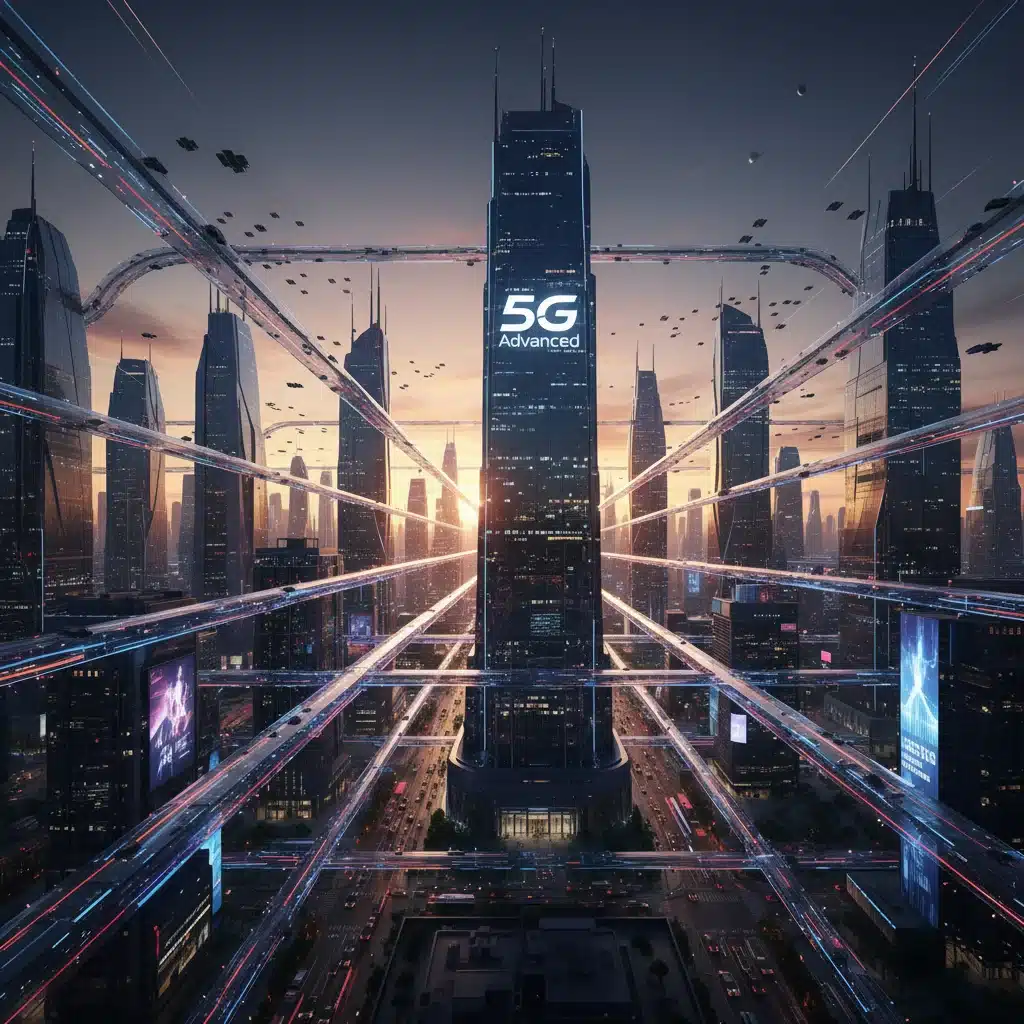
The Impact of 5G Advanced on Mobile Connectivity: What US Users Can Expect by the End of 2026
The landscape of mobile connectivity is on the cusp of another monumental transformation with the advent of 5G Advanced US. As the world rapidly progresses, the demand for faster, more reliable, and more intelligent networks continues to escalate. While many parts of the United States are still grappling with the full deployment and optimization of initial 5G networks, the industry is already looking ahead to its next evolution: 5G Advanced. This upgraded iteration promises to push the boundaries of what’s possible, offering not just incremental improvements but foundational shifts in how we interact with technology and each other. By the end of 2026, US users are poised to experience a new era of mobile connectivity that will redefine our digital lives, from everyday activities to groundbreaking industrial applications.
This article delves deep into what 5G Advanced US entails, exploring its core features, anticipated benefits, and the specific ways it will impact consumers and industries across the nation. We will examine the technological advancements that differentiate 5G Advanced from its predecessor, discuss the timeline for its rollout and adoption, and highlight the transformative applications it will enable. From enhanced mobile broadband and ultra-low latency communications to massive machine-type communications and integrated AI, 5G Advanced is set to unlock unprecedented capabilities. Understanding these changes is crucial for anyone looking to stay ahead in an increasingly connected world.
What is 5G Advanced and How Does it Differ from Current 5G?
To truly appreciate the impending impact of 5G Advanced US, it’s essential to first understand what it is and how it stands apart from the 5G we know today. 5G Advanced, formally known as Release 18 of the 3GPP specifications, represents the next major phase in the evolution of 5G technology. While initial 5G deployments focused on delivering significantly higher speeds and lower latency compared to 4G, 5G Advanced is designed to enhance these capabilities further while introducing a host of new features that will make the network more intelligent, efficient, and versatile.
One of the primary distinctions lies in its deeper integration of Artificial Intelligence (AI) and Machine Learning (ML) into the network architecture. This means the network will become more self-optimizing, capable of predicting traffic patterns, allocating resources more efficiently, and even self-healing in certain scenarios. This intelligence will lead to more consistent performance, even in highly congested areas, and a more robust user experience. For 5G Advanced US users, this translates to less dropped calls, smoother streaming, and more reliable connections, regardless of their location or the time of day.
Furthermore, 5G Advanced will bring significant improvements in energy efficiency. As the number of connected devices continues to skyrocket, the power consumption of cellular networks becomes a critical concern. 5G Advanced aims to address this by optimizing signal processing and transmission, leading to longer battery life for devices and reduced operational costs for network providers. This focus on sustainability is not just good for the environment but also enhances the practicality and widespread adoption of 5G Advanced technologies.
Another key area of advancement is in the realm of Extended Reality (XR) – encompassing Virtual Reality (VR), Augmented Reality (AR), and Mixed Reality (MR). 5G Advanced is specifically engineered to support the demanding requirements of immersive XR applications, which require extremely low latency, massive bandwidth, and precise synchronization. This will unlock new possibilities in entertainment, education, healthcare, and professional training, making highly realistic and interactive virtual experiences a mainstream reality for 5G Advanced US consumers.
Finally, 5G Advanced will introduce enhancements to network slicing, allowing for even more granular customization of network resources for specific applications or industries. This means a hospital could have a dedicated, ultra-reliable slice of the network for critical medical devices, while an autonomous vehicle fleet could utilize another slice optimized for real-time sensor data exchange. This flexibility is paramount for supporting the diverse and stringent requirements of future digital ecosystems.
Key Features and Technological Advancements of 5G Advanced
The technological underpinnings of 5G Advanced US are complex, but understanding some of its key features helps illustrate its transformative potential. These advancements are not merely incremental but represent significant leaps in wireless communication capabilities.
Enhanced Mobile Broadband (eMBB) Plus
While current 5G already offers impressive speeds, 5G Advanced pushes the boundaries even further. We can expect peak speeds to increase significantly, allowing for instantaneous downloads of large files and seamless streaming of 8K video. More importantly, it will improve sustained speeds and capacity, meaning more users can access high-bandwidth applications concurrently without experiencing slowdowns. This is crucial for urban areas and densely populated environments where network congestion is a common issue. The goal is to provide a ‘fiber-like’ experience wirelessly, making fixed broadband alternatives less necessary for many users.
Ultra-Reliable Low-Latency Communications (URLLC) for Critical Applications
One of the most exciting aspects of 5G Advanced US is the refinement of URLLC. While initial 5G aimed for low latency, 5G Advanced targets even lower latencies (potentially below 1 millisecond) with incredibly high reliability (99.9999%). This level of performance is not just about faster webpage loading; it’s about enabling truly mission-critical applications. Think autonomous vehicles communicating with each other and with infrastructure in real-time to prevent accidents, remote surgery where a surgeon controls instruments thousands of miles away with no perceptible delay, or industrial automation where precision and instant feedback are paramount. The implications for safety, efficiency, and innovation are profound.
Massive Machine-Type Communications (mMTC) Evolution
The Internet of Things (IoT) is already vast, but 5G Advanced will supercharge its growth. It’s designed to efficiently connect an even greater density of devices – potentially millions per square kilometer – with improved power efficiency. This means everything from smart city sensors, smart agriculture devices, and interconnected industrial equipment to wearable health monitors will be able to communicate seamlessly and reliably. The evolution of mMTC in 5G Advanced US will facilitate vast data collection and analysis, leading to smarter infrastructure, more efficient resource management, and entirely new services.
Integrated AI/ML for Network Optimization
As mentioned, AI and ML are at the heart of 5G Advanced. These technologies will be embedded throughout the network, from the radio access network (RAN) to the core. AI will enable predictive maintenance, dynamic resource allocation based on real-time demand, and proactive anomaly detection. This will not only improve network performance and reliability but also reduce operational costs for carriers, potentially leading to more affordable and accessible services for consumers. The network will essentially become ‘smarter,’ adapting to changing conditions and user needs without manual intervention.
Enhanced Positioning and Sensing Capabilities
Beyond communication, 5G Advanced will also enhance the network’s ability to accurately determine the location of devices and even sense their environment. This could lead to highly precise indoor navigation, enhanced asset tracking, and even new forms of radar-like sensing for security or environmental monitoring. Imagine a network that can not only connect you but also tell you precisely where you are, even indoors, with centimeter-level accuracy, opening up a plethora of location-based services and applications for 5G Advanced US users.
Sidelink Enhancements and Non-Terrestrial Networks (NTN) Integration
5G Advanced will further develop ‘sidelink’ communication, allowing devices to communicate directly with each other without routing through a base station. This is crucial for applications like vehicle-to-everything (V2X) communication, public safety networks, and localized IoT deployments. Additionally, NTN integration will enable satellite and drone-based 5G services, extending coverage to remote areas, oceans, and even airborne vehicles, ensuring a truly ubiquitous 5G Advanced US experience.
The Timeline: When Can US Users Expect 5G Advanced?
The rollout of new wireless technologies is always a phased process, and 5G Advanced US will be no exception. While the 3GPP Release 18 specifications are being finalized, the industry is already working on implementing these advancements. By the end of 2026, we can expect significant progress in several key areas:
Initial Deployments and Device Availability (2024-2025)
Some initial elements of 5G Advanced, particularly those related to AI/ML enhancements for network efficiency and specific URLLC features, may begin to appear in trials and early deployments in 2024 and 2025. Device manufacturers will also start integrating 5G Advanced-capable chipsets into new smartphones, tablets, and other connected devices during this period. Early adopters and those in technologically advanced regions might see the first tangible benefits of 5G Advanced US during this time. However, these will likely be isolated improvements rather than a widespread, holistic upgrade.
Broader Rollout and Commercialization (2025-2026)
By late 2025 and throughout 2026, we anticipate a more substantial rollout of 5G Advanced capabilities across major US carriers. This will involve software upgrades to existing 5G infrastructure, as well as the deployment of new hardware designed to fully support Release 18 features. Consumers will find a wider array of 5G Advanced-compatible devices on the market, and service providers will begin marketing specific services that leverage these new capabilities. This is when the enhanced mobile broadband and improved latency benefits will become more noticeable to a larger segment of the population.
Widespread Adoption and Transformative Applications (Late 2026 and Beyond)
The end of 2026 marks a crucial inflection point. By this time, 5G Advanced US is expected to have achieved significant penetration in urban and suburban areas, with rural deployments also gaining momentum. This widespread availability will be the catalyst for the proliferation of truly transformative applications. Industries such as manufacturing, healthcare, logistics, and entertainment will increasingly rely on 5G Advanced for their core operations. Consumers will experience a more seamless, intelligent, and immersive digital world, with XR applications becoming more commonplace and the ‘always-on, always-connected’ lifestyle becoming even more ingrained.
It’s important to note that the pace of rollout can vary by region and carrier, influenced by factors like spectrum availability, regulatory policies, and investment levels. However, the competitive nature of the US wireless market suggests a strong drive towards rapid adoption of 5G Advanced US to gain a competitive edge.
Impact on US Consumers: A New Era of Connectivity
For the average US consumer, the arrival of 5G Advanced US by the end of 2026 promises a dramatically enhanced mobile experience. This isn’t just about faster internet; it’s about enabling entirely new ways of living, working, and playing.
Unprecedented Mobile Broadband Speeds and Reliability
Imagine downloading a full-length 4K movie in seconds, or streaming multiple high-definition videos simultaneously without any buffering, even in crowded environments like stadiums or public transport. 5G Advanced will deliver consistent, ultra-fast speeds and unparalleled reliability, making dropped connections and slow loading times a relic of the past. This will empower remote work, online learning, and cloud-based gaming to reach new levels of performance and accessibility.
Immersive XR Experiences Becoming Mainstream
The high bandwidth and ultra-low latency of 5G Advanced US are tailor-made for XR. By 2026, we can expect to see a surge in high-quality VR headsets that don’t require tethering to powerful PCs, and AR applications that seamlessly blend digital information with the real world on our smartphones or smart glasses. This could revolutionize gaming, offer new ways to experience live events, enable virtual travel, and provide interactive learning environments that were previously unimaginable.
Smarter Devices and Seamless IoT Integration
Your smart home will become even smarter. With 5G Advanced, every device, from your refrigerator to your doorbell, can communicate more efficiently and reliably. This leads to more responsive automation, better energy management, and enhanced security. Beyond the home, wearable tech will offer more sophisticated health monitoring, and smart city applications will provide real-time information on traffic, pollution, and public safety, all contributing to a more connected and convenient lifestyle for 5G Advanced US users.
Enhanced Public Safety and Emergency Services
The low latency and high reliability of 5G Advanced will have a profound impact on public safety. First responders will benefit from instantaneous communication, real-time data from drones and body cameras, and enhanced location accuracy during emergencies. This could lead to faster response times, more effective coordination, and ultimately, saving more lives. Critical infrastructure will also be more resilient and secure thanks to the robust connectivity provided by 5G Advanced US.
New Opportunities for Innovation and Entrepreneurship
The capabilities unlocked by 5G Advanced will create a fertile ground for new businesses and innovative services. Startups and established companies alike will be able to develop applications and solutions that leverage the network’s full potential, from new forms of entertainment to advanced healthcare diagnostics. This technological leap will drive economic growth and job creation across the US.
Transforming Industries with 5G Advanced in the US
The impact of 5G Advanced US extends far beyond individual consumers, promising to revolutionize entire industries by the end of 2026. Its unique blend of speed, low latency, and massive connectivity will serve as the backbone for next-generation industrial applications.
Manufacturing and Industry 4.0
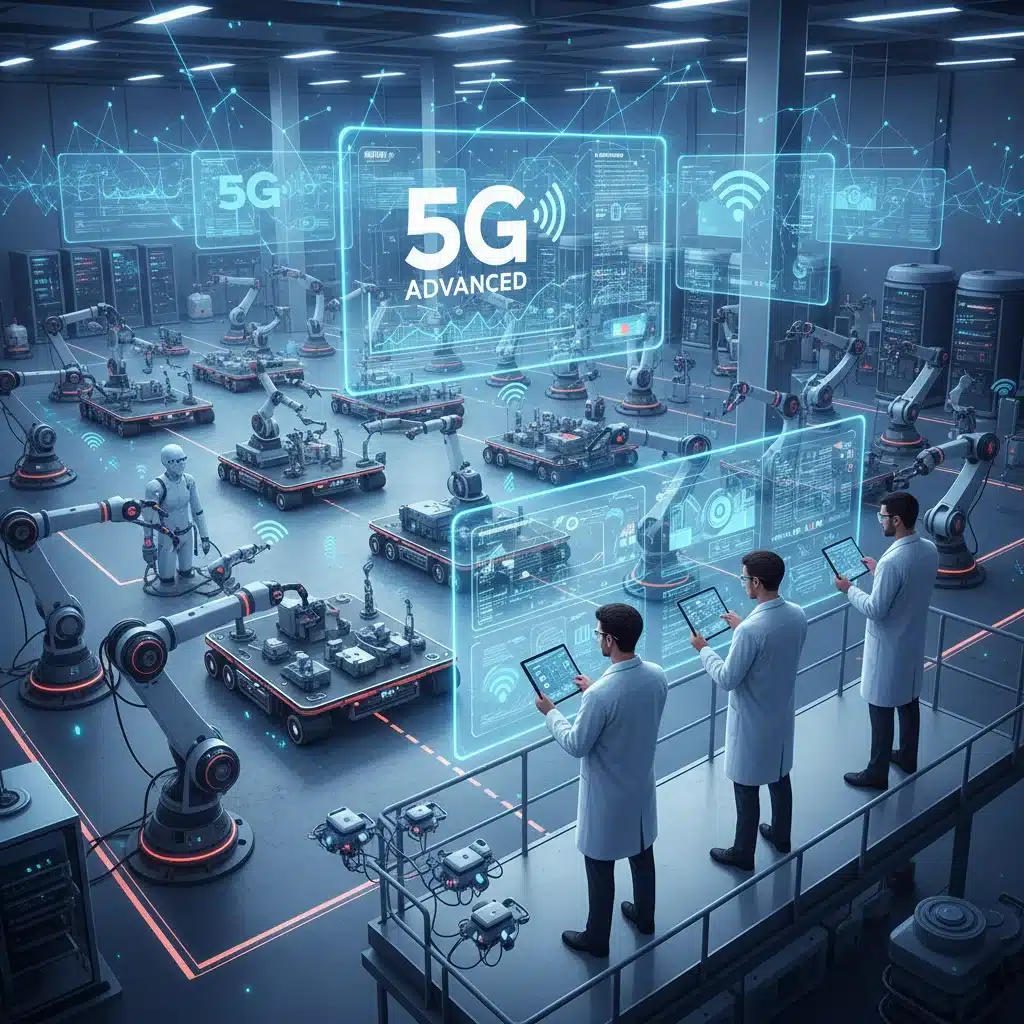
For the manufacturing sector, 5G Advanced is a game-changer. It will enable truly smart factories where robots, machines, and sensors communicate in real-time, facilitating fully automated production lines, predictive maintenance, and precise quality control. Ultra-low latency will allow for remote control of machinery with pinpoint accuracy, while massive IoT connectivity will provide unprecedented visibility into the entire production process. This will lead to increased efficiency, reduced downtime, and significant cost savings for US manufacturers.
Healthcare and Telemedicine
In healthcare, 5G Advanced US will accelerate the adoption of telemedicine, making remote consultations more effective with high-definition video and real-time data sharing. It will also enable advanced applications like remote surgery, where specialists can operate on patients from a distance using robotic instruments. Wearable medical devices will be able to continuously monitor vital signs and transmit data reliably, allowing for proactive health management and emergency alerts. The potential for improving patient outcomes and expanding access to specialized care is immense.
Transportation and Logistics
The automotive industry stands to gain significantly from 5G Advanced, particularly in the development of autonomous vehicles. The network’s URLLC capabilities will allow vehicles to communicate with each other (V2V), with traffic infrastructure (V2I), and with pedestrians (V2P) in milliseconds, creating a safer and more efficient transportation system. Smart traffic management systems, real-time logistics tracking, and drone delivery services will all benefit from the robust and intelligent connectivity provided by 5G Advanced US.
Entertainment and Media
The entertainment industry will leverage 5G Advanced for more immersive experiences. Live events, from concerts to sports, could offer multi-angle VR streams, allowing viewers to choose their perspective. Cloud gaming will become virtually indistinguishable from console gaming, with no perceptible lag. Content creation and distribution will also be streamlined, with faster uploads and downloads of high-fidelity media, enabling new forms of interactive and personalized content.
Agriculture and Smart Farming
Even traditional sectors like agriculture will be transformed. 5G Advanced will enable smart farming techniques, utilizing sensors to monitor soil conditions, crop health, and livestock in real-time. Drones equipped with 5G Advanced connectivity can provide precise data for irrigation and pest control, optimizing yields and reducing resource waste. This will lead to more sustainable and efficient agricultural practices across the US.
Challenges and Considerations for 5G Advanced US Deployment
While the promise of 5G Advanced US is exciting, its widespread deployment and full realization of its benefits will not be without challenges. Several factors need to be addressed to ensure a smooth transition and optimal performance by the end of 2026.
Infrastructure Investment and Spectrum Availability
Deploying 5G Advanced requires significant capital investment in new base stations, fiber optic backhaul, and network upgrades. Carriers will need to continue investing heavily in infrastructure, particularly in millimeter-wave (mmWave) deployments which offer the highest speeds but have shorter ranges. Additionally, the availability and allocation of sufficient spectrum bands are crucial for supporting the massive bandwidth and capacity demands of 5G Advanced. Regulatory bodies play a vital role in facilitating this by making more spectrum available and streamlining deployment processes.
Device Compatibility and Upgrade Cycles
To fully utilize 5G Advanced US capabilities, consumers will need compatible devices. While new smartphones will increasingly support these features, the upgrade cycle for many users means that widespread adoption of 5G Advanced devices will take time. Manufacturers will need to innovate to make these advanced chipsets more power-efficient and affordable, encouraging faster consumer adoption.
Security and Privacy Concerns
As networks become more intelligent and interconnected, security and privacy become even more critical. The vast amount of data generated by IoT devices and the potential for real-time control of critical infrastructure through 5G Advanced networks necessitate robust security protocols and stringent privacy regulations. Protecting against cyber threats and ensuring data integrity will be an ongoing challenge that requires continuous innovation and collaboration between industry, government, and cybersecurity experts.
Energy Consumption and Environmental Impact
While 5G Advanced aims for greater energy efficiency per bit, the sheer scale of increased data traffic and connected devices could still lead to higher overall energy consumption. Developing sustainable network architectures and leveraging renewable energy sources for data centers and base stations will be crucial to mitigate the environmental footprint of 5G Advanced US. Research and development in low-power communication technologies will also be key.
Digital Divide and Equitable Access
Ensuring that the benefits of 5G Advanced are accessible to all Americans, regardless of their geographic location or socioeconomic status, is a significant challenge. Bridging the digital divide, particularly in rural and underserved areas, will require targeted investments, public-private partnerships, and innovative deployment strategies. Without equitable access, the transformative potential of 5G Advanced US may not be fully realized for everyone.
Preparing for the 5G Advanced Future
As the end of 2026 approaches, both consumers and businesses in the US should begin to prepare for the inevitable shift towards 5G Advanced US. Understanding what’s coming will allow for better planning and leveraging the opportunities presented by this technological leap.
For Consumers:
- Stay Informed: Keep an eye on announcements from your mobile carrier and device manufacturers regarding 5G Advanced deployments and compatible products.
- Consider Device Upgrades: When it’s time to upgrade your smartphone or other connected devices, look for those that explicitly support 5G Advanced features (e.g., Release 18 compatibility) to future-proof your connectivity.
- Explore New Applications: Be open to experimenting with new XR applications, advanced IoT devices, and cloud services that will thrive on 5G Advanced networks.
For Businesses:
- Assess Connectivity Needs: Evaluate how 5G Advanced can address your current and future business needs, particularly for applications requiring high bandwidth, low latency, or massive device connectivity.
- Pilot Programs: Consider participating in pilot programs or trials with carriers to understand the practical implications and benefits of 5G Advanced for your specific industry.
- Invest in Compatible Infrastructure: For industries like manufacturing or logistics, plan for investments in 5G Advanced-compatible IoT devices, sensors, and automation equipment.
- Cybersecurity Preparedness: Strengthen your cybersecurity posture to protect against potential new vulnerabilities that may arise with increased network complexity and interconnectedness.
- Innovate and Adapt: Explore how 5G Advanced US can enable new business models, improve operational efficiency, and create competitive advantages in your market.