5G Expansion US 2026: Connectivity & IoT Future

The digital landscape is in a constant state of evolution, driven by relentless innovation and an insatiable demand for faster, more reliable connectivity. At the forefront of this transformation is 5G, the fifth generation of cellular technology, which promises to revolutionize everything from how we communicate to how industries operate. As we look towards 2026, the 5G US Expansion is set to reach unprecedented levels, ushering in an era of hyper-connectivity and unlocking the full potential of the Internet of Things (IoT). This comprehensive article will delve into the anticipated trajectory of 5G in the United States, exploring its profound implications for connectivity, IoT, and the broader societal and economic fabric.
The journey to widespread 5G adoption is not merely about faster internet speeds; it’s about building a foundational infrastructure capable of supporting an infinitely more connected world. By 2026, the ambitions for 5G US Expansion are vast, aiming to cover a significant portion of the population and geographical area, thereby transforming urban centers, rural communities, and industrial sectors alike. This expansion is critical for maintaining the US’s competitive edge in the global technology race, fostering innovation, and creating new economic opportunities. Understanding the nuances of this expansion requires an examination of the technological underpinnings, the strategic deployments by major carriers, the policy frameworks facilitating its growth, and the transformative applications it will enable.
At its core, 5G is designed to deliver three primary benefits: extremely high bandwidth, ultra-low latency, and massive machine-type communications (mMTC). These characteristics collectively pave the way for applications that were previously confined to the realm of science fiction. From instantaneous cloud computing to real-time augmented reality, and from fully autonomous vehicles to smart cities that anticipate our needs, the capabilities of 5G are set to redefine our interactions with the digital and physical worlds. The 5G US Expansion is therefore not just an upgrade; it’s a paradigm shift that will reshape industries, improve public services, and enhance daily life for millions of Americans.
The Current State of 5G in the US: A Foundation for Growth
Before we project into 2026, it’s essential to understand the current landscape of 5G deployment in the United States. Major carriers like Verizon, AT&T, and T-Mobile have been aggressively rolling out their 5G networks, utilizing a combination of low-band, mid-band, and high-band (mmWave) spectrums. Each spectrum band offers distinct advantages and challenges. Low-band 5G provides broad coverage, similar to 4G LTE, but with modest speed improvements. Mid-band 5G strikes a balance, offering good coverage and significantly faster speeds, making it ideal for urban and suburban areas. High-band mmWave 5G delivers blistering speeds and ultra-low latency but has limited range and struggles with obstacles, making it best suited for dense urban environments and specific enterprise applications.
As of late 2023 and early 2024, significant progress has been made. T-Mobile, largely due to its acquisition of Sprint and its extensive mid-band spectrum holdings, has established a strong lead in nationwide 5G coverage. Verizon has focused heavily on its mmWave deployment in specific high-traffic areas and is rapidly expanding its mid-band C-Band spectrum. AT&T is also expanding its mid-band footprint while continuing to build out its low-band and mmWave networks. This multi-faceted approach by carriers indicates a strategic understanding that no single spectrum band can fulfill all the promises of 5G, and a layered approach is necessary for comprehensive 5G US Expansion.
The initial phase of 5G rollout primarily focused on enhancing mobile broadband experiences, offering faster downloads and smoother streaming. However, the true potential of 5G lies beyond consumer smartphones. Enterprises, governments, and innovators are beginning to leverage 5G’s capabilities for mission-critical applications, private networks, and advanced IoT deployments. The lessons learned from these early deployments are crucial for shaping the strategies and investments required to achieve the ambitious goals set for 5G US Expansion by 2026.
Key Drivers of 5G US Expansion Towards 2026
Several critical factors are accelerating the pace of 5G US Expansion. Understanding these drivers provides insight into the projected growth and its potential impact.
Government Initiatives and Spectrum Allocation
Government policies and regulatory frameworks play a pivotal role in facilitating 5G deployment. The Federal Communications Commission (FCC) has been actively involved in auctioning off crucial spectrum bands, particularly mid-band frequencies, which are considered the sweet spot for delivering a balanced 5G experience. The ongoing allocation of C-Band and other mid-band spectrums is vital for carriers to expand their networks efficiently and effectively. Furthermore, initiatives aimed at streamlining permitting processes for cell tower and small cell installations are reducing deployment timelines and costs, directly contributing to faster 5G US Expansion.
Beyond spectrum, government funding and public-private partnerships are also driving connectivity to underserved areas. Programs designed to bridge the digital divide recognize that ubiquitous 5G access is essential for economic equity and national competitiveness. These initiatives ensure that the benefits of 5G are not concentrated solely in urban centers but extend to rural and remote communities, fostering a more inclusive digital future.
Technological Advancements in Network Infrastructure
The evolution of 5G technology itself is a significant driver. Advancements in Massive MIMO (Multiple Input, Multiple Output) antennas, beamforming, and network slicing are enhancing network capacity, efficiency, and flexibility. Massive MIMO allows base stations to handle more users and devices simultaneously, significantly boosting speeds. Beamforming directs wireless signals precisely to specific users, reducing interference and improving signal quality. Network slicing, a core 5G capability, enables operators to create virtual, customized network slices tailored to specific application requirements, such as ultra-low latency for autonomous vehicles or high bandwidth for industrial IoT.
The growing adoption of Open RAN (Radio Access Network) architectures is also contributing to the expansion. Open RAN promotes disaggregated network components and vendor interoperability, potentially lowering deployment costs and fostering innovation. This open approach could accelerate the rollout of 5G infrastructure, especially in challenging environments, and diversify the supply chain, strengthening the overall resilience of the 5G US Expansion.
Increasing Demand for Enhanced Connectivity and IoT
Perhaps the most compelling driver is the ever-increasing demand from consumers and businesses for better connectivity. The proliferation of smart devices, the rise of remote work and learning, the explosion of streaming content, and the nascent stages of the metaverse all necessitate a robust, high-capacity network. For businesses, 5G offers the promise of digital transformation, enabling new operational efficiencies, innovative product development, and enhanced customer experiences.
The Internet of Things (IoT) is inextricably linked to 5G’s success. As billions of devices become connected, from smart home appliances to industrial sensors, the need for a network that can handle massive numbers of connections with varying requirements becomes paramount. 5G’s mMTC capabilities are specifically designed for this, ensuring that the 5G US Expansion directly fuels the growth and utility of IoT across all sectors.
5G’s Transformative Impact on Connectivity by 2026
By 2026, the landscape of connectivity in the US will be profoundly altered by 5G. This transformation extends beyond mere speed improvements, touching upon reliability, accessibility, and the very nature of how we interact with information and devices.
Ubiquitous High-Speed Mobile Broadband
One of the most noticeable impacts will be the widespread availability of high-speed mobile broadband. As mid-band spectrum deployments mature, consumers can expect consistent gigabit-level speeds in many urban and suburban areas, making mobile internet comparable to or even exceeding traditional wired broadband. This will be particularly impactful for remote work, education, and entertainment, reducing reliance on Wi-Fi and enabling seamless connectivity on the go. The 5G US Expansion will effectively eliminate many connectivity bottlenecks that currently hinder productivity and digital access.
Fixed Wireless Access (FWA) as a Viable Broadband Alternative
5G Fixed Wireless Access (FWA) is emerging as a compelling alternative to traditional fiber and cable broadband, especially in areas where wired infrastructure is expensive or difficult to deploy. By 2026, FWA is expected to capture a significant share of the home broadband market, offering competitive speeds and reliability through 5G networks. This democratizes access to high-speed internet, providing more choices for consumers and fostering competition among service providers. The success of FWA is a direct outcome of robust 5G US Expansion, particularly in mid-band frequencies.
Enhanced Public Safety and Emergency Services
The ultra-low latency and high reliability of 5G will be critical for public safety and emergency services. First responders will benefit from dedicated network slices, ensuring priority access and seamless communication during critical incidents. Real-time data sharing, high-definition video streaming from incident sites, and advanced location services will empower emergency personnel with unprecedented situational awareness and faster response times. This vital application underscores the societal benefits of a comprehensive 5G US Expansion.
The Revolution of IoT Driven by 5G US Expansion
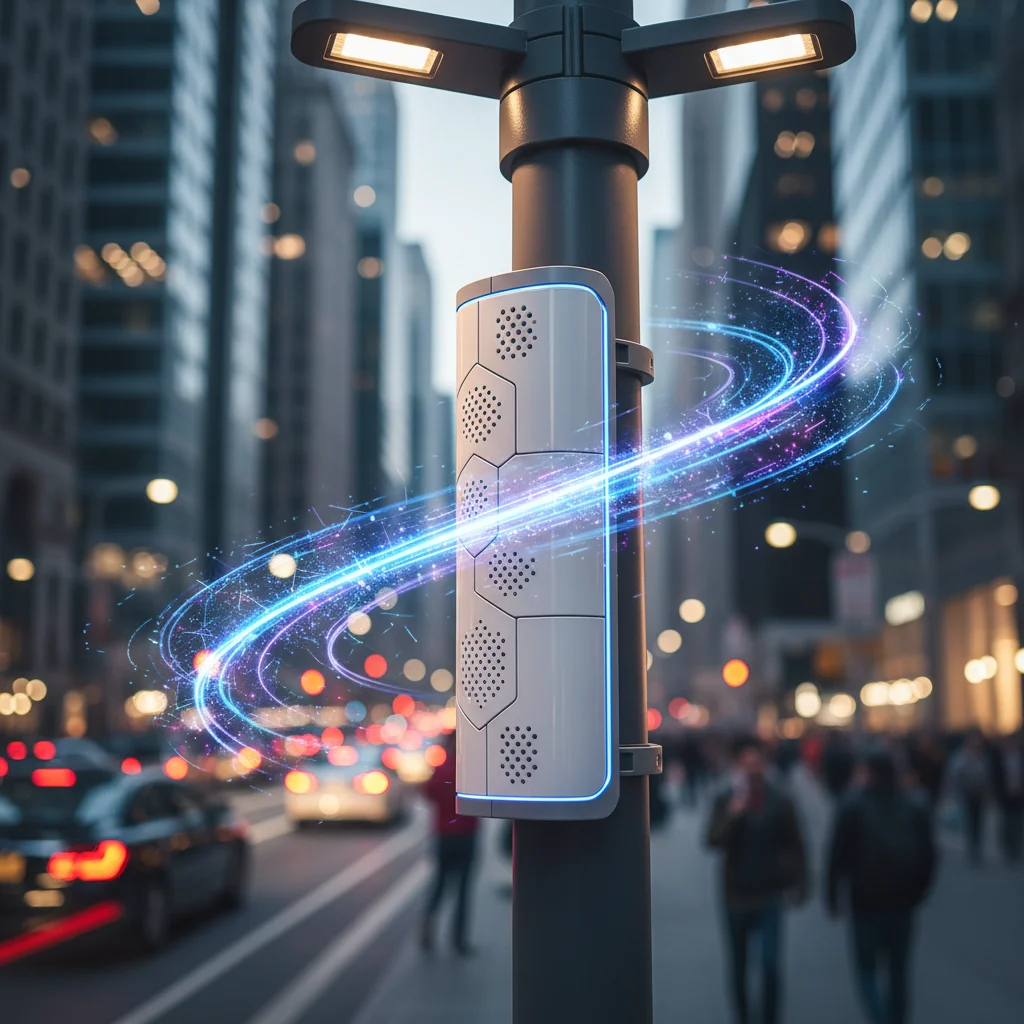
The true game-changer facilitated by 5G US Expansion is its symbiotic relationship with the Internet of Things. 5G provides the robust, scalable, and low-latency network infrastructure that IoT needs to move beyond niche applications into mainstream adoption across virtually every sector.
Smart Cities and Infrastructure
By 2026, smart city initiatives will be significantly accelerated by 5G. Connected sensors and devices will monitor everything from traffic flow and air quality to waste management and public safety. Real-time data analytics, powered by 5G’s ability to handle massive data volumes, will enable cities to optimize resource allocation, reduce congestion, enhance environmental sustainability, and improve the quality of life for residents. Smart streetlights, intelligent transportation systems, and connected public services will become increasingly common, all orchestrated by the underlying 5G US Expansion.
Industrial IoT (IIoT) and Industry 4.0
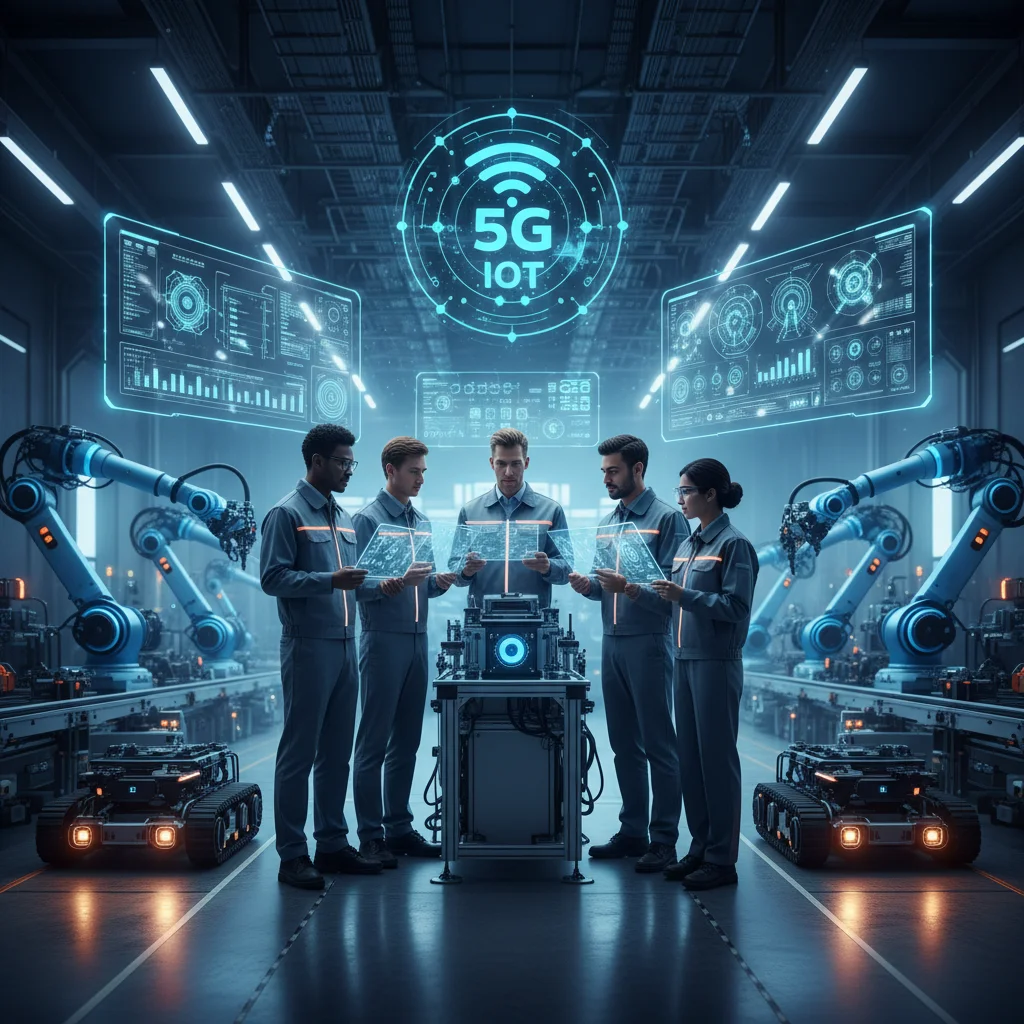
In the industrial sector, 5G will be a cornerstone of Industry 4.0. Factories will become ‘smart factories,’ utilizing 5G to connect thousands of sensors, robots, and automated systems in real time. This enables predictive maintenance, real-time quality control, autonomous material handling, and remote operation of machinery. The ultra-reliable low-latency communication (URLLC) capabilities of 5G are crucial for mission-critical industrial applications where even milliseconds of delay can have significant consequences. The 5G US Expansion is thus directly fueling a new era of manufacturing efficiency and innovation.
Healthcare Innovation and Remote Care
5G will revolutionize healthcare by enabling advanced remote care, telemedicine, and connected medical devices. Ultra-low latency connectivity will support remote robotic surgery, real-time monitoring of patients with chronic conditions, and efficient data transfer of large medical images. Wearable health devices will continuously transmit vital signs, allowing for proactive interventions and personalized care. The secure and reliable nature of 5G networks is paramount for handling sensitive patient data, making 5G US Expansion a critical component of the future of healthcare delivery.
Autonomous Vehicles and Transportation
The vision of fully autonomous vehicles relies heavily on 5G. Vehicle-to-everything (V2X) communication, powered by 5G, will allow cars to communicate with each other, with traffic infrastructure, and with pedestrians in real time. This will enhance safety, optimize traffic flow, and pave the way for intelligent transportation systems. The low latency and high bandwidth of 5G are essential for processing the vast amounts of data generated by autonomous vehicles and for ensuring instantaneous decision-making, highlighting another critical aspect of 5G US Expansion.
Challenges and Considerations for 5G US Expansion
While the prospects for 5G US Expansion are exciting, several challenges need to be addressed to ensure its successful and equitable deployment.
Infrastructure Deployment and Costs
Building out a dense 5G network, especially with mmWave small cells, requires significant capital investment and logistical challenges. Permitting, access to utility poles, and the sheer volume of new infrastructure needed are substantial hurdles. While considerable progress has been made, continuous investment and streamlined regulatory processes are necessary to meet the 2026 targets. Furthermore, ensuring backhaul capacity – the connection between cell sites and the core network – is equally important and can be a costly endeavor, particularly in rural areas.
Spectrum Availability and Interference
While the FCC has made efforts to free up spectrum, the demand for additional mid-band spectrum remains high. Competition for these airwaves can drive up costs for carriers, potentially slowing down deployment. Moreover, managing interference between different spectrum bands and ensuring coexistence with existing services (e.g., satellite communications) requires careful planning and regulatory oversight. The efficient management and allocation of spectrum will continue to be a critical factor for sustained 5G US Expansion.
Cybersecurity and Privacy Concerns
As 5G networks become the backbone for critical infrastructure and host billions of IoT devices, cybersecurity becomes an even more pressing concern. The expanded attack surface and the potential for sophisticated cyber threats necessitate robust security measures, including network slicing for isolation, advanced encryption, and continuous threat monitoring. Protecting user data and maintaining privacy in an increasingly connected world will be paramount. Addressing these concerns is not just a technical challenge but also a matter of public trust, crucial for the widespread adoption of services powered by 5G US Expansion.
Digital Divide and Equity of Access
Despite efforts to expand connectivity, the digital divide persists. Ensuring that 5G US Expansion benefits all Americans, including those in rural and economically disadvantaged areas, is a significant challenge. Bridging this gap requires sustained investment, innovative deployment strategies, and policies that promote affordable access. Without equitable distribution, the transformative benefits of 5G and IoT could exacerbate existing societal inequalities rather than alleviate them.
The Future Beyond 2026: 5G Advanced and 6G
While 2026 marks a significant milestone for 5G US Expansion, the evolution of wireless technology doesn’t stop there. The industry is already looking towards 5G Advanced (often referred to as 5.5G) and the eventual arrival of 6G.
5G Advanced: Enhancing Current Capabilities
5G Advanced will build upon the foundation laid by initial 5G deployments, focusing on further enhancing capabilities like AI integration, extended reality (XR) support, and more precise positioning. It will refine network slicing, improve energy efficiency, and introduce new features to support increasingly complex IoT ecosystems. This iterative improvement ensures that the investments made in 5G US Expansion continue to yield returns and adapt to emerging technological demands.
The Dawn of 6G: A Vision for Hyper-Intelligent Connectivity
Beyond 5G Advanced, research and development for 6G are already underway, with a projected commercial launch around 2030. 6G is envisioned to deliver speeds up to 1 terabit per second, achieve sub-millisecond latency, and integrate seamlessly with artificial intelligence and machine learning at a foundational level. It aims to create a truly hyper-intelligent and pervasive network that can support holographic communication, sentient environments, and fully immersive digital experiences. The groundwork laid by the 5G US Expansion is crucial for paving the way for these future generations of wireless technology, creating a continuous cycle of innovation and progress.
Conclusion: A Connected Future with 5G US Expansion
The 5G US Expansion by 2026 is more than just a technological upgrade; it represents a fundamental shift in how the United States will operate, innovate, and connect. From transforming urban landscapes into smart cities to revolutionizing industries with advanced IoT, and from enhancing healthcare delivery to enabling the next generation of transportation, 5G is the critical infrastructure for the digital age.
While challenges in deployment, spectrum management, and cybersecurity persist, the strategic investments by carriers, supportive government policies, and the relentless pace of technological innovation are driving significant progress. By 2026, we can expect a far more connected America, where the promises of 5G – ultra-fast speeds, ultra-low latency, and massive connectivity – are increasingly realized across a multitude of applications. This expansion will not only solidify the US’s position as a global technology leader but also unlock unprecedented opportunities for economic growth, societal advancement, and a truly interconnected future. The journey of 5G US Expansion is a testament to human ingenuity and our collective aspiration for a more efficient, intelligent, and connected world.