Edge Computing Explained: Why 60% of US Businesses Will Adopt It by 2026 for Faster Data Processing
In the rapidly evolving landscape of digital transformation, businesses are constantly seeking innovative solutions to gain a competitive edge. One technology that is not just gaining traction but is poised to redefine how enterprises operate is Edge Computing Adoption. Projections indicate that an astounding 60% of US businesses will embrace Edge Computing by 2026, a testament to its undeniable benefits in an increasingly data-driven world. This isn’t just a fleeting trend; it’s a fundamental shift in how data is processed, analyzed, and utilized, promising unprecedented speed, efficiency, and intelligence at the network’s periphery.
The imperative for faster data processing has never been more critical. From real-time analytics in manufacturing to instantaneous responses in autonomous vehicles, the demand for immediate insights is pushing traditional cloud computing models to their limits. Edge Computing emerges as the strategic answer, bringing computational power and data storage closer to the source of data generation. This article will delve deep into what Edge Computing entails, why its adoption is accelerating, the myriad benefits it offers, the challenges businesses might face, and the real-world applications driving this significant technological pivot.
Understanding Edge Computing: Beyond the Cloud
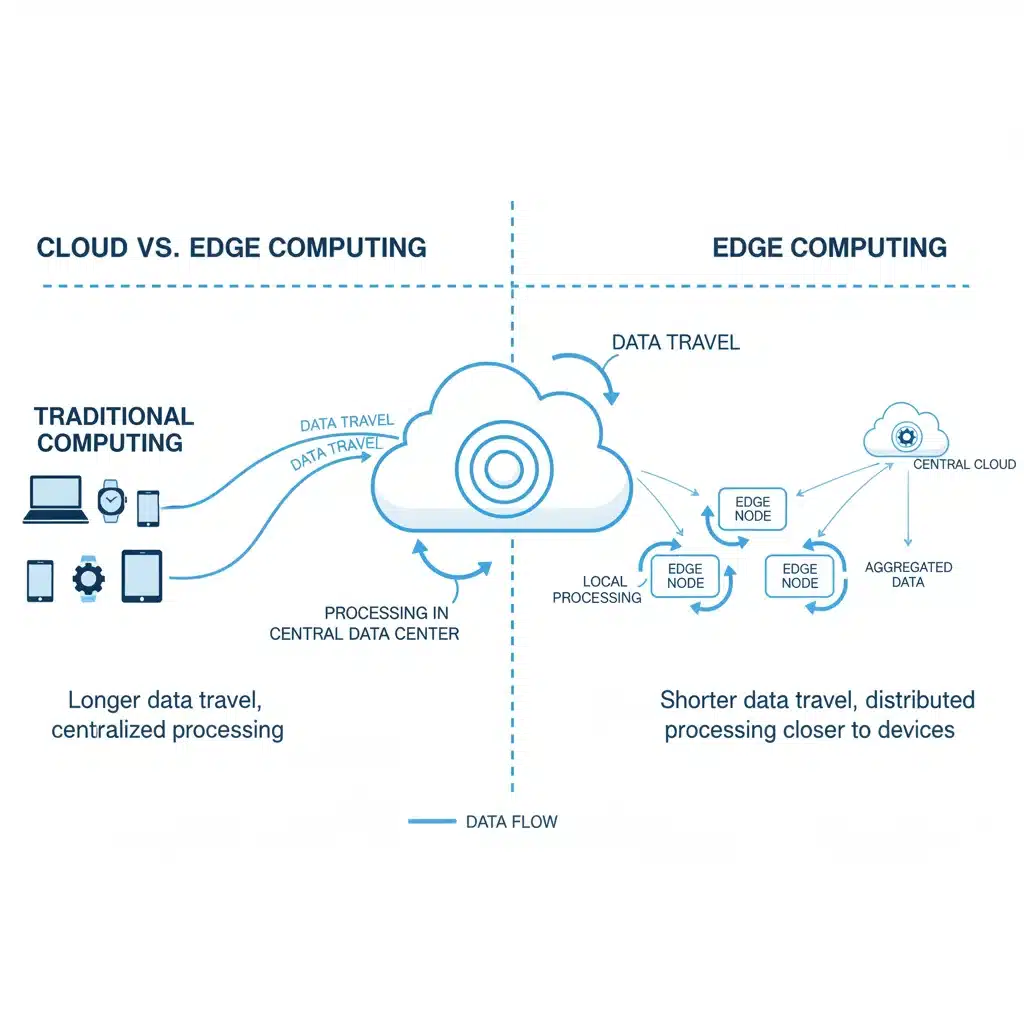
To truly grasp the significance of Edge Computing Adoption, it’s essential to understand its core concept. At its heart, Edge Computing is a distributed computing paradigm that brings computation and data storage closer to the sources of data. Instead of sending all data to a centralized cloud data center for processing, edge devices process data locally or at a nearby server, known as an edge node.
Think of it this way: traditional cloud computing is like a massive central library where all books (data) are stored, and you have to travel a long distance to access them. Edge Computing, on the other hand, is like having smaller, specialized libraries (edge nodes) strategically placed closer to communities (data sources), allowing for quicker access to the most frequently used books. This architectural shift significantly reduces latency, conserves bandwidth, and enhances data security.
The Limitations of Traditional Cloud Computing for Modern Demands
While cloud computing revolutionized scalability and accessibility, its centralized nature presents limitations for applications requiring ultra-low latency and high bandwidth. Consider an autonomous vehicle needing to make split-second decisions based on sensor data. Sending this data to a distant cloud server for processing and then awaiting a response could lead to critical delays. Similarly, in industrial IoT, where machinery needs to react in real-time to prevent failures or optimize production, cloud latency can be a significant bottleneck.
These limitations are precisely where Edge Computing shines. By processing data closer to the source, it minimizes the round-trip time for data, making real-time applications not just feasible but highly efficient. This localized processing also reduces the amount of data that needs to be transmitted to the cloud, thereby conserving bandwidth and lowering data transmission costs.
The Driving Forces Behind 60% Edge Computing Adoption by 2026
The projection of 60% Edge Computing Adoption by US businesses by 2026 is not an arbitrary figure. It’s a reflection of several powerful trends and pressing business needs. These forces are converging to make edge computing an indispensable component of modern IT infrastructure.
1. The Proliferation of IoT Devices
The Internet of Things (IoT) has exploded, with billions of connected devices generating unprecedented volumes of data. From smart sensors in agriculture to wearables monitoring health, and industrial machinery reporting operational metrics, this data deluge is overwhelming traditional cloud infrastructures. Edge Computing provides a scalable and efficient way to manage and process this data, filtering out irrelevant information and sending only critical insights to the cloud.
2. The Demand for Real-Time Analytics and AI at the Edge
Businesses are increasingly reliant on real-time analytics for competitive advantage. Whether it’s fraud detection in financial services, personalized customer experiences in retail, or predictive maintenance in manufacturing, immediate insights are paramount. Integrating Artificial Intelligence (AI) and Machine Learning (ML) capabilities at the edge allows for on-device inference, enabling devices to learn and adapt without constant cloud connectivity, further accelerating decision-making.
3. Latency Reduction and Bandwidth Optimization
Applications like augmented reality (AR), virtual reality (VR), autonomous systems, and remote surgery demand near-zero latency. Sending data to a central cloud and back simply isn’t fast enough. Edge Computing drastically reduces latency by minimizing the physical distance data travels, ensuring instantaneous responses crucial for these cutting-edge applications. Moreover, by processing data locally, businesses can significantly reduce the amount of raw data sent to the cloud, optimizing bandwidth usage and reducing costs.
4. Enhanced Data Security and Privacy
Processing sensitive data locally at the edge can offer enhanced security and privacy. By keeping data within a localized network, businesses can reduce the exposure of sensitive information to potential threats associated with cloud transmission. This is particularly important for industries with strict regulatory compliance requirements, such as healthcare and finance. Edge computing allows for data anonymization and aggregation at the source, further safeguarding privacy.
5. Operational Efficiency and Cost Savings
By reducing reliance on continuous cloud connectivity and processing data closer to the source, businesses can achieve significant operational efficiencies. This includes lower data transfer costs, reduced energy consumption for data transmission, and optimized resource allocation. Furthermore, the ability to make quicker, more informed decisions at the edge can lead to improved productivity, reduced downtime, and better resource utilization across various sectors.
Key Benefits Driving Edge Computing Adoption
The widespread Edge Computing Adoption is fundamentally driven by a compelling suite of benefits that address critical pain points for modern businesses. These advantages extend beyond mere technical specifications, impacting operational efficiency, customer experience, and strategic decision-making.
Unparalleled Speed and Reduced Latency
This is arguably the most significant benefit of edge computing. By bringing computation closer to the data source, the time it takes for data to travel, be processed, and return with an action is drastically cut. For applications like autonomous vehicles, real-time manufacturing control, or augmented reality experiences, milliseconds matter. Edge computing ensures that decisions are made almost instantaneously, enabling truly responsive and intelligent systems.
Improved Reliability and Uptime
Edge devices can operate autonomously even when connectivity to the central cloud is intermittent or completely lost. This localized processing capability ensures continuous operation for critical systems, such as remote oil rigs, smart factories, or emergency services, where constant cloud access might not be guaranteed. This enhanced reliability is a major factor for businesses operating in challenging environments or those with mission-critical applications.
Enhanced Data Security and Privacy
With data processed and stored locally at the edge, the attack surface for cyber threats is significantly reduced. Less sensitive data needs to be transmitted over wide area networks to the cloud, minimizing exposure. Furthermore, edge computing facilitates compliance with data privacy regulations (like GDPR or CCPA) by enabling data anonymization and aggregation at the source before any information leaves the local environment. This localized control over data is crucial for industries handling sensitive customer or operational information.
Optimized Bandwidth Usage and Cost Savings
The sheer volume of data generated by IoT devices can strain network bandwidth and incur substantial costs for cloud data transfer. Edge computing mitigates this by allowing raw data to be filtered, processed, and analyzed locally. Only relevant, aggregated, or critical insights are then sent to the cloud, dramatically reducing the amount of data transmitted. This not only frees up bandwidth for other uses but also leads to significant cost savings on data transfer and storage in the cloud.
Scalability and Flexibility
Edge computing architectures are inherently scalable. Businesses can deploy edge nodes as needed, expanding their computational capabilities incrementally without having to overhaul their entire infrastructure. This modular approach provides immense flexibility, allowing organizations to tailor their computing resources to specific needs and locations, from a single smart device to a large industrial complex.
Challenges and Considerations for Successful Edge Computing Adoption
While the benefits of Edge Computing Adoption are compelling, businesses must also navigate several challenges to ensure a successful implementation. These challenges span technical complexities, security concerns, and operational considerations.
Security at the Edge
Distributing computational power to numerous edge devices and nodes creates a broader attack surface. Securing these geographically dispersed devices, often in diverse and sometimes unprotected environments, requires robust security protocols. This includes device authentication, data encryption, access control, and continuous monitoring for vulnerabilities. The sheer number and variety of edge devices can make security management complex.
Device Management and Orchestration
Managing a vast network of edge devices, often from different vendors and with varying hardware and software specifications, can be daunting. Deploying, updating, and maintaining software on these devices, as well as orchestrating their interactions and data flows, requires sophisticated management tools and platforms. Ensuring compatibility and interoperability across the edge ecosystem is a significant challenge.
Data Consistency and Integration
With data being processed both at the edge and in the cloud, maintaining data consistency and ensuring seamless integration between these environments is crucial. Businesses need strategies for data synchronization, conflict resolution, and ensuring that insights derived from edge processing are effectively integrated with central data lakes and business intelligence systems.
Network Infrastructure Requirements
While edge computing reduces reliance on constant cloud connectivity, it still requires a robust local network infrastructure to support the high-speed data transfer between edge devices and edge nodes. Reliable and high-bandwidth local area networks (LANs) and potentially 5G connectivity are essential to maximize the benefits of edge processing.
Talent and Expertise Gap
Implementing and managing edge computing solutions requires specialized skills in areas like distributed systems, IoT, network security, and AI/ML at the edge. Many organizations may face a talent gap, needing to invest in training existing staff or hiring new experts to effectively deploy and maintain edge infrastructure.
Real-World Applications Driving Edge Computing Adoption
The projected 60% Edge Computing Adoption is not just theoretical; it’s being propelled by tangible, transformative applications across various industries. These use cases highlight how edge computing is solving real-world problems and creating new opportunities for businesses.
Manufacturing and Industrial IoT (IIoT)
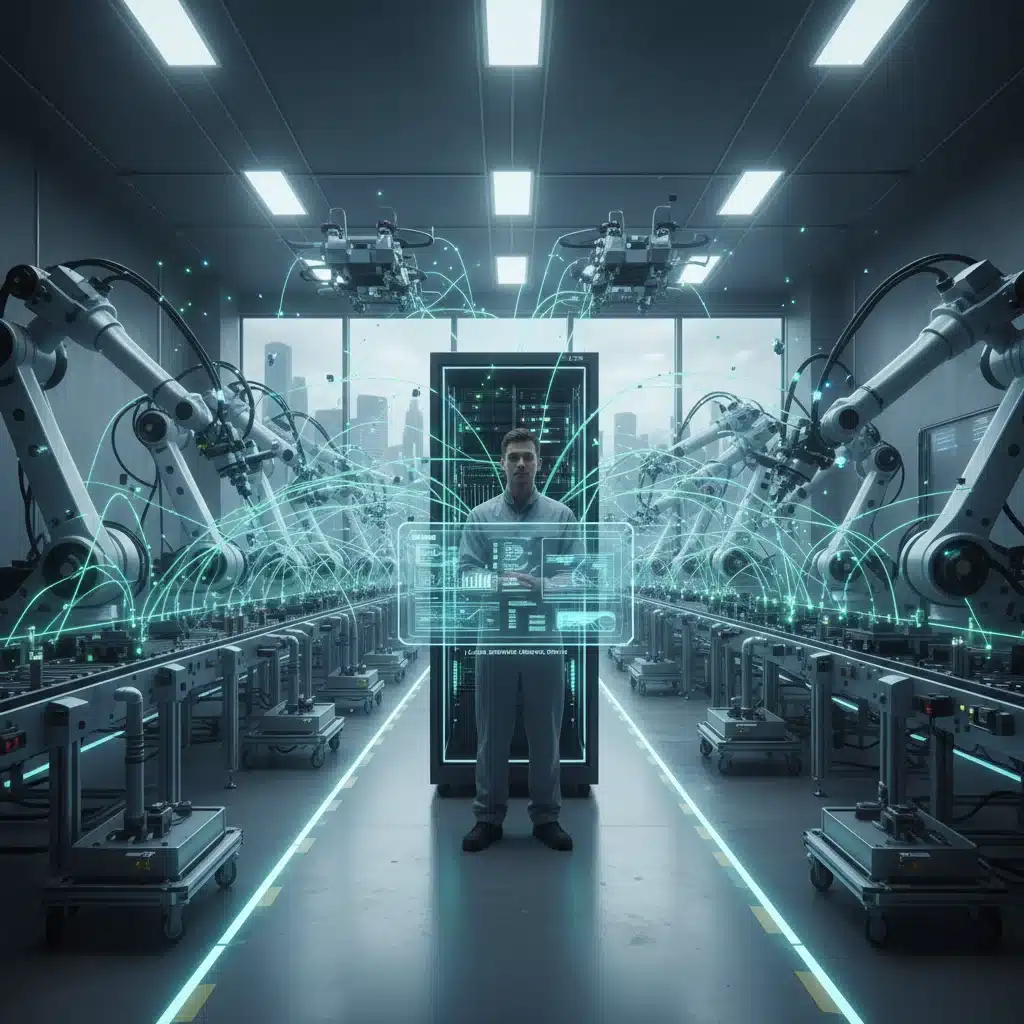
In smart factories, edge computing enables real-time monitoring of machinery, predictive maintenance, and quality control. Sensors on equipment generate vast amounts of data, which edge nodes process locally to detect anomalies, optimize production lines, and prevent costly downtime. This immediate feedback loop is critical for operational efficiency and safety.
Retail and Smart Stores
Edge computing is transforming the retail experience. In smart stores, edge devices can analyze customer traffic patterns, manage inventory in real-time, personalize digital signage, and even facilitate frictionless checkout experiences. By processing data locally, retailers can react instantly to customer behavior and operational needs, enhancing both efficiency and customer satisfaction.
Healthcare and Remote Patient Monitoring
For healthcare, edge computing enables secure and real-time processing of patient data from wearables and medical devices. This allows for immediate alerts in critical situations, remote diagnostics, and personalized treatment plans without sending sensitive data to the cloud for every analysis. It improves patient care while adhering to strict privacy regulations.
Autonomous Vehicles and Smart Transportation
Perhaps one of the most demanding applications, autonomous vehicles rely heavily on edge computing. Vehicles must process sensor data (from cameras, LiDAR, radar) instantaneously to navigate, detect obstacles, and make critical driving decisions. Edge computing ensures the ultra-low latency required for safety and reliable operation in complex environments.
Telecommunications and 5G Networks
5G networks are inherently designed with edge computing in mind. By deploying edge nodes closer to users, telecom providers can offer ultra-low latency services, supporting applications like AR/VR, cloud gaming, and industrial automation. Edge computing is crucial for unlocking the full potential of 5G and delivering next-generation connectivity.
Smart Cities and Public Safety
In smart cities, edge computing facilitates real-time analysis of data from traffic cameras, environmental sensors, and public safety devices. This enables immediate responses to traffic congestion, optimizes energy consumption, enhances public safety through rapid anomaly detection, and improves overall urban management.
The Future Landscape: Edge, Cloud, and Hybrid Models
The increasing Edge Computing Adoption does not signal the demise of cloud computing. Instead, it heralds a new era of hybrid and distributed architectures where edge and cloud work in tandem, each playing to its strengths. The future IT landscape will likely feature a continuum of computing, from the deep edge (on-device processing) to the near edge (local servers) and then to the centralized cloud.
The cloud will continue to be vital for long-term data storage, large-scale analytics, historical data processing, and applications that don’t require ultra-low latency. Edge computing will handle the immediate, real-time data processing and decision-making at the source. This synergistic relationship allows businesses to optimize their data strategies, ensuring that the right data is processed in the right place at the right time.
Businesses looking to adopt edge computing should consider a phased approach, starting with pilot projects that address specific pain points and demonstrate clear ROI. Investing in robust edge platforms, security solutions, and skilled personnel will be critical for a successful transition. The journey towards widespread Edge Computing Adoption is not just about technology; it’s about rethinking data strategies and embracing a more distributed, intelligent future.
Conclusion: The Inevitable Rise of Edge Computing
The projection that 60% of US businesses will adopt Edge Computing by 2026 underscores its transformative potential and its critical role in addressing the demands of our increasingly connected and data-intensive world. From enabling real-time AI in autonomous systems to optimizing industrial operations and enhancing customer experiences, edge computing is no longer a niche technology but a strategic imperative.
Its ability to deliver faster data processing, reduce latency, conserve bandwidth, and bolster security makes it an indispensable tool for businesses striving for efficiency, innovation, and competitive advantage. While challenges exist, the clear benefits and the accelerating pace of digital transformation ensure that Edge Computing Adoption will continue its upward trajectory, reshaping how enterprises collect, process, and derive value from their data. Businesses that strategically embrace this paradigm shift will be well-positioned to thrive in the digital economy of tomorrow.
The future is distributed, intelligent, and immediate, and Edge Computing is at the forefront of this revolution. Prepare your business for the edge, and unlock a new realm of possibilities for faster, smarter, and more resilient operations.