Boost Your Business: Top 7 CRM Apps for 2026 and Customer Engagement Growth

In the rapidly evolving landscape of modern business, customer relationships are the bedrock of sustainable growth. As we approach 2026, the imperative to not only attract but also retain and nurture customer loyalty has never been more pronounced. This is where Customer Relationship Management (CRM) apps become indispensable. A recent analysis projects that businesses leveraging advanced CRM solutions could see an average increase of 18% in customer engagement, directly translating to enhanced revenue streams and market share. This article delves into the top 7 CRM apps that are set to define the industry in 2026, offering unparalleled capabilities to boost your business and revolutionize your approach to customer interaction.
The digital transformation journey for many organizations has underscored the critical role of technology in managing customer data, streamlining sales processes, and personalizing marketing efforts. CRM apps are no longer just glorified contact managers; they are sophisticated ecosystems designed to provide a 360-degree view of every customer, predict their needs, and automate interactions to foster deeper connections. Our focus on these seven platforms is based on their innovation, scalability, user-friendliness, and their proven ability to deliver tangible results in a competitive market.
The Evolving Role of CRM in Modern Business Growth
Before we dive into the specific apps, it’s crucial to understand why CRM has become such a pivotal element in business strategy. The modern customer is empowered, informed, and expects personalized experiences across all touchpoints. Generic marketing campaigns and one-size-fits-all sales approaches are no longer effective. CRM apps provide the tools to collect, organize, and analyze vast amounts of customer data, enabling businesses to understand individual preferences, anticipate future behaviors, and tailor communications accordingly. This hyper-personalization is a key driver of customer engagement and loyalty, directly contributing to business growth.
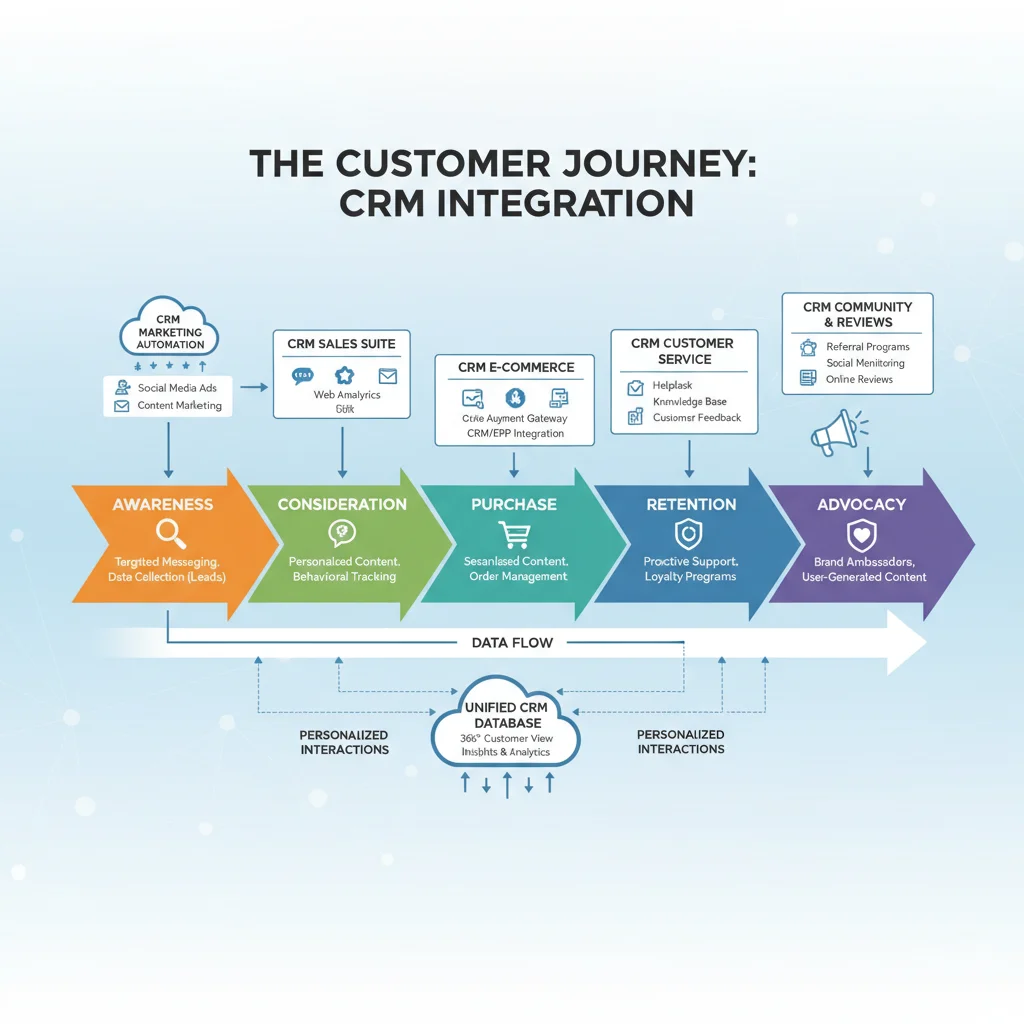
Furthermore, CRM solutions integrate various business functions, breaking down silos between sales, marketing, and customer service departments. This holistic approach ensures a consistent customer experience, regardless of who the customer interacts with. From lead generation and qualification to sales conversion, order fulfillment, and post-purchase support, CRM orchestrates the entire customer journey, making it seamless and efficient. The ability to track every interaction, analyze performance metrics, and identify areas for improvement is invaluable for strategic decision-making and continuous optimization, leading to significant CRM apps business growth.
The market for CRM software is continually expanding, with new features and AI-driven capabilities emerging regularly. In 2026, we anticipate an even greater emphasis on predictive analytics, hyper-automation, and seamless integration with other enterprise systems like ERP and marketing automation platforms. The CRM apps highlighted in this article are at the forefront of these innovations, offering solutions that are not just current but future-proof, ensuring your investment continues to yield returns as your business evolves.
1. Salesforce Sales Cloud: The Enduring Leader in CRM Apps Business Growth
Salesforce has long been synonymous with CRM, and its Sales Cloud offering continues to set the benchmark for robust sales automation and customer management. For 2026, Salesforce is doubling down on AI integration with its Einstein AI, offering more predictive insights into customer behavior, automated lead scoring, and personalized recommendations for sales representatives. This enhances efficiency and allows sales teams to focus on high-value activities, directly impacting CRM apps business growth.
Key features expected to be further refined include advanced forecasting capabilities, a more intuitive mobile experience, and deeper integration with external data sources for a comprehensive customer view. Salesforce’s extensive ecosystem of apps and integrations through its AppExchange ensures that businesses can customize their CRM to fit almost any specific need. Its scalability makes it suitable for businesses of all sizes, from small startups to large enterprises. The platform’s ability to manage complex sales cycles, automate repetitive tasks, and provide real-time analytics makes it an indispensable tool for any organization aiming to maximize its sales potential and foster significant CRM apps business growth.
The strength of Salesforce also lies in its community and continuous innovation. Regular updates and a vast network of partners and developers mean that the platform is always evolving to meet new market demands. For businesses prioritizing a comprehensive, scalable, and AI-powered solution, Salesforce Sales Cloud remains a top contender for driving CRM apps business growth in 2026.
2. HubSpot CRM: The All-in-One Growth Platform
HubSpot has carved out a niche as an all-in-one platform for inbound marketing, sales, and customer service. Its CRM is at the heart of this ecosystem, offering a free-tier robust enough for many small businesses, with scalable paid plans that unlock more advanced features. In 2026, HubSpot is expected to further enhance its ‘connected customer experience’ by deepening the integration between its Marketing Hub, Sales Hub, Service Hub, and CMS Hub, creating a truly unified platform for CRM apps business growth.
Anticipated improvements include more sophisticated automation workflows across all hubs, enhanced reporting and analytics that offer a clearer picture of the customer journey, and advanced AI tools for content personalization and customer support. HubSpot’s intuitive interface and extensive knowledge base make it particularly appealing for businesses looking for a user-friendly solution that can grow with them. Its focus on inbound methodologies helps businesses attract, engage, and delight customers organically, fostering long-term relationships.
The platform’s strength lies in its ability to centralize all customer-facing activities. From managing marketing campaigns and tracking website visitors to handling sales pipelines and providing customer support, HubSpot offers a unified view. This eliminates data silos and ensures that every team member has access to the most current customer information, facilitating collaborative efforts and ultimately boosting CRM apps business growth. For companies seeking a powerful yet accessible solution to manage their entire customer lifecycle, HubSpot CRM is an excellent choice.
3. Zoho CRM: Cost-Effective Innovation for CRM Apps Business Growth
Zoho CRM stands out for its comprehensive feature set offered at competitive price points, making it an attractive option for small to medium-sized businesses (SMBs) and enterprises alike. Zoho’s ecosystem of over 40 integrated business apps means that Zoho CRM can connect seamlessly with tools for finance, HR, project management, and more, offering a truly integrated business management experience. This holistic approach is critical for maximizing CRM apps business growth.
By 2026, Zoho is expected to further refine its AI assistant, Zia, providing even more intelligent insights, sales predictions, and task automation. Enhanced customization options and deeper integration with communication platforms are also on the horizon, allowing businesses to tailor the CRM to their exact operational needs. Zoho’s commitment to data privacy and security also sets it apart, a growing concern for businesses and customers alike.
Zoho CRM offers powerful lead management, deal management, contact management, and workflow automation. Its ability to generate detailed reports and analytics helps businesses understand their sales performance and customer interactions better. The platform is known for its flexibility, allowing users to customize modules, fields, and layouts to match their specific business processes. For organizations seeking a powerful, affordable, and highly customizable CRM solution that supports extensive CRM apps business growth, Zoho CRM presents a compelling proposition.
4. Microsoft Dynamics 365: Enterprise-Grade Integration
Microsoft Dynamics 365 offers a suite of intelligent business applications that combine CRM and ERP functionalities. Its strength lies in its seamless integration with other Microsoft products, such as Office 365, Power BI, and Azure, making it a natural fit for businesses already invested in the Microsoft ecosystem. For large enterprises seeking a unified platform for all their business operations, Dynamics 365 is a formidable contender for driving CRM apps business growth.
Looking ahead to 2026, expect Dynamics 365 to further leverage Microsoft’s advancements in AI and machine learning, particularly in areas like predictive customer service, personalized marketing campaigns, and intelligent sales insights. Its modular approach allows businesses to select specific applications (Sales, Service, Marketing, Field Service, etc.) based on their needs, providing flexibility and scalability. The platform’s robust security features and compliance certifications also make it suitable for highly regulated industries.
Dynamics 365 provides comprehensive tools for sales force automation, customer service management, and marketing automation. Its deep analytical capabilities allow businesses to gain actionable insights from their customer data, enabling more informed decision-making. The platform’s ability to handle complex organizational structures and large volumes of data ensures that it can support the demands of global enterprises, making it a powerful engine for CRM apps business growth.
5. SAP CRM: Scalability and Industry-Specific Solutions
SAP CRM, often part of the broader SAP Customer Experience suite, is designed for large enterprises that require extensive customization and integration with other SAP systems (like ERP). It offers robust capabilities across sales, service, and marketing, with a strong focus on industry-specific solutions. This specialization allows businesses in niche markets to benefit from tailored functionalities that address their unique challenges, making it a strong platform for CRM apps business growth.
By 2026, SAP CRM is expected to enhance its cloud offerings, providing greater flexibility and accessibility. Advancements in its intelligent technologies, including machine learning and robotic process automation, will further streamline customer interactions and automate routine tasks. Its emphasis on data security and compliance is also a major draw for large corporations operating in regulated environments.
SAP CRM provides sophisticated tools for managing customer data, automating sales processes, and delivering personalized customer service. Its strong analytical capabilities allow businesses to gain deep insights into customer behavior and market trends. The platform’s ability to integrate with complex enterprise landscapes and support global operations makes it an invaluable asset for large organizations looking to optimize their customer relationships and ensure sustained CRM apps business growth.
6. Pipedrive: Sales-Focused CRM for Efficiency
Pipedrive is a sales-focused CRM designed with a strong emphasis on visual sales pipelines and intuitive deal management. It’s particularly popular among sales teams looking to streamline their processes, track leads effectively, and close deals faster. Its simplicity and effectiveness in managing the sales funnel make it a powerful tool for accelerating CRM apps business growth, especially for sales-driven organizations.
In 2026, Pipedrive is anticipated to introduce even more advanced AI-driven sales assistant features, offering proactive suggestions for next actions and identifying potential roadblocks in the sales process. Enhanced integration with communication tools and marketing automation platforms will also allow for a more cohesive approach to customer engagement. Pipedrive’s commitment to a clean, user-friendly interface ensures that sales teams can adopt and utilize the platform with minimal training.
Key features include customizable pipelines, activity management, email synchronization, and robust reporting. Pipedrive’s visual interface allows sales reps to see exactly where each deal stands, enabling them to prioritize tasks and follow up effectively. The platform’s focus on actionable insights helps sales teams identify bottlenecks and optimize their strategies for better results. For businesses that prioritize a streamlined sales process and clear visibility into their pipeline, Pipedrive is an excellent choice for driving CRM apps business growth.

7. Freshsales Suite: Unified Sales and Marketing CRM
Freshsales Suite, part of the Freshworks family of products, offers a unified platform for sales and marketing teams. It combines CRM, marketing automation, chat, and phone capabilities into a single solution, providing a comprehensive view of the customer journey. This integrated approach is crucial for businesses looking to align their sales and marketing efforts and achieve significant CRM apps business growth.
By 2026, Freshsales Suite is expected to further enhance its AI capabilities, particularly in lead scoring, sales forecasting, and personalized customer outreach. Deeper integration with e-commerce platforms and advanced analytics for marketing campaign performance will also be key areas of development. The platform’s focus on ease of use and quick implementation makes it attractive for businesses of all sizes, especially those seeking an intuitive and powerful solution.
Key features include AI-powered lead scoring, visual sales pipelines, email marketing automation, built-in phone and chat, and advanced reporting. Freshsales Suite helps businesses attract, engage, close, and nurture customers more effectively. Its ability to provide a unified view of customer interactions across sales and marketing channels ensures a consistent and personalized experience. For companies seeking an integrated, AI-powered solution to drive both sales and marketing efficiency, Freshsales Suite is a strong contender for promoting CRM apps business growth.
Choosing the Right CRM App for Your Business Growth
Selecting the ideal CRM app for your business is a strategic decision that can significantly impact your future growth. While the top 7 CRM apps for 2026 offer exceptional features and capabilities, the best choice ultimately depends on your specific business needs, size, budget, and long-term goals. Here are some critical factors to consider when making your selection:
1. Define Your Specific Needs
Before evaluating any CRM, clearly articulate what problems you’re trying to solve and what goals you aim to achieve. Are you looking to improve lead generation, streamline sales processes, enhance customer service, or automate marketing campaigns? Each of the CRM apps discussed excels in different areas. For instance, Pipedrive is excellent for sales pipeline management, while HubSpot offers a more comprehensive marketing and sales ecosystem. Understanding your core requirements will narrow down your options and help you focus on solutions that genuinely support your CRM apps business growth.
2. Consider Scalability
Your business is likely to grow, and your CRM app should be able to scale with it. Look for platforms that offer flexible pricing plans and modular features, allowing you to add functionalities as your needs evolve. Salesforce and Microsoft Dynamics 365 are renowned for their enterprise-grade scalability, while Zoho CRM and HubSpot also offer robust options for growing businesses. A scalable CRM ensures that your investment remains valuable over the long term, contributing to sustained CRM apps business growth.
3. Evaluate Integration Capabilities
A CRM app is rarely a standalone solution. It needs to integrate seamlessly with your existing technology stack, including email clients, marketing automation tools, ERP systems, and customer service platforms. The ability to connect with other essential business tools prevents data silos and ensures a unified view of your customer across all departments. Microsoft Dynamics 365 and SAP CRM shine in their integration with their respective ecosystems, while Zoho CRM boasts an extensive suite of interconnected apps. Strong integration capabilities are vital for fostering cohesive CRM apps business growth.
4. User-Friendliness and Adoption
Even the most powerful CRM app is ineffective if your team doesn’t use it. User adoption is critical for maximizing your return on investment. Look for platforms with intuitive interfaces, comprehensive training resources, and excellent customer support. HubSpot and Pipedrive are often praised for their user-friendly designs, which can significantly reduce the learning curve and encourage widespread adoption, thereby accelerating CRM apps business growth.
5. Budget and ROI
CRM apps come with varying pricing models, from free tiers to expensive enterprise solutions. While it’s essential to consider your budget, focus on the potential return on investment (ROI). A more expensive CRM that significantly boosts sales efficiency, customer retention, and overall CRM apps business growth might be more cost-effective in the long run than a cheaper solution that fails to deliver desired results. Calculate the potential benefits in terms of increased revenue, reduced operational costs, and improved customer loyalty.
6. Security and Compliance
Customer data is sensitive, and ensuring its security and compliance with regulations (such as GDPR, CCPA, etc.) is paramount. Verify that the CRM provider has robust security measures in place and adheres to relevant industry standards. SAP CRM and Microsoft Dynamics 365, being enterprise-focused, often have very strong security frameworks. This aspect is non-negotiable for protecting your business and your customers, and for maintaining trust, which is fundamental to CRM apps business growth.
The Future of Customer Engagement with CRM Apps
The trajectory for CRM apps in 2026 and beyond points towards even greater intelligence, automation, and personalization. We can expect to see:
- Hyper-Personalization at Scale: AI and machine learning will enable businesses to deliver incredibly personalized experiences to individual customers across all channels, making every interaction feel unique and relevant.
- Predictive Analytics: CRMs will become even more adept at predicting customer needs, churn risks, and sales opportunities, allowing businesses to proactively engage and intervene.
- Voice and Conversational AI: Integration with voice assistants and sophisticated chatbots will make customer interactions more natural and efficient, providing instant support and information.
- Augmented Reality (AR) and Virtual Reality (VR) in Sales & Service: While still emerging, AR/VR could offer immersive customer experiences, from virtual product demonstrations to remote technical support.
- Ethical AI and Data Privacy: As AI becomes more prevalent, there will be a strong emphasis on ethical AI development and stringent data privacy measures to build and maintain customer trust.
These advancements will not only streamline operations but also empower businesses to forge deeper, more meaningful relationships with their customers, driving unprecedented levels of customer engagement and ultimately, substantial CRM apps business growth.
Conclusion: Leveraging CRM for a Competitive Edge
In conclusion, the selection and strategic implementation of a CRM app are no longer optional but a critical component of any successful business strategy. The top 7 CRM apps for 2026 – Salesforce Sales Cloud, HubSpot CRM, Zoho CRM, Microsoft Dynamics 365, SAP CRM, Pipedrive, and Freshsales Suite – each offer unique strengths and innovative features designed to boost your business by enhancing customer engagement, optimizing sales processes, and providing invaluable insights. The projected 18% increase in customer engagement for businesses utilizing advanced CRM solutions underscores the immense potential these platforms hold.
By carefully evaluating your needs, considering scalability, integration, user adoption, budget, and security, you can choose the CRM app that best aligns with your organizational goals. Investing in the right CRM is an investment in your customer relationships, your operational efficiency, and ultimately, your sustained CRM apps business growth in the years to come. Embrace these powerful tools to transform your customer interactions from transactional to truly relational, securing a competitive edge in the dynamic market of 2026 and beyond.