AI Marketing Tools 2026: Top 5 Transforming US Digital Strategies

The Top 5 AI-Powered Tools Transforming Digital Marketing in 2026: A Recent Updates Analysis for US Businesses
The landscape of digital marketing is in a constant state of flux, driven by technological advancements that redefine how businesses connect with their audiences. As we look towards 2026, Artificial Intelligence (AI) stands out as the paramount force reshaping strategies, optimizing campaigns, and driving unprecedented growth for US businesses. The integration of AI marketing tools is no longer a luxury but a fundamental necessity for competitive advantage.
This comprehensive analysis dives deep into the most impactful AI marketing tools poised to dominate the digital sphere in 2026. We’ll explore how these innovative solutions are not just automating tasks but are fundamentally transforming the core tenets of digital marketing, from content creation and SEO to customer experience and data analytics. For US businesses aiming to stay ahead, understanding and adopting these tools will be crucial for navigating the complexities of the modern digital ecosystem.
The Inevitable Rise of AI in Digital Marketing
The journey of AI in digital marketing has been swift and profound. What started as rudimentary automation has evolved into sophisticated cognitive systems capable of predictive analytics, hyper-personalization, and even creative content generation. The sheer volume of data generated daily, coupled with the increasing demand for tailored customer experiences, has created fertile ground for AI marketing tools to flourish. US businesses, in particular, are at the forefront of this adoption, seeking innovative ways to optimize their marketing spend and achieve higher ROI.
In 2026, the distinction between ‘traditional’ and ‘AI-powered’ marketing will become increasingly blurred. AI will be an embedded component across all facets of digital strategy, from the initial research phase to post-campaign analysis. This integration promises not only efficiency gains but also a deeper, more nuanced understanding of customer behavior and market dynamics. Companies that embrace these changes will be better equipped to respond to market shifts, anticipate customer needs, and deliver truly impactful campaigns.
The transformative power of AI marketing tools extends beyond mere automation; it empowers marketers to focus on strategic thinking and creative problem-solving by offloading repetitive, data-intensive tasks. This allows for a more human-centric approach to marketing, where AI provides the insights, and human ingenuity crafts the compelling narratives. The synergy between human marketers and advanced AI systems is where the true magic happens, leading to campaigns that are both highly effective and deeply resonant with target audiences.
Moreover, the continuous advancements in machine learning and natural language processing (NLP) mean that AI marketing tools are becoming more intuitive and powerful. They can now understand context, sentiment, and even predict future trends with remarkable accuracy, offering US businesses an unparalleled advantage in a competitive global market. The ability to process and derive actionable insights from massive datasets at speeds impossible for humans is a game-changer, enabling real-time optimization and adaptive strategies.
1. Predictive Analytics & Customer Journey Mapping Tools
At the forefront of the AI marketing tools revolution are platforms specializing in predictive analytics and comprehensive customer journey mapping. These tools leverage machine learning algorithms to analyze vast amounts of historical and real-time data, identifying patterns and forecasting future customer behavior. For US businesses, this means moving beyond reactive marketing to proactive engagement.
Key Features and Benefits:
- Behavioral Forecasting: Predicts which customers are likely to churn, purchase, or respond to specific campaigns, allowing marketers to intervene with targeted strategies.
- Personalized Journeys: Maps out individual customer paths, identifying key touchpoints and recommending personalized content, offers, and communication channels.
- Optimized Resource Allocation: Helps businesses allocate marketing budgets more effectively by identifying high-value segments and optimal engagement strategies.
- Early Warning Systems: Flags potential issues, such as declining customer satisfaction or emerging market trends, enabling swift corrective action.
In 2026, these AI marketing tools will be indispensable for creating truly seamless and personalized customer experiences. They will enable US businesses to anticipate needs before they are explicitly stated, leading to higher conversion rates, improved customer loyalty, and ultimately, stronger brand advocacy. The ability to understand and predict the customer journey with such precision transforms marketing from a series of educated guesses into a data-driven science.
The sophistication of these tools is rapidly increasing, moving beyond simple segmentation to truly individual-level predictions. Imagine an AI system that knows exactly when a customer is contemplating a purchase, what specific information they need to convert, and the most effective channel to deliver that information. This level of insight allows for micro-targeted campaigns that feel less like marketing and more like helpful, timely assistance, fostering deeper relationships between brands and consumers. For US businesses, this translates into a significant competitive edge by maximizing customer lifetime value.
2. AI-Powered Content Generation and Optimization Platforms
Content remains king, but the creation and optimization of high-quality, engaging content at scale present significant challenges. Enter AI-powered content generation and optimization platforms, a category of AI marketing tools that are rapidly evolving to meet these demands. These tools leverage advanced Natural Language Processing (NLP) and Natural Language Generation (NLG) to assist marketers in creating everything from blog posts and social media updates to email copy and product descriptions.
Key Features and Benefits:
- Automated Content Creation: Generates drafts of various content types, saving significant time and resources.
- SEO Optimization: Analyzes keywords, competitor content, and search trends to suggest improvements for higher search engine rankings.
- Tone and Style Adaptation: Adjusts content to match specific brand voices and target audience preferences.
- Performance Prediction: Estimates content performance based on historical data and audience engagement metrics.
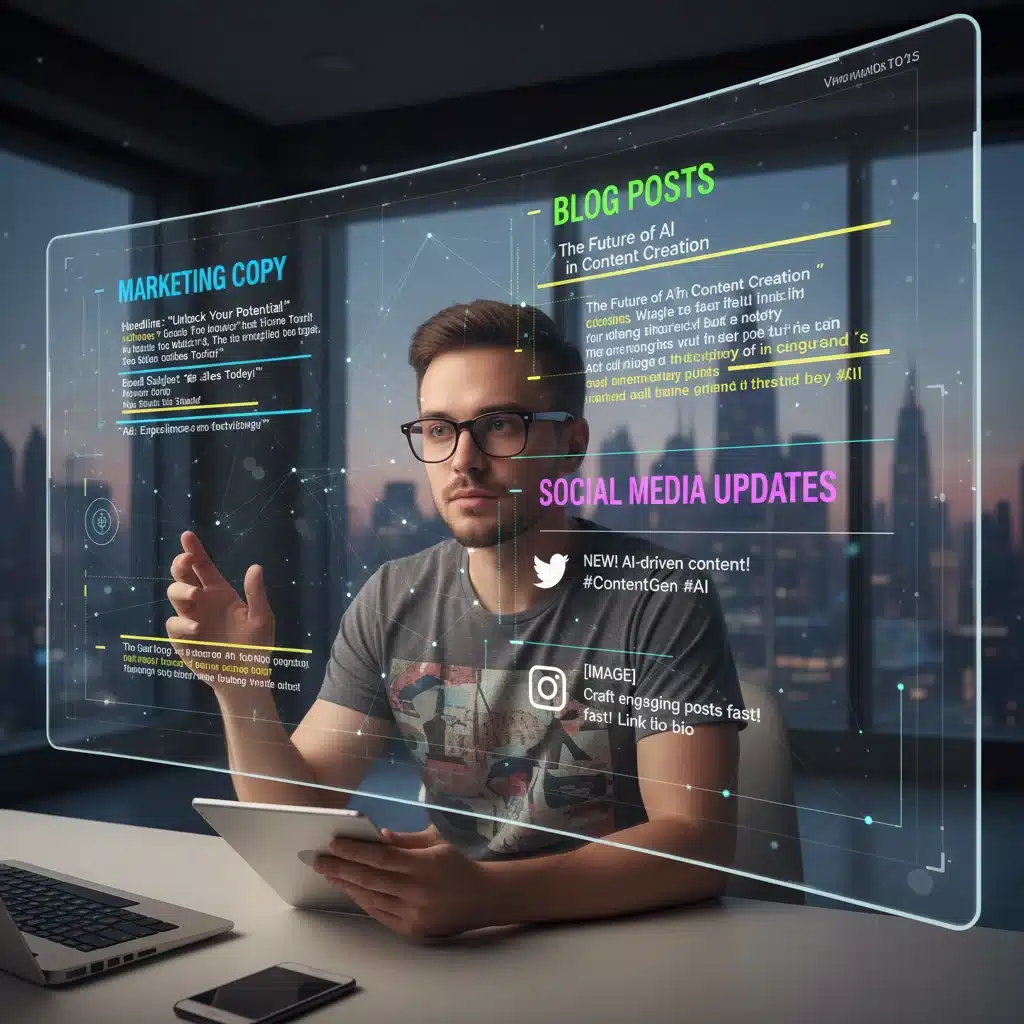
By 2026, these AI marketing tools will be essential for US businesses to maintain a consistent and high-quality content output across all digital channels. They will empower marketing teams to scale their content efforts without sacrificing quality, ensuring that every piece of content is optimized for both search engines and human readers. The true power lies not in fully automating content but in augmenting human creativity, allowing marketers to ideate and refine while AI handles the heavy lifting of drafting and optimization.
The evolution of AI in content creation is not about replacing human writers but enhancing their capabilities. These tools act as intelligent assistants, providing data-backed suggestions for headlines, calls to action, and structural improvements. They can analyze vast amounts of successful content to identify common themes and linguistic patterns, applying these insights to new creations. For US businesses striving for content leadership, integrating these AI marketing tools will be paramount for producing relevant, engaging, and SEO-friendly material at the speed required by the modern digital landscape. This ensures that content is not only prolific but also highly effective in driving engagement and conversions.
3. AI-Driven Ad Optimization and Personalization Engines
Advertising is a cornerstone of digital marketing, and AI is revolutionizing how campaigns are designed, executed, and optimized. AI-driven ad optimization and personalization engines are sophisticated AI marketing tools that analyze audience data, predict campaign performance, and dynamically adjust ad creatives and targeting in real-time. For US businesses, this translates into significantly improved ad spend efficiency and higher conversion rates.
Key Features and Benefits:
- Real-time Bid Optimization: Automatically adjusts bids across various ad platforms to maximize ROI based on performance metrics.
- Dynamic Creative Optimization (DCO): Generates multiple versions of ad creatives and serves the most effective ones to specific audience segments.
- Hyper-Targeting: Identifies and targets niche audience segments with highly personalized messages, reducing waste and increasing relevance.
- Fraud Detection: Utilizes AI to detect and prevent ad fraud, ensuring that budgets are spent on legitimate impressions and clicks.
In 2026, the ability of these AI marketing tools to deliver hyper-personalized ad experiences will be a critical differentiator. US businesses will be able to move beyond broad demographic targeting to individual-level advertising, where every ad seen by a potential customer is precisely tailored to their interests, behaviors, and stage in the buying journey. This level of personalization not only boosts engagement but also builds stronger brand affinity by demonstrating a deep understanding of customer needs.
The continuous learning capabilities of these AI engines mean that ad campaigns are constantly improving. They can identify subtle shifts in audience preferences or market conditions and adapt strategies accordingly, often before human marketers even notice. This agility is invaluable in the fast-paced digital advertising world, allowing US businesses to maintain a competitive edge and ensure their ad spend is always working as hard as possible. The future of advertising is intelligent, adaptive, and deeply personal, all powered by advanced AI marketing tools.
4. Conversational AI for Enhanced Customer Experience
The demand for instant and seamless customer support has led to the rapid adoption of conversational AI. Chatbots and virtual assistants, powered by advanced NLP and machine learning, are becoming increasingly sophisticated AI marketing tools for enhancing customer experience. These systems are moving beyond simple FAQs to handle complex queries, provide personalized recommendations, and even complete transactions.
Key Features and Benefits:
- 24/7 Customer Support: Provides immediate assistance, improving customer satisfaction and reducing response times.
- Personalized Interactions: Learns from past conversations and customer data to offer tailored recommendations and solutions.
- Lead Qualification and Nurturing: Engages potential leads, answers questions, and guides them through the sales funnel.
- Feedback Collection: Gathers valuable customer insights through natural language conversations, helping businesses improve products and services.
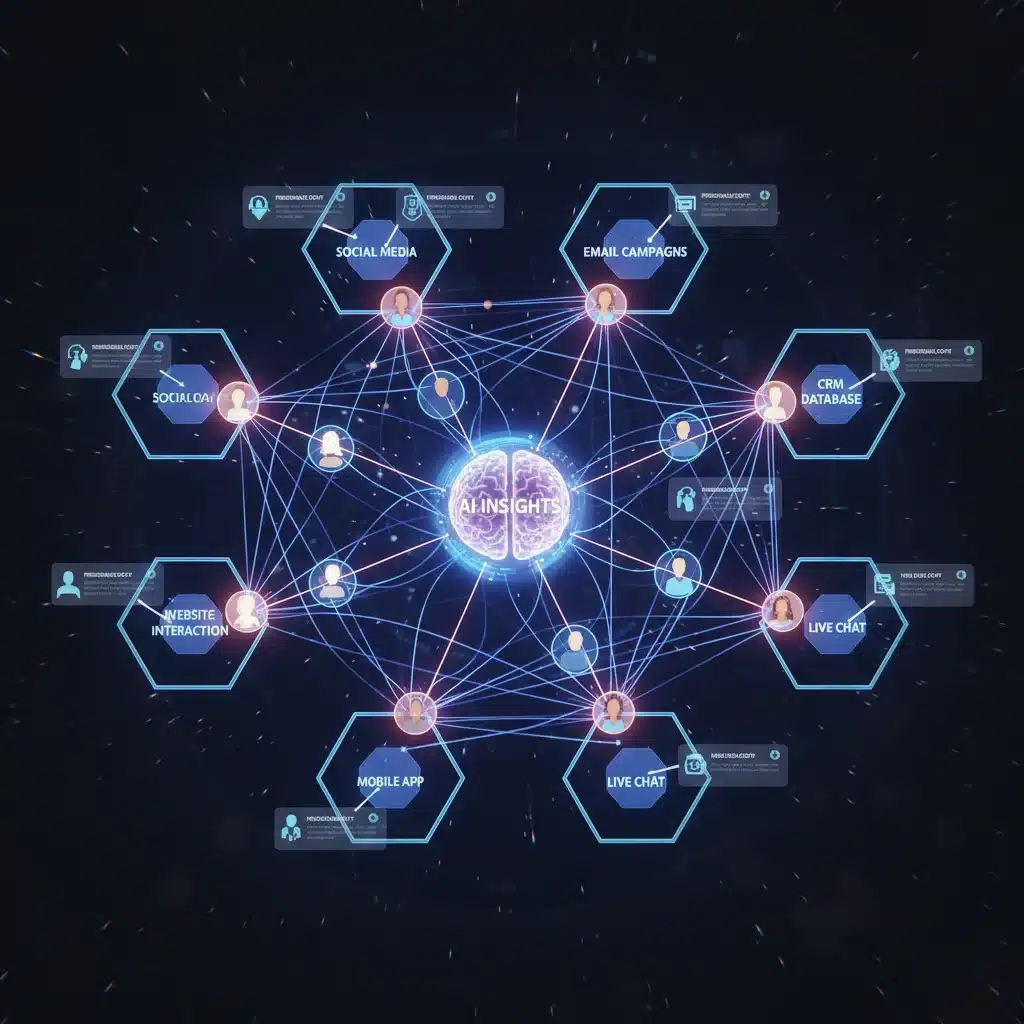
By 2026, conversational AI will be a standard component of customer engagement strategies for US businesses. These AI marketing tools will not only streamline customer service operations but also act as powerful marketing touchpoints, guiding customers through their journey and building brand loyalty. The ability to provide human-like interactions at scale offers a significant advantage, ensuring that every customer feels heard and valued, regardless of when or how they choose to interact with a brand.
The evolution of conversational AI includes integration with voice assistants and multi-channel communication platforms, making interactions even more accessible and convenient. Imagine a customer asking a question to their smart speaker and receiving an immediate, personalized response from a brand’s AI assistant, followed by a relevant offer sent to their email. This level of seamless, omnipresent support and engagement is what these AI marketing tools promise for the near future. For US businesses, this means a truly always-on, always-learning customer experience that drives satisfaction and conversion.
5. AI-Powered Marketing Automation and Workflow Optimization
Marketing automation has been around for some time, but the integration of AI is taking it to an entirely new level. AI-powered marketing automation platforms are intelligent AI marketing tools that not only automate repetitive tasks but also optimize workflows, predict outcomes, and recommend the most effective actions. This frees up marketing teams to focus on strategic initiatives rather than manual execution.
Key Features and Benefits:
- Intelligent Email Campaigns: Automates email sequences, personalizes content, and optimizes send times based on individual recipient behavior.
- Workflow Automation: Streamlines complex marketing processes, such as lead scoring, content distribution, and reporting.
- A/B Testing and Optimization: Conducts automated A/B tests across various campaign elements and implements the winning variations.
- Cross-Channel Orchestration: Coordinates marketing efforts across multiple channels (email, social, web, mobile) for a cohesive customer experience.
In 2026, these AI marketing tools will be the backbone of efficient and effective marketing operations for US businesses. They will enable marketers to run highly complex, multi-channel campaigns with minimal manual intervention, ensuring consistency and maximizing impact. The predictive capabilities of AI within these platforms mean that campaigns are not just automated but are continuously optimized for the best possible results, adapting to real-time data and market responses.
The true advantage lies in the ability of these AI marketing tools to learn and improve over time. As they process more data and observe the outcomes of various campaigns, their recommendations become more accurate and insightful. This continuous learning loop ensures that marketing strategies are always evolving and adapting, staying ahead of customer expectations and competitive pressures. For US businesses seeking to maximize efficiency and achieve scalable growth, AI-powered automation is not just an upgrade; it’s a fundamental shift in how marketing is done, making campaigns smarter, faster, and more effective.
Implementing AI Marketing Tools: Best Practices for US Businesses
Adopting AI marketing tools requires a strategic approach to ensure successful integration and maximum ROI. For US businesses, a thoughtful implementation plan is crucial to harness the full potential of these transformative technologies.
1. Start with Clear Objectives:
Before investing in any AI tool, define what specific marketing challenges you aim to solve. Is it improving lead quality, enhancing customer retention, or scaling content creation? Clear objectives will guide your selection process and provide measurable benchmarks for success.
2. Invest in Data Infrastructure:
AI thrives on data. Ensure your data collection, storage, and management systems are robust and integrated. Clean, accurate, and accessible data is the foundation for effective AI insights. US businesses should prioritize data governance and privacy compliance from the outset.
3. Phased Implementation:
Instead of a full-scale overhaul, consider a phased approach. Start with one or two AI marketing tools that address your most pressing needs, allowing your team to adapt and learn. Gradually expand your AI stack as your organization gains confidence and expertise.
4. Upskill Your Team:
AI tools are powerful, but they require skilled human operators. Invest in training your marketing team to understand how to leverage AI effectively, interpret its outputs, and work collaboratively with these new technologies. The future of marketing is a human-AI partnership.
5. Monitor and Iterate:
AI is not a ‘set it and forget it’ solution. Continuously monitor the performance of your AI marketing tools, analyze their impact, and be prepared to iterate and optimize your strategies based on the insights generated. Regular review ensures ongoing effectiveness and adaptation to evolving market conditions.
By following these best practices, US businesses can navigate the complexities of AI adoption and unlock the immense potential of these tools to drive innovation, efficiency, and growth in their digital marketing efforts.
The Future Landscape: Beyond 2026 for AI Marketing Tools
While this analysis focuses on 2026, the evolution of AI marketing tools will undoubtedly continue at an accelerated pace. Looking further into the future, we can anticipate even more profound shifts. The integration of AI with emerging technologies like the metaverse, advanced virtual and augmented reality (VR/AR), and even brain-computer interfaces (BCI) could open up entirely new dimensions for marketing and customer engagement. Imagine AI-powered virtual brand ambassadors interacting with customers in immersive digital worlds, or marketing campaigns that adapt in real-time to a user’s emotional state detected via biometric data.
Ethical considerations and regulatory frameworks around AI will also become increasingly important. US businesses will need to navigate issues of data privacy, algorithmic bias, and transparency in AI decision-making. Developing responsible AI practices will be just as crucial as technological adoption for maintaining consumer trust and ensuring sustainable growth. The conversation around AI in marketing will shift from ‘what can AI do?’ to ‘what should AI do?’
Furthermore, the democratization of AI will continue, making sophisticated AI marketing tools accessible to businesses of all sizes, not just large enterprises. This will level the playing field, fostering an environment where creativity and strategic thinking, powered by AI, become the ultimate differentiators. The human element will remain irreplaceable, but its role will evolve, focusing on vision, empathy, and the unique ability to connect with audiences on a deeper, emotional level. AI will provide the intelligence, but humans will provide the soul of marketing.