Data Monetization Strategies: US Companies Leveraging Analytics in 2026

In an increasingly data-driven world, the ability to effectively leverage and monetize information has become a critical differentiator for businesses across all sectors. As we look towards 2026, US companies are not just collecting data; they are strategically transforming it into valuable assets, driving innovation, and unlocking unprecedented revenue streams. This paradigm shift, often referred to as data monetization strategies, is at the forefront of corporate agendas, with advanced analytics serving as the indispensable engine.
The landscape of data is vast and ever-expanding. From customer interactions and operational logistics to market trends and sensor data, organizations are awash in information. The challenge, and indeed the opportunity, lies in extracting meaningful insights and converting them into tangible economic value. For US businesses, this involves a sophisticated blend of technological prowess, strategic foresight, and a deep understanding of market dynamics. This comprehensive guide will delve into the multifaceted world of data monetization, exploring the strategies, technologies, and ethical considerations shaping how US companies are leveraging analytics to thrive in 2026.
Understanding data monetization strategies is more than just identifying new revenue sources; it’s about fundamentally rethinking how data integrates into every aspect of a business. It encompasses direct sales of data products, indirect improvements to existing services, and the creation of entirely new business models. The journey to effective data monetization is complex, requiring significant investment in infrastructure, talent, and a cultural shift towards data-centric decision-making.
The Evolution of Data: From Cost Center to Profit Driver
Historically, data was often viewed as a necessary operational overhead — a cost center for storage and management. However, with the advent of powerful analytics tools, machine learning, and artificial intelligence, this perception has dramatically shifted. Data is now recognized as a strategic asset, capable of generating significant returns on investment. US companies, particularly those in competitive sectors like technology, finance, retail, and healthcare, have been quick to embrace this transformation.
The evolution from data as a cost to data as a profit driver hasn’t been linear. It required a foundational shift in how organizations perceive and interact with their information. Early attempts at data utilization often focused on basic reporting and descriptive analytics — understanding what happened. Today, the focus has moved towards predictive and prescriptive analytics — understanding what will happen and what actions to take. This advanced analytical capability is the cornerstone of successful data monetization strategies.
In 2026, US companies are distinguished by their proactive approach to identifying data value. They are not merely reacting to market changes but are actively shaping them through data-driven insights. This involves:
- Investing in Data Infrastructure: Cloud-based data warehouses, data lakes, and real-time processing capabilities are no longer luxuries but necessities.
- Cultivating Data Literacy: Ensuring employees at all levels understand the value of data and how to interpret basic analytics.
- Hiring Data Specialists: Data scientists, machine learning engineers, and data ethicists are crucial roles within modern enterprises.
- Developing Data Governance Frameworks: Ensuring data quality, security, and compliance are paramount for trust and effective monetization.
Key Data Monetization Strategies in 2026
The approaches to monetizing data are diverse, ranging from direct sales to indirect value creation. US companies are employing a combination of these strategies, tailored to their industry, data assets, and business objectives.
1. Enhancing Core Products and Services
One of the most common and effective data monetization strategies involves using data to improve existing products and services. By analyzing customer behavior, preferences, and feedback, companies can make their offerings more relevant, personalized, and efficient. This leads to increased customer satisfaction, loyalty, and ultimately, higher revenue.
- Personalized Recommendations: E-commerce giants use purchase history and browsing data to suggest relevant products, significantly boosting sales.
- Predictive Maintenance: Industrial companies use sensor data from machinery to predict failures, reducing downtime and offering new service contracts based on uptime guarantees.
- Optimized Pricing: Retailers and airlines use dynamic pricing models based on demand, competitor pricing, and inventory levels to maximize revenue.
- Targeted Marketing: Understanding customer segments allows for highly effective marketing campaigns, reducing waste and increasing conversion rates.
2. Selling Data Products and Services Directly
For some US companies, their data assets are so valuable that they can be packaged and sold as standalone products or services. This often involves anonymizing and aggregating data to ensure privacy while providing valuable insights to other businesses.
- Market Intelligence Reports: Aggregated data on consumer trends, industry performance, or demographic shifts can be sold to other businesses for strategic planning.
- API Access to Data: Companies with unique datasets (e.g., traffic patterns, weather data, financial market data) can offer API access to developers and other enterprises for a fee.
- Data-as-a-Service (DaaS): Providing ongoing data streams or curated datasets to subscribers, often used in sectors like finance, real estate, and healthcare.
- Benchmarking Services: Offering insights that allow companies to compare their performance against industry averages or best practices, derived from aggregated data.
3. Creating New Business Models
Perhaps the most transformative aspect of data monetization strategies is the ability to spawn entirely new business models that were previously unimaginable. Data becomes the core offering, not just a supporting element.
- Platform-as-a-Service (PaaS) with Data Insights: Companies that build platforms can offer premium tiers that include advanced analytics and insights derived from platform usage data.
- Insurance Models based on Behavioral Data: Telematics data from vehicles can inform personalized car insurance premiums, or health data from wearables can influence health insurance offerings.
- Smart City Solutions: Urban data (traffic, waste, energy consumption) can be used to develop and sell solutions for optimizing city operations.
- AI-Powered Consulting: Leveraging proprietary datasets and AI models to offer highly specialized consulting services that provide predictive insights or automate complex decision-making.
4. Improving Operational Efficiency
While not always a direct revenue stream, using data to significantly improve operational efficiency translates directly into cost savings, which boosts profitability. This indirect monetization is a cornerstone for many US businesses.
- Supply Chain Optimization: Predictive analytics can forecast demand, optimize inventory levels, and streamline logistics, reducing waste and costs.
- Fraud Detection: Advanced algorithms can identify fraudulent transactions in real-time, saving financial institutions billions.
- Resource Allocation: Data helps optimize staffing, energy consumption, and asset utilization across various industries.
- Customer Service Automation: AI-powered chatbots and virtual assistants, trained on vast interaction data, can handle routine queries, freeing up human agents for more complex issues.
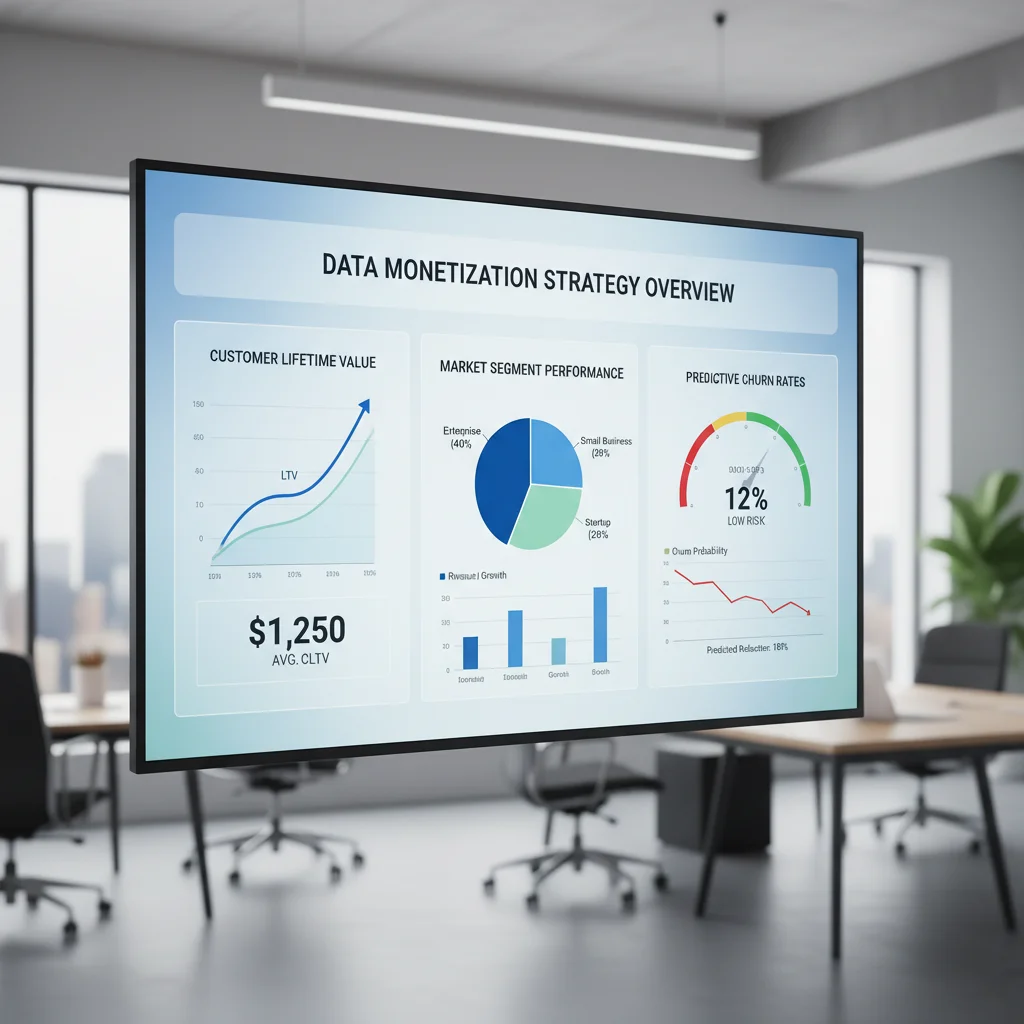
The Role of Advanced Analytics in 2026
At the heart of every successful data monetization strategy lies sophisticated analytics. In 2026, US companies are moving beyond traditional business intelligence to embrace more advanced techniques:
Machine Learning and AI
Machine learning (ML) and Artificial Intelligence (AI) are no longer buzzwords but foundational technologies. They enable companies to uncover hidden patterns, make accurate predictions, and automate complex decision-making processes at scale. From natural language processing for sentiment analysis to computer vision for quality control, AI is unlocking new data monetization avenues.
Predictive and Prescriptive Analytics
Instead of merely reporting what has happened, predictive analytics forecasts future outcomes (e.g., customer churn, equipment failure). Prescriptive analytics takes it a step further, recommending specific actions to achieve desired results (e.g., optimal pricing, best marketing channel). These are crucial for proactive data monetization strategies.
Real-time Analytics
The ability to process and analyze data as it’s generated is paramount in fast-paced environments. Real-time analytics enables immediate responses to market shifts, customer interactions, or operational issues, allowing for dynamic pricing, personalized offers, and instant fraud detection.
Big Data Technologies
Handling the sheer volume, velocity, and variety of data requires robust big data technologies like Apache Hadoop, Spark, and cloud-native solutions. These platforms provide the scalable infrastructure necessary to store, process, and analyze massive datasets effectively for monetization purposes.
Challenges and Considerations for US Companies
While the opportunities presented by data monetization strategies are immense, US companies face several significant challenges that require careful navigation.
Data Privacy and Security
With increasing regulations like CCPA and the global influence of GDPR, ensuring data privacy and robust security measures is paramount. Breaches can lead to severe financial penalties, reputational damage, and loss of customer trust. Companies must invest in advanced encryption, access controls, and anonymization techniques, especially when dealing with sensitive personal data.
Data Quality and Governance
The adage "garbage in, garbage out" holds true. Poor data quality — inconsistencies, inaccuracies, or incompleteness — can undermine any monetization effort. Establishing strong data governance frameworks, including data stewardship, clear ownership, and quality standards, is essential. This ensures that data is reliable, accessible, and compliant.
Talent Gap
The demand for skilled data scientists, AI engineers, and data ethicists far outstrips supply. US companies are competing fiercely for this talent, often leading to high recruitment costs and retention challenges. Building internal capabilities through training and fostering a data-driven culture are crucial for long-term success.
Ethical Considerations and Bias
The ethical implications of using data, particularly with AI, are gaining prominence. Algorithmic bias can lead to discriminatory outcomes, eroding public trust and inviting regulatory scrutiny. US companies must prioritize ethical AI development, conduct bias audits, and ensure transparency in how data is collected, used, and monetized.

Integration and Legacy Systems
Many established US companies grapple with complex legacy IT systems that are not designed for modern data analytics. Integrating disparate data sources and modernizing infrastructure can be a significant undertaking, requiring substantial investment and strategic planning. Cloud migration and API-first approaches are becoming common solutions.
Best Practices for Successful Data Monetization in 2026
To successfully implement and sustain data monetization strategies, US companies should adhere to several best practices:
1. Define Clear Business Objectives
Before embarking on any data monetization initiative, companies must clearly define what they aim to achieve. Is it increased revenue, cost reduction, improved customer satisfaction, or new market entry? Clear objectives guide data collection, analysis, and strategy development.
2. Start Small, Scale Fast
Instead of attempting a massive, all-encompassing data monetization project, start with pilot programs that target specific, high-value use cases. Prove the concept, demonstrate ROI, and then scale successful initiatives across the organization. This agile approach minimizes risk and builds momentum.
3. Foster a Data-Driven Culture
Data monetization is not just an IT or analytics function; it requires buy-in from the entire organization, from the C-suite to frontline employees. Promote data literacy, encourage experimentation, and reward data-driven decision-making. Leadership must champion the data agenda.
4. Invest in the Right Technology Stack
Choose scalable, flexible, and secure data infrastructure that can handle current and future needs. This includes cloud platforms, advanced analytics tools, data visualization software, and robust data governance solutions. The technology stack should support real-time processing and AI/ML capabilities.
5. Prioritize Data Governance and Ethics
Integrate data governance, privacy, and ethical considerations from the outset. Implement robust security measures, ensure compliance with relevant regulations, and develop ethical guidelines for data usage. Transparency with customers about how their data is used builds trust.
6. Build a Cross-Functional Data Team
Effective data monetization requires collaboration between data scientists, business analysts, legal experts, marketing professionals, and product developers. Create cross-functional teams that can bridge the gap between technical capabilities and business needs.
7. Continuously Monitor and Iterate
The data landscape is constantly evolving. Companies must continuously monitor the performance of their data monetization initiatives, gather feedback, and iterate on their strategies. What works today might need adjustment tomorrow. Leverage A/B testing and performance metrics to refine approaches.
Future Outlook: Data Monetization in the AI-Native Era
Looking beyond 2026, the future of data monetization strategies for US companies is inextricably linked to the advancements in AI. We are rapidly moving towards an AI-native era where data and intelligence are embedded into every process and product.
- Generative AI for Data Synthesis: Generative AI could create synthetic datasets for training models or for sale, preserving privacy while offering valuable insights.
- Autonomous Data Monetization Platforms: AI-powered platforms might autonomously identify valuable data assets, package them, and even negotiate their sale, minimizing human intervention.
- Hyper-Personalization at Scale: With more sophisticated AI, companies will achieve unprecedented levels of personalization in products, services, and marketing, driving deeper customer engagement and loyalty.
- Data Marketplaces and Exchanges: The growth of secure, transparent data marketplaces will facilitate easier and more ethical exchange of data assets between businesses.
- Enhanced Regulatory Frameworks: As data monetization becomes more pervasive, expect stricter and more nuanced regulatory frameworks globally, requiring continuous adaptation from US companies.
Conclusion
The journey of data monetization strategies is a transformative one for US companies in 2026. It’s about recognizing data not just as a byproduct of operations but as a strategic asset capable of generating substantial value. By harnessing the power of advanced analytics, machine learning, and AI, businesses can unlock new revenue streams, optimize existing operations, and foster deeper customer relationships.
However, success in this domain is not without its challenges. Navigating the complexities of data privacy, ensuring data quality, addressing the talent gap, and upholding ethical standards are critical. Companies that prioritize these aspects, coupled with a clear vision and a commitment to innovation, will be the ones that truly thrive in the data-driven economy of tomorrow. As the digital frontier continues to expand, the ability to strategically monetize data will remain a defining characteristic of leading US enterprises.