Navigating the 2026 US Data Privacy Landscape: A Practical Guide to New Regulations
Navigating the 2026 US Data Privacy Landscape: A Practical Guide to New Regulations
The digital age has ushered in an era of unprecedented data collection and utilization. While this has fueled innovation and economic growth, it has also brought forth a critical need for robust data privacy regulations. As we approach 2026, the US data privacy landscape is poised for significant transformation. Businesses, regardless of size or industry, must prepare to navigate a complex web of new and evolving laws designed to protect consumer information. This comprehensive guide will delve into the anticipated changes, outline key compliance strategies, and provide actionable insights to ensure your organization is not just compliant, but also builds lasting trust with its customers.
Understanding the intricacies of the US data privacy framework is no longer optional; it is a fundamental requirement for sustainable business operations. The patchwork of state-level laws, coupled with the potential for overarching federal legislation, creates a dynamic environment that demands proactive engagement. Ignoring these developments can lead to severe financial penalties, reputational damage, and a significant loss of consumer confidence. Our focus here is to demystify these changes, offering a clear roadmap for preparedness for US Data Privacy 2026.
The Evolving Landscape of US Data Privacy Regulations
For years, the United States has operated under a sector-specific approach to data privacy, contrasting sharply with the comprehensive regulatory frameworks seen in regions like the European Union with its GDPR. However, this fragmented approach is rapidly consolidating. Several states have already enacted their own comprehensive privacy laws, and more are on the horizon. The cumulative effect of these state laws, alongside ongoing discussions for a potential federal privacy law, paints a picture of a much stricter and more unified regulatory environment by 2026.
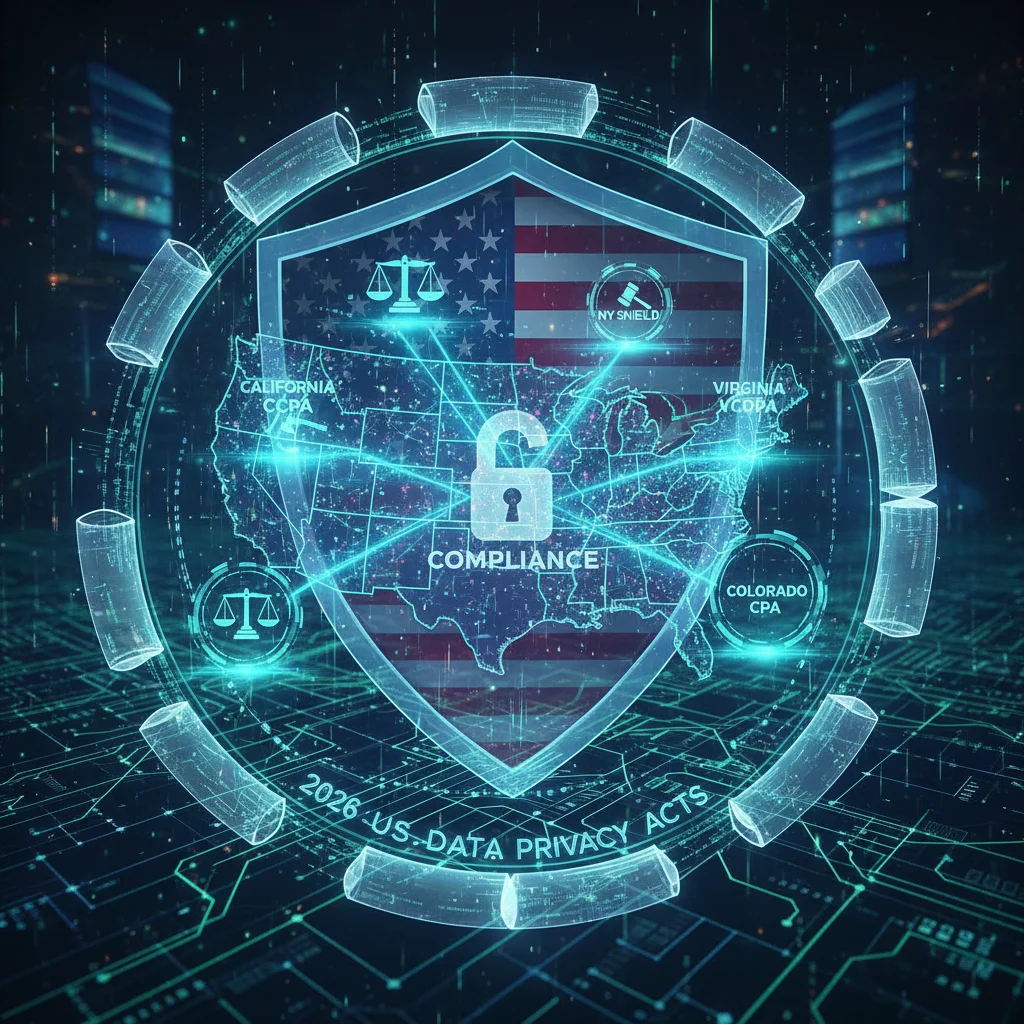
Key state-level privacy laws, such as the California Consumer Privacy Act (CCPA) and its successor, the California Privacy Rights Act (CPRA), the Virginia Consumer Data Protection Act (VCDPA), the Colorado Privacy Act (CPA), and similar legislation in Utah, Connecticut, and others, have set precedents. These laws typically grant consumers specific rights regarding their personal data, including the right to know what data is collected, the right to delete it, and the right to opt-out of its sale. As more states adopt similar or even more stringent measures, businesses operating across state lines face the daunting task of complying with multiple, sometimes conflicting, requirements.
The push for a federal privacy law continues to gain momentum. While the specifics are still being debated, any federal legislation would likely aim to harmonize the existing state laws, providing a more consistent framework for businesses nationwide. Such a law would undoubtedly introduce new obligations and potentially expand consumer rights even further. Businesses must monitor these legislative developments closely, as they will significantly shape the requirements for US Data Privacy 2026.
The shift towards a more comprehensive and consumer-centric data privacy model is driven by several factors: increased public awareness of data breaches, growing concerns over data exploitation, and a global trend towards stronger privacy protections. This evolving landscape requires businesses to move beyond mere compliance and embrace a culture of privacy by design, integrating privacy considerations into every aspect of their operations from the outset.
Understanding Key Consumer Rights Under New Regulations
At the heart of the emerging US Data Privacy 2026 regulations are enhanced consumer rights. These rights empower individuals to have greater control over their personal information. While the specifics may vary slightly between state laws and potential federal legislation, several core rights are consistently being established:
- Right to Know: Consumers have the right to know what personal data is being collected about them, the categories of sources from which it is collected, the business or commercial purpose for collecting or selling it, and the categories of third parties with whom the business shares personal data.
- Right to Access: Individuals can request access to the specific pieces of personal data a business has collected about them.
- Right to Delete: Consumers can request that businesses delete personal data collected from them, with certain exceptions (e.g., to complete a transaction, detect security incidents).
- Right to Correct/Rectify: Many new laws grant consumers the right to correct inaccurate personal data maintained by a business.
- Right to Opt-Out of Sale/Sharing: A crucial right allowing consumers to direct a business not to sell or share their personal data to third parties. This often includes opting out of targeted advertising.
- Right to Limit Use and Disclosure of Sensitive Personal Information: Some regulations, like the CPRA, introduce the concept of ‘sensitive personal information’ (e.g., racial or ethnic origin, religious beliefs, health information) and grant consumers the right to limit its use and disclosure.
- Right to Non-Retaliation: Businesses are prohibited from discriminating against consumers for exercising their privacy rights.
Businesses must develop robust mechanisms to facilitate the exercise of these rights. This includes clear privacy policies, accessible data request portals, and efficient internal processes for fulfilling requests within specified timeframes. Failure to properly address these consumer rights can lead to significant penalties and erode consumer trust, making it a critical area of focus for US Data Privacy 2026 preparations.
Impact on Businesses: What to Expect by 2026
The impending changes to US Data Privacy 2026 will have a profound impact on businesses of all sizes and across all sectors. From small startups to multinational corporations, organizations will need to reassess their data handling practices, update their policies, and invest in new technologies and processes to ensure compliance. The scope of these changes extends beyond legal departments, affecting IT, marketing, sales, human resources, and customer service.
Data Mapping and Inventory: The Foundation of Compliance
One of the most critical first steps for any business preparing for US Data Privacy 2026 is to conduct a thorough data mapping and inventory exercise. This involves understanding:
- What data is collected: Identifying all types of personal data your organization collects, including customer data, employee data, website visitor data, etc.
- Where data is stored: Pinpointing all locations where this data resides, both internally (servers, databases, employee devices) and externally (cloud services, third-party vendors).
- How data is used: Documenting the purposes for which each piece of data is collected and processed.
- Who has access to data: Identifying all internal personnel and external third parties (vendors, partners) who have access to personal data.
- How data flows: Tracing the lifecycle of data from collection to storage, processing, sharing, and eventual deletion.
This comprehensive understanding is foundational for demonstrating accountability and fulfilling various regulatory requirements, such as responding to data subject access requests (DSARs) and conducting data protection impact assessments (DPIAs). Without an accurate data inventory, businesses will struggle to manage consent, fulfill deletion requests, or identify potential privacy risks. Investing in data governance tools and expertise for this phase is crucial.
Updating Privacy Policies and Consent Mechanisms
With new regulations come new requirements for transparency and consent. Businesses will need to review and significantly update their privacy policies to accurately reflect their data collection, usage, and sharing practices under the new laws. These policies must be clear, concise, and easily accessible to consumers. They should detail:
- The specific categories of personal information collected.
- The purposes for which each category of information is used.
- The categories of third parties with whom the information is shared or sold.
- Instructions on how consumers can exercise their privacy rights.
- Contact information for privacy inquiries.
Furthermore, consent mechanisms will need to be re-evaluated. Many new laws move towards an opt-in model for certain data processing activities, particularly for sensitive personal information or the sale/sharing of data for targeted advertising. Cookie consent banners, mobile app permissions, and website forms will all need to be designed to be explicit, granular, and easily revocable. Implementing a robust Consent Management Platform (CMP) can help manage these complex requirements effectively.
Enhanced Data Security Requirements
While data privacy focuses on how personal data is collected, used, and shared, data security is about protecting that data from unauthorized access, loss, or disclosure. The new privacy regulations often include provisions that mandate reasonable security measures to protect personal information. This means businesses must:
- Implement strong access controls and authentication protocols.
- Encrypt sensitive data both in transit and at rest.
- Regularly conduct security audits and vulnerability assessments.
- Develop and test incident response plans.
- Train employees on data security best practices.
A data breach can have devastating consequences under the new privacy laws, leading to significant fines, mandatory breach notifications, and severe reputational damage. Therefore, bolstering data security infrastructure and practices is not just good business practice but a critical component of US Data Privacy 2026 compliance.
Vendor and Third-Party Risk Management
Most businesses rely on a complex ecosystem of third-party vendors, from cloud service providers to marketing analytics firms. Each of these vendors may process personal data on behalf of your organization, making them an extension of your data privacy responsibilities. New regulations often hold businesses accountable for the data privacy practices of their vendors.
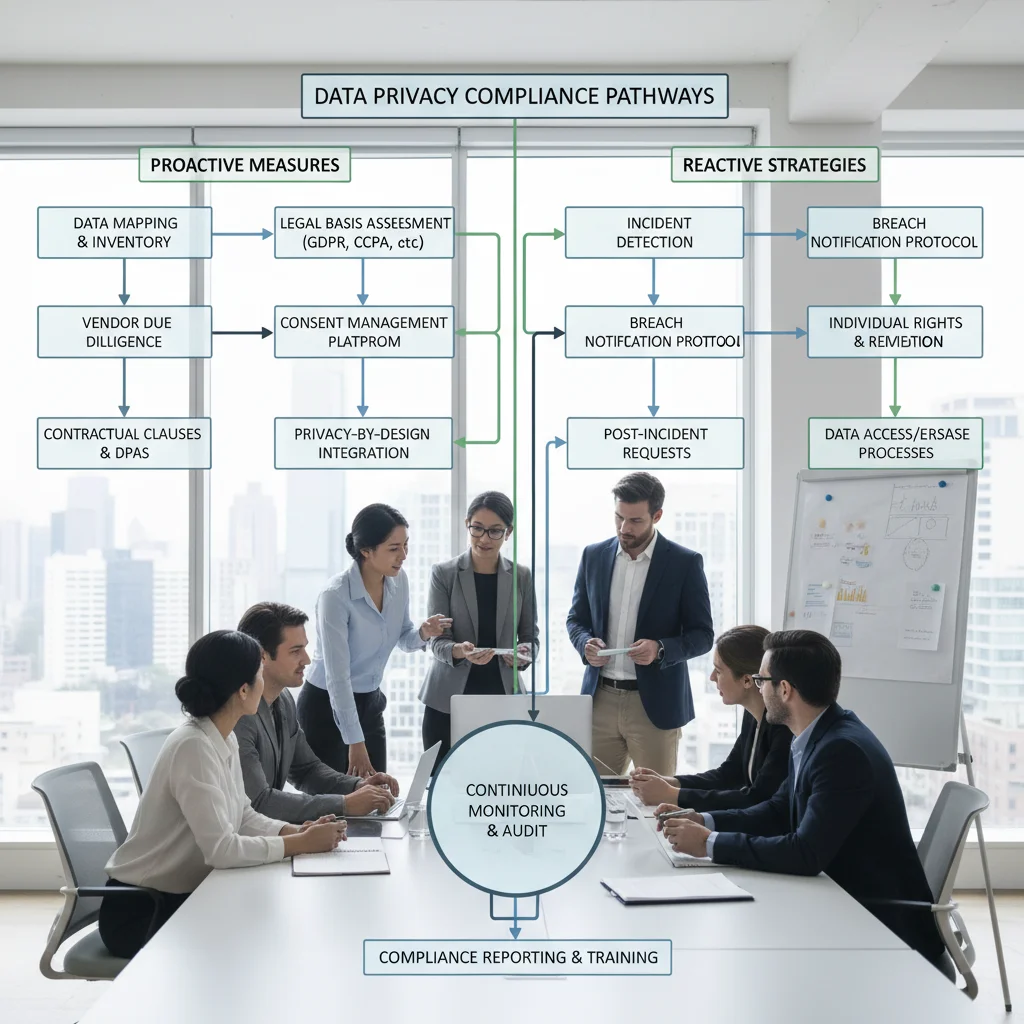
To mitigate this risk, businesses must:
- Conduct thorough due diligence on all third-party vendors that handle personal data.
- Implement robust data processing agreements (DPAs) that clearly define roles, responsibilities, and security obligations.
- Regularly audit vendor compliance with privacy and security standards.
- Ensure that vendors also have appropriate mechanisms for fulfilling consumer rights requests.
A single weak link in your supply chain can compromise your entire data privacy posture. Proactive vendor management is essential for navigating the requirements of US Data Privacy 2026.
Practical Steps for Achieving Compliance by 2026
Preparing for US Data Privacy 2026 requires a systematic and multi-faceted approach. It’s not a one-time project but an ongoing commitment to data governance and privacy best practices. Here are practical steps businesses can take:
1. Appoint a Privacy Officer or Designate a Responsible Team
For many organizations, especially larger ones, appointing a dedicated Privacy Officer or establishing a cross-functional privacy team is crucial. This individual or team will be responsible for overseeing the organization’s privacy program, staying abreast of regulatory changes, conducting assessments, and ensuring compliance across all departments. Even for smaller businesses, designating a specific individual to champion privacy initiatives is a vital first step.
2. Conduct a Comprehensive Data Audit and Map Data Flows
As discussed, understanding what data you have, where it is, and how it moves is paramount. Utilize specialized software or engage privacy consultants to perform a thorough data audit. Document every data touchpoint, from initial collection to storage, processing, sharing, and eventual deletion. This data map will serve as the blueprint for your compliance efforts.
3. Review and Update Legal Documentation
This includes:
- Privacy Policy: Ensure it is transparent, comprehensive, and compliant with all applicable state and potential federal laws.
- Terms of Service: Update to reflect data handling practices and consumer rights.
- Data Processing Agreements (DPAs): Revise or create new DPAs with all third-party vendors who process personal data on your behalf.
- Employee Privacy Policies: Ensure internal policies reflect privacy obligations regarding employee data.
Legal counsel specializing in data privacy should be involved in this critical review process.
4. Implement Robust Consent Management Systems
Deploy or enhance a Consent Management Platform (CMP) to effectively manage user consent for data collection, usage, and sharing. The CMP should allow for granular control over preferences, be easily accessible, and provide a clear audit trail of consent choices. For websites, this means updated cookie banners and privacy preference centers. For mobile apps, clear in-app notifications and settings are necessary.
5. Strengthen Data Security Measures
Regularly assess and improve your cybersecurity posture. This includes:
- Implementing multi-factor authentication (MFA).
- Performing regular penetration testing and vulnerability scans.
- Adopting data encryption for sensitive information.
- Establishing a robust incident response plan and conducting regular drills.
- Ensuring all software and systems are up-to-date with the latest security patches.
A proactive approach to data security is integral to demonstrating compliance and protecting against breaches.
6. Develop and Streamline Data Subject Access Request (DSAR) Processes
Consumers will increasingly exercise their rights to access, delete, or correct their data. Businesses need clear, efficient, and well-documented processes for handling DSARs within the legally mandated timeframes (e.g., 45 days under CCPA/CPRA). This involves:
- Establishing clear channels for consumers to submit requests.
- Verifying the identity of the requester.
- Locating and retrieving the requested data across all systems.
- Redacting sensitive information where necessary.
- Communicating effectively with the consumer.
Automated DSAR management tools can significantly streamline this process for larger organizations.
7. Provide Ongoing Employee Training
Your employees are your first line of defense against privacy breaches. Regular and comprehensive training on data privacy policies, security best practices, and how to handle personal data is essential. This training should be tailored to different roles within the organization, emphasizing the specific privacy responsibilities of each department. A culture of privacy starts with informed and vigilant employees.
8. Monitor and Adapt to Regulatory Changes
The US Data Privacy 2026 landscape is dynamic. New state laws will continue to emerge, and federal legislation may materialize. Businesses must subscribe to legal updates, engage with industry associations, and regularly review their compliance framework to adapt to these changes. Regular internal audits and assessments will help identify gaps and ensure ongoing adherence to evolving requirements.
The Role of Technology in US Data Privacy Compliance
Technology plays a pivotal role in achieving and maintaining compliance with the evolving US Data Privacy 2026 regulations. Manual processes are simply unsustainable for managing the volume and complexity of data and privacy requests that businesses now face. Leveraging the right tools can automate tasks, reduce human error, and provide the necessary audit trails for demonstrating accountability.
Privacy-Enhancing Technologies (PETs)
PETs are a suite of technologies designed to minimize personal data collection and maximize data protection. Examples include:
- Anonymization and Pseudonymization: Techniques to remove or obscure direct identifiers from data, making it harder to link back to an individual while still allowing for analysis.
- Homomorphic Encryption: Allows computations on encrypted data without decrypting it, maintaining privacy throughout the process.
- Differential Privacy: Adds statistical noise to datasets, protecting individual privacy while still enabling data analysis.
- Secure Multi-Party Computation (SMC): Enables multiple parties to jointly compute a function over their inputs while keeping those inputs private.
Integrating PETs into your data processing pipelines can significantly reduce privacy risks and demonstrate a commitment to privacy by design.
Consent Management Platforms (CMPs)
As mentioned earlier, CMPs are indispensable for managing user consent. Modern CMPs offer features like:
- Customizable consent banners and preference centers.
- Integration with various website and app platforms.
- Granular control over cookie categories and data processing purposes.
- Automatic enforcement of consent preferences.
- Detailed audit logs for compliance reporting.
A well-implemented CMP ensures that businesses collect and process data only with valid consent, a cornerstone of US Data Privacy 2026.
Data Discovery and Classification Tools
These tools automate the process of finding, identifying, and classifying personal data across an organization’s entire IT infrastructure. They can scan databases, file shares, cloud storage, and endpoints to:
- Identify where personal data resides.
- Categorize data based on sensitivity (e.g., PII, sensitive PII).
- Track data lineage and flows.
This automation is crucial for building and maintaining an accurate data inventory, which is fundamental for responding to DSARs and conducting DPIAs effectively.
Data Subject Access Request (DSAR) Automation Platforms
Processing DSARs manually can be time-consuming and error-prone. DSAR automation platforms can:
- Streamline the intake of requests through dedicated portals.
- Automate identity verification.
- Orchestrate data retrieval from various systems.
- Facilitate redaction and review processes.
- Generate compliant response reports.

These platforms are essential for meeting the strict timelines and accuracy requirements of US Data Privacy 2026.
Data Loss Prevention (DLP) Solutions
DLP tools help prevent sensitive data from leaving the organization’s control. They can monitor, detect, and block the unauthorized transmission of confidential information through various channels, including email, cloud storage, and removable media. DLP is a critical component of data security, directly supporting privacy objectives by minimizing the risk of data breaches.
Building a Culture of Privacy: Beyond Compliance
While compliance with US Data Privacy 2026 regulations is a legal necessity, successful organizations will go beyond simply ticking boxes. They will cultivate a ‘culture of privacy’ where data protection is embedded into the organizational DNA. This approach not only ensures ongoing compliance but also fosters trust, enhances brand reputation, and can even become a competitive differentiator.
Privacy by Design and Default
This principle advocates for integrating privacy considerations into the design and architecture of IT systems, business practices, and product development from the very beginning. Instead of bolting on privacy features as an afterthought, privacy by design ensures that data protection is a core component. This includes:
- Minimizing data collection to only what is necessary (data minimization).
- Limiting data retention to only as long as required.
- Building in security measures from the outset.
- Offering privacy-friendly default settings in products and services.
Adopting privacy by design demonstrates a proactive commitment to protecting consumer data, aligning perfectly with the spirit of the new regulations.
Transparency and Trust
Openness about data practices builds trust. Clear, understandable privacy policies, transparent consent mechanisms, and prompt communication during data incidents are vital. Consumers are becoming increasingly aware and concerned about their data; businesses that prioritize transparency will be rewarded with greater loyalty and confidence. A strong privacy posture can differentiate your brand in a crowded marketplace, appealing to privacy-conscious consumers.
Continuous Improvement and Adaptation
The data privacy landscape is not static. New technologies emerge, consumer expectations evolve, and regulatory frameworks continue to change. A culture of privacy embraces continuous improvement, regularly reviewing and updating policies, processes, and technologies. This involves:
- Regular internal audits and privacy assessments.
- Staying informed about new legislative developments.
- Gathering feedback from customers and employees.
- Investing in ongoing privacy training and education.
By treating privacy as an ongoing journey rather than a destination, businesses can ensure they remain resilient and compliant in the face of future challenges, well beyond US Data Privacy 2026.
Conclusion: Embracing the Future of US Data Privacy
The year 2026 marks a pivotal moment for data privacy in the United States. The convergence of numerous state-level laws and the potential for federal legislation will fundamentally reshape how businesses collect, process, and protect personal information. While the journey to full compliance may seem daunting, it presents an opportunity for organizations to strengthen their data governance, enhance their security posture, and build deeper trust with their customers.
By proactively conducting data audits, updating legal documentation, implementing robust consent and security mechanisms, streamlining DSAR processes, and investing in continuous employee training, businesses can not only meet the requirements of US Data Privacy 2026 but also position themselves as leaders in responsible data stewardship. Embracing a culture of privacy by design and leveraging innovative privacy-enhancing technologies will be key differentiators in this new era.
The future of business success in the digital economy is intrinsically linked to data privacy. Those who adapt early and commit to a privacy-first approach will not only avoid penalties but will also gain a significant competitive advantage, earning the confidence and loyalty of consumers in an increasingly data-conscious world. Start your preparations today to navigate the evolving US data privacy landscape with confidence and strategic foresight.