The Future of Work: How Automation is Reshaping US Job Markets by 2026
The landscape of the American workforce is in constant flux, but few forces promise to reshape it as profoundly as automation. As we rapidly approach 2026, the integration of artificial intelligence (AI), robotics, and advanced software is no longer a distant sci-fi fantasy but a tangible reality transforming industries nationwide. Understanding the trajectory of Automation US Jobs 2026 is crucial for individuals, businesses, and policymakers alike.
The discourse surrounding automation often swings between two extremes: widespread job displacement and the creation of entirely new, more fulfilling roles. The truth, as always, lies somewhere in the middle, presenting a complex tapestry of challenges and unprecedented opportunities. This comprehensive article delves into the projected impact of automation on the US job market by 2026, examining which sectors are most affected, the types of jobs at risk, the emerging skill sets in demand, and the strategic adaptations necessary to thrive in this evolving environment.
Understanding the Drivers of Automation in the US
Before we project the future of Automation US Jobs 2026, it’s essential to grasp the underlying forces accelerating its adoption. Several factors contribute to the rapid integration of automated systems across US industries:
- Technological Advancements: The exponential growth in computing power, machine learning algorithms, and robotic capabilities has made automation more sophisticated, affordable, and accessible than ever before. AI can now perform tasks requiring cognitive abilities previously exclusive to humans, such as complex data analysis, pattern recognition, and even creative problem-solving in specific domains.
- Economic Imperatives: Businesses are constantly seeking ways to enhance efficiency, reduce operational costs, and improve productivity. Automation offers a compelling solution, allowing companies to streamline processes, minimize human error, and achieve higher output. In a competitive global market, the drive for economic advantage is a powerful catalyst for automation adoption.
- Demographic Shifts: An aging workforce and declining birth rates in some regions of the US are leading to labor shortages in certain sectors. Automation can fill these gaps, ensuring that essential services and production capabilities remain robust.
- Increased Data Availability: The proliferation of data, often referred to as ‘big data,’ fuels AI and machine learning models. More data means more accurate and effective automated systems, creating a positive feedback loop that further accelerates automation.
- Pandemic Acceleration: The COVID-19 pandemic highlighted the vulnerability of human-dependent supply chains and operations. Automation offered a way to maintain continuity, reduce human contact, and enhance resilience, significantly accelerating its adoption in sectors like manufacturing, logistics, and healthcare.
Sectors Most Affected by Automation by 2026
The impact of Automation US Jobs 2026 will not be uniform across all industries. Some sectors are inherently more susceptible to automation due to the repetitive, predictable, or data-intensive nature of their tasks. Conversely, others will see a surge in demand for human-centric skills.
Manufacturing and Production
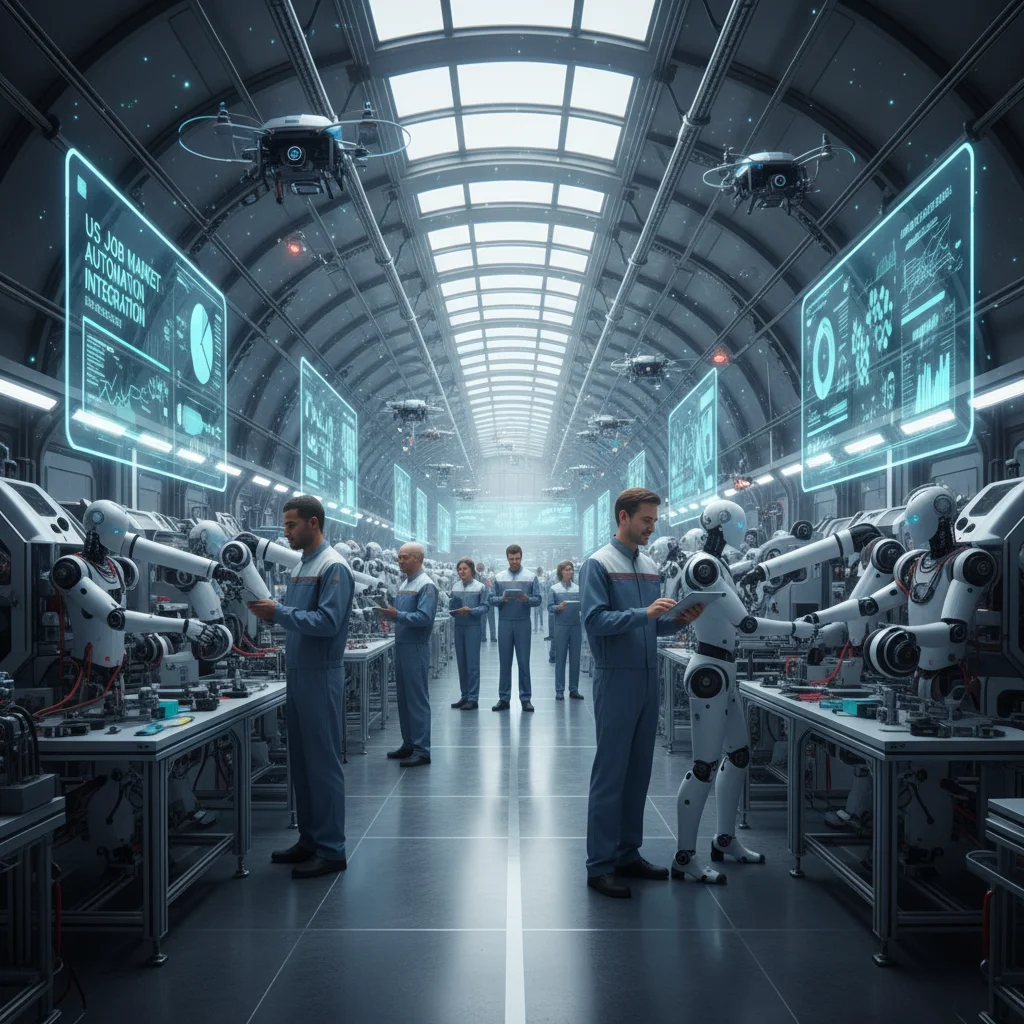
This sector has been at the forefront of automation for decades, but the next few years will see an even more profound transformation. Advanced robotics, AI-driven quality control, and automated assembly lines will continue to replace manual labor. However, this also creates demand for skilled technicians to program, maintain, and troubleshoot these sophisticated systems, alongside roles in design and engineering of automated solutions.
Transportation and Logistics
Autonomous vehicles, drone delivery, and automated warehousing are rapidly moving from experimental stages to widespread deployment. Truck drivers, delivery personnel, and warehouse workers are among the roles most likely to be impacted. The shift will create new jobs in fleet management, AI development for autonomous systems, and logistics optimization.
Retail and Customer Service
Self-checkout kiosks, inventory management robots, and AI-powered chatbots are already common. By 2026, these technologies will become even more sophisticated, handling a greater volume of customer interactions and store operations. While some retail and customer service roles may diminish, there will be a growing need for individuals who can manage AI systems, provide complex problem-solving that AI cannot, and offer personalized, high-touch customer experiences.
Administrative and Office Support
Many routine administrative tasks, such as data entry, scheduling, and document processing, are highly amenable to automation. Robotic Process Automation (RPA) is already making inroads in these areas. This shift will free up human workers for more strategic, creative, and interpersonal tasks, but also necessitate a re-evaluation of traditional office support structures.
Healthcare
While direct patient care remains largely human-centric, automation is revolutionizing administrative tasks, diagnostics, and surgical assistance. AI can analyze medical images, predict disease outbreaks, and manage patient records with unprecedented efficiency. This will create roles for AI specialists in healthcare, data scientists, and medical technicians proficient in using automated tools, while augmenting the capabilities of doctors and nurses.
Job Displacement vs. Job Creation: The Nuance of Automation US Jobs 2026
The narrative of automation often focuses solely on job displacement, igniting fears of mass unemployment. While it is undeniable that certain roles will be reduced or eliminated, it’s equally important to acknowledge the significant potential for job creation and transformation. The key lies in understanding how work itself changes.
Tasks Automated, Not Entire Jobs
Often, automation doesn’t replace an entire job but rather automates specific tasks within that job. For example, a financial analyst might spend less time on data collection and more time on strategic interpretation and client communication, thanks to AI tools. This allows human workers to focus on higher-value activities that require uniquely human skills.
Emergence of New Roles
Historically, technological revolutions have always led to the creation of entirely new categories of jobs. The rise of the internet, for instance, gave birth to web developers, SEO specialists, social media managers, and countless other roles that didn’t exist before. Similarly, Automation US Jobs 2026 will foster demand for roles such as:
- AI Trainers and Data Annotators: Individuals needed to train and refine AI models.
- Robot Maintenance and Repair Technicians: Experts to keep automated systems running.
- Automation Engineers and Integrators: Professionals who design, implement, and manage automated solutions.
- Data Scientists and AI Ethicists: Specialists to analyze the vast amounts of data generated by automated systems and ensure ethical deployment of AI.
- Human-AI Collaboration Specialists: Roles focused on optimizing the interaction between human workers and AI.
- Cybersecurity Analysts: With more interconnected systems, the need for robust cybersecurity will only grow.
Augmentation of Human Capabilities
Perhaps the most significant impact of automation will be its ability to augment human capabilities. AI and robotics can handle the mundane, repetitive, or dangerous tasks, freeing humans to focus on creativity, critical thinking, emotional intelligence, and complex problem-solving – skills that are difficult for machines to replicate. This leads to more engaging and productive work environments.
The Skill Shift: Preparing the Workforce for Automation US Jobs 2026
As the job market evolves, so too must the skills of the workforce. Preparing for Automation US Jobs 2026 requires a proactive approach to skill development and lifelong learning.
In-Demand Technical Skills
- Data Literacy and Analytics: The ability to interpret, analyze, and make decisions based on data.
- AI and Machine Learning Fundamentals: Understanding how these technologies work, even for non-specialists.
- Robotics and Automation Systems: Basic proficiency in operating and troubleshooting automated equipment.
- Cybersecurity: Awareness and skills to protect digital assets.
- Cloud Computing: Understanding and working with cloud-based platforms.
Crucial Soft Skills
While technical skills are vital, it’s the uniquely human ‘soft skills’ that will become even more valuable in an automated world:
- Critical Thinking and Problem-Solving: Analyzing complex situations and devising effective solutions.
- Creativity and Innovation: Generating new ideas and approaches.
- Emotional Intelligence: Understanding and managing emotions, both one’s own and others’, crucial for collaboration and leadership.
- Adaptability and Resilience: The ability to learn new skills, adjust to change, and bounce back from setbacks.
- Communication and Collaboration: Working effectively with diverse teams, including human-AI interaction.
- Digital Fluency: Comfort and proficiency in navigating and utilizing digital tools and environments.

Strategies for Navigating the Automated Future
Successfully navigating the changes brought about by Automation US Jobs 2026 requires concerted efforts from individuals, businesses, and government.
For Individuals: Embrace Lifelong Learning
The concept of a static career path is increasingly obsolete. Workers must adopt a mindset of continuous learning and skill development. This includes:
- Upskilling: Improving existing skills to stay relevant in a changing role.
- Reskilling: Learning entirely new skills for a different role or industry.
- Utilizing Online Learning Platforms: MOOCs (Massive Open Online Courses), vocational training, and certification programs offer accessible pathways to new knowledge.
- Networking: Building connections within emerging fields and staying informed about industry trends.
For Businesses: Invest in Your Workforce
Companies that view automation as an opportunity to augment their human capital, rather than just replace it, will be the most successful. Key strategies include:
- Workforce Planning: Proactively identifying which roles will be impacted and what new skills will be needed.
- Internal Training and Development: Investing in reskilling and upskilling programs for current employees.
- Creating Human-AI Collaboration Frameworks: Designing workflows where humans and AI work synergistically.
- Fostering a Culture of Learning: Encouraging employees to continuously develop new skills and adapt to technological changes.
- Ethical AI Deployment: Ensuring that automation is implemented responsibly and transparently, considering its impact on employees and society.
For Government and Policy Makers: Create Supportive Ecosystems
Government plays a critical role in easing the transition and ensuring equitable outcomes from Automation US Jobs 2026:
- Education Reform: Aligning educational curricula with future workforce needs, emphasizing STEM, digital literacy, and critical thinking from an early age.
- Investment in Retraining Programs: Funding and facilitating accessible, effective retraining programs for displaced workers.
- Social Safety Nets: Exploring and strengthening social support systems to provide a safety net during periods of transition.
- Incentivizing Innovation and Ethical AI: Supporting research and development in automation while establishing guidelines for its responsible use.
- Data and Labor Market Analysis: Continuously monitoring labor market trends to anticipate changes and inform policy.
Economic and Societal Implications by 2026
Beyond individual jobs, automation will have broader economic and societal implications for the US by 2026. These include:
Productivity Growth
Automation has the potential to significantly boost national productivity, leading to economic growth and potentially higher living standards. By automating repetitive tasks, human capital can be reallocated to more innovative and complex activities, driving further advancements.
Income Inequality
Without proper interventions, automation could exacerbate income inequality. Workers with in-demand skills in automated environments may see their wages rise, while those whose skills are made redundant may struggle. Policies focused on education, retraining, and social support will be crucial to mitigate this risk.
Geographic Concentration of Opportunities
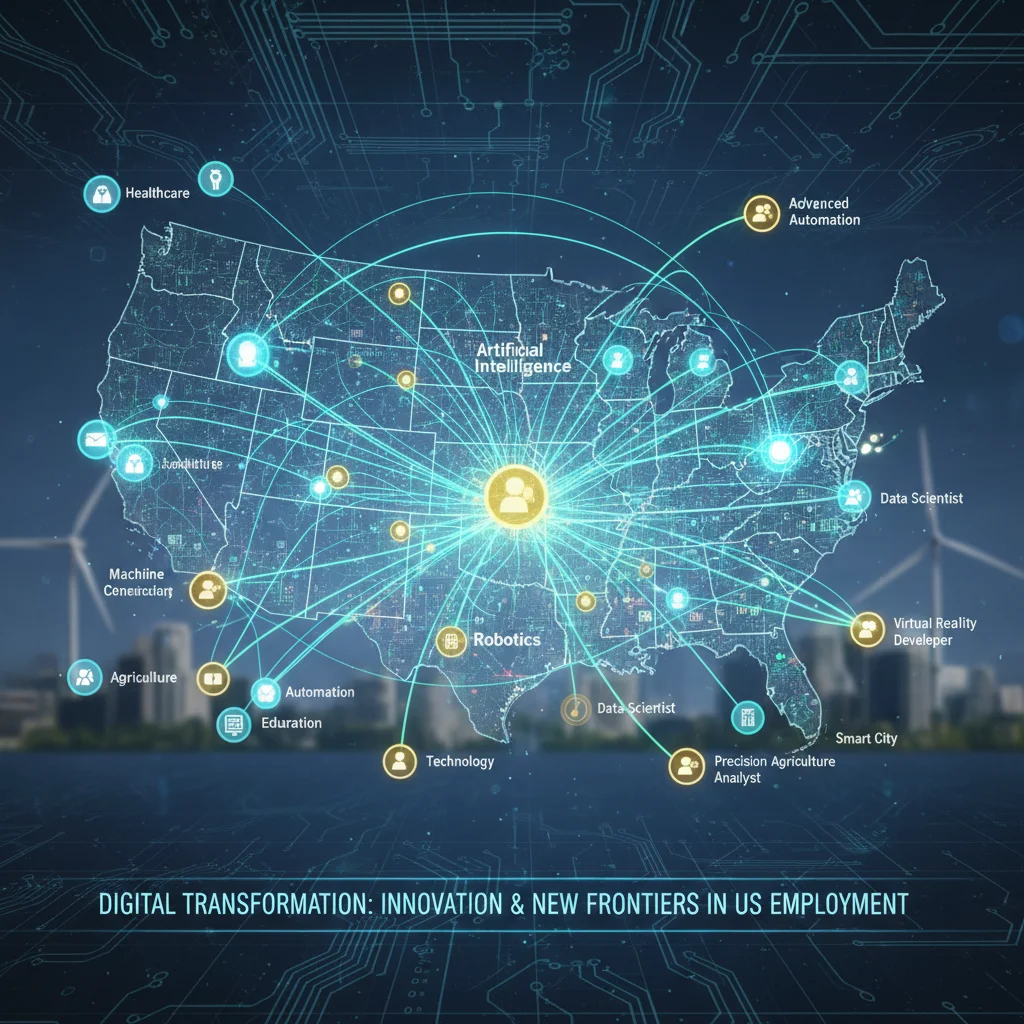
The benefits and challenges of automation may not be evenly distributed geographically. Tech hubs and areas with strong educational infrastructure might thrive, while regions heavily dependent on industries susceptible to automation could face greater economic hardship. Regional development strategies will be vital.
Ethical Considerations
The rise of AI and automation also brings significant ethical questions about data privacy, algorithmic bias, accountability, and the nature of work itself. Addressing these concerns proactively will be essential for a sustainable and equitable automated future.
Case Studies and Emerging Trends
To better illustrate the impact of Automation US Jobs 2026, let’s consider some real-world examples and emerging trends:
Automated Warehouses and Fulfillment Centers
Companies like Amazon have heavily invested in automated warehouses, where robots handle tasks like moving inventory, sorting packages, and even picking items. While this has reduced the need for some manual labor, it has simultaneously created demand for robotics engineers, maintenance technicians, data analysts to optimize warehouse layouts, and human managers who oversee the complex interplay of human and robotic workers.
AI in Financial Services
In finance, AI is being used for fraud detection, algorithmic trading, personalized financial advice (robo-advisors), and risk assessment. This has transformed roles for financial analysts, requiring them to be more adept at interpreting AI outputs and focusing on client relationships and complex strategic planning, rather than routine data crunching.
Telemedicine and AI Diagnostics
The healthcare sector is seeing AI assist in diagnosing diseases from medical images (e.g., radiology, pathology) with high accuracy. Telemedicine, often powered by AI scheduling and initial symptom assessment, has expanded access to care. This doesn’t replace doctors but augments their diagnostic capabilities, allowing them to focus on treatment plans and patient interaction. New roles are emerging for AI specialists in medical imaging and data management.
Personalized Education with AI
AI is beginning to personalize learning experiences, adapting educational content and pace to individual student needs. While not directly displacing teachers, it redefines their role, allowing them to focus on mentorship, critical thinking development, and addressing complex student challenges, rather than standardized instruction. This creates opportunities for educational technologists and AI curriculum designers.
Conclusion: A Future of Transformation, Not Just Replacement
The future of Automation US Jobs 2026 is not a dystopian vision of human obsolescence, but rather a dynamic period of profound transformation. While undoubtedly disruptive for some, it also promises a future where work is more efficient, productive, and potentially more fulfilling as humans are freed from repetitive tasks to engage in higher-level cognitive and creative endeavors.
The key to thriving in this automated future lies in proactive adaptation. For individuals, this means embracing lifelong learning and cultivating uniquely human skills. For businesses, it involves strategic investment in workforce development and fostering human-AI collaboration. For governments, it necessitates creating supportive policies and educational frameworks that ensure an equitable transition for all.
By understanding the trends, anticipating the shifts, and investing in the right skills and strategies, the US workforce can harness the power of automation to build a more prosperous and innovative future. The journey to 2026 is one of continuous learning, strategic planning, and collaborative effort to ensure that automation serves humanity, enhancing our capabilities and creating new horizons for growth and opportunity.