AI-Powered Learning Apps 2026: K-12 Education Transformed

The Dawn of a New Era: AI-Powered Learning Apps in K-12 Education by 2026
The landscape of K-12 education is in the midst of a profound transformation, driven by the relentless march of technological innovation. Among the most impactful advancements are the new wave of AI Learning Apps K-12, which by 2026, are not just supplementary tools but fundamental pillars of the learning experience. These sophisticated applications are leveraging artificial intelligence to personalize education, enhance engagement, and provide unprecedented insights into student progress, fundamentally reshaping how we teach and learn.
For decades, educators have strived for individualized instruction, recognizing that each student possesses a unique learning style, pace, and set of needs. However, the sheer scale of a typical classroom has made true personalization an elusive goal. Enter AI. By 2026, AI-powered learning apps are bridging this gap, offering dynamic, adaptive content that responds in real-time to a student’s performance, interests, and even emotional state. This article delves into a comprehensive review of these revolutionary tools, exploring their current capabilities, the benefits they bring, the challenges they face, and what the future holds for K-12 education.
Understanding the Evolution of AI Learning Apps K-12
The journey of AI in education is not new, but its acceleration in recent years has been exponential. Early educational software offered basic adaptive quizzes, but today’s AI Learning Apps K-12 are light-years ahead. They integrate machine learning, natural language processing (NLP), computer vision, and predictive analytics to create truly intelligent learning environments. Imagine an app that not only identifies a student’s weakness in fractions but also understands why they are struggling, perhaps through analyzing their thought process in problem-solving or detecting patterns in their responses that suggest a foundational misunderstanding. This level of diagnostic precision was once unimaginable.
By 2026, these apps are characterized by several key features:
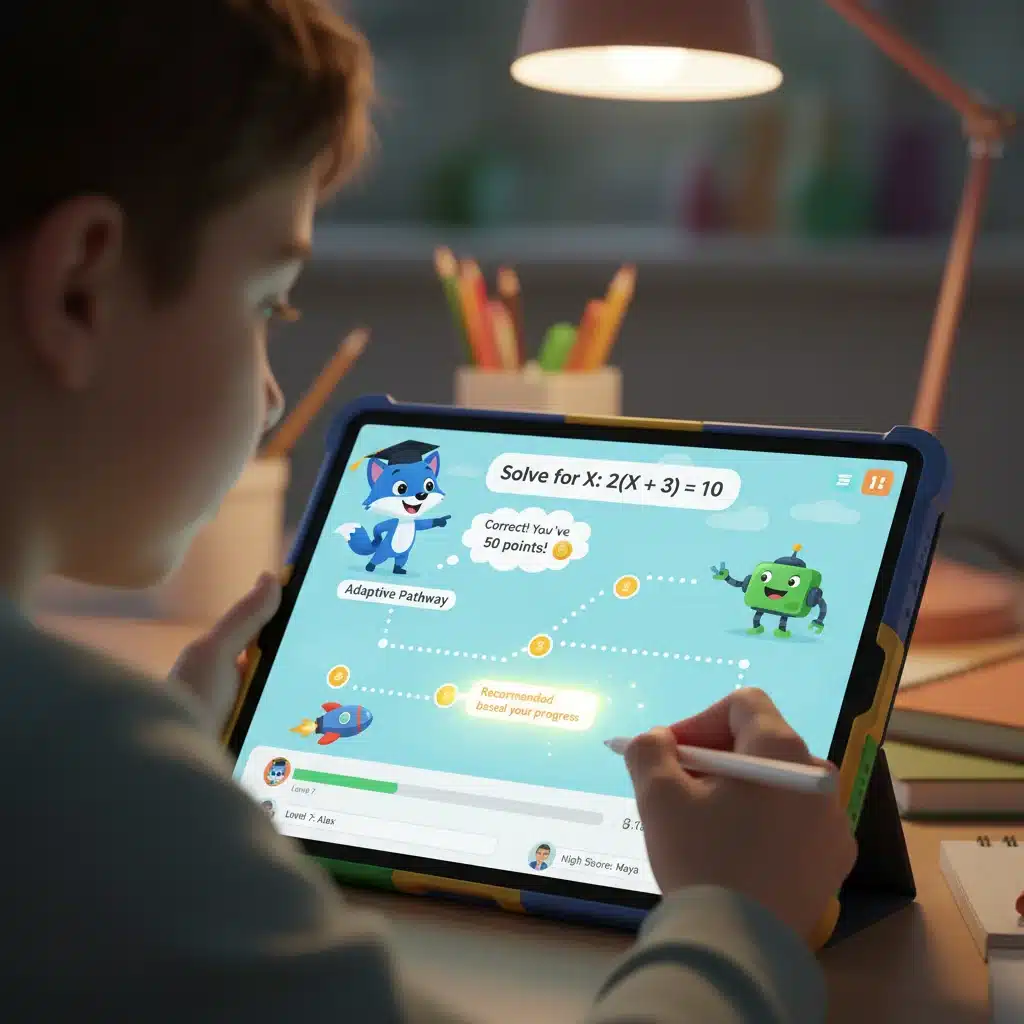
- Adaptive Learning Pathways: Dynamically adjusting content difficulty and presentation based on real-time student performance, ensuring optimal challenge without frustration.
- Personalized Feedback: Providing immediate, constructive, and highly specific feedback that goes beyond just right or wrong answers, guiding students toward deeper understanding.
- Intelligent Tutoring Systems: Acting as virtual tutors, offering explanations, hints, and alternative approaches tailored to individual student needs.
- Content Curation and Generation: Recommending relevant learning resources or even generating new exercises and explanations on the fly to address specific learning gaps.
- Engagement through Gamification: Incorporating game-like elements, reward systems, and interactive challenges to maintain student motivation and focus.
- Data-Driven Insights for Educators: Providing teachers with comprehensive dashboards that offer a holistic view of student progress, identifying trends, and flagging students who might need additional support.
The Transformative Benefits for Students and Educators
Empowering Students with Personalized Learning
The most significant benefit of AI Learning Apps K-12 is their ability to deliver truly personalized education at scale. No longer are students bound by a one-size-fits-all curriculum. Instead, AI crafts a unique learning journey for each individual:
- Tailored Pace: Students can move through material at their own speed, spending more time on difficult concepts and accelerating through those they grasp quickly. This reduces both boredom for advanced learners and anxiety for those who need more time.
- Targeted Intervention: AI can pinpoint specific areas of struggle with remarkable accuracy. If a student consistently misunderstands a particular mathematical concept, the app can provide extra practice, different explanations, or even recommend supplementary materials until mastery is achieved.
- Increased Engagement and Motivation: By adapting to individual interests and learning styles, and often incorporating gamified elements, AI apps make learning more enjoyable and interactive. This intrinsic motivation is crucial for sustained academic success.
- Accessibility and Inclusivity: AI can be a game-changer for students with diverse learning needs. Apps can offer text-to-speech, speech-to-text, visual aids, simplified language options, and even adapt to different cognitive processing speeds, making education more accessible than ever before.
- Development of Self-Directed Learning Skills: As students interact with AI, they learn to navigate their own learning paths, ask questions, seek resources, and take ownership of their education, fostering critical 21-century skills.
Enhancing the Role of Educators
Far from replacing teachers, AI Learning Apps K-12 empower them, transforming their role from content deliverers to facilitators of learning, mentors, and strategists:
- Data-Driven Instruction: Teachers gain access to unprecedented amounts of data on student performance, engagement, and learning patterns. AI dashboards highlight individual strengths and weaknesses, allowing teachers to make informed decisions about lesson planning, group activities, and one-on-one interventions.
- Reduced Administrative Burden: AI can automate routine tasks such as grading quizzes, tracking attendance, and generating progress reports, freeing up valuable teacher time to focus on instruction and student interaction.
- Personalized Support: With AI handling much of the individualized content delivery and basic feedback, teachers can dedicate more time to students who need extra help, foster collaborative projects, and address socio-emotional learning needs.
- Professional Development: AI can also offer insights into teaching effectiveness, helping educators identify areas where their instructional strategies could be improved or adapted to better suit student needs.
- Fostering Creativity and Critical Thinking: By taking over rote tasks, AI allows teachers to design more engaging, project-based learning experiences that encourage critical thinking, problem-solving, and creativity – skills that AI cannot replicate.
Key AI-Powered Learning Apps and Technologies by 2026
By 2026, the market for AI Learning Apps K-12 has matured, with several categories of tools making significant strides:
- Intelligent Tutoring Systems (ITS): These are the most advanced AI apps, capable of mimicking a human tutor. Examples include platforms that teach math, science, and language arts by adapting questions, providing hints, and offering detailed explanations based on the student’s responses. They often use sophisticated diagnostic models to understand misconceptions.
- Adaptive Assessment Tools: Beyond traditional tests, these apps use AI to create dynamic assessments that adjust difficulty based on previous answers, providing a more accurate measure of a student’s true understanding and identifying precise learning gaps.
- Language Learning Platforms: AI-powered language apps leverage NLP for pronunciation analysis, grammar correction, and personalized vocabulary building. They can simulate conversations and provide immediate feedback on fluency and accuracy.
- Content Recommendation Engines: Similar to streaming services, these AI systems recommend educational videos, articles, interactive simulations, and other resources tailored to a student’s interests and current learning objectives.
- Virtual Reality (VR) and Augmented Reality (AR) Enhanced AI: While not purely AI, these immersive technologies are increasingly integrated with AI to create highly engaging learning experiences. Imagine an AI-guided virtual tour of ancient Rome or an AR app that overlays biological systems onto a human body, with AI providing real-time explanations and interactive quizzes.
- AI for Special Education: These specialized apps are designed to support students with learning disabilities, offering highly customized interfaces, multisensory input, and AI-driven strategies to address specific challenges like dyslexia or ADHD.
Challenges and Ethical Considerations in Implementing AI Learning Apps K-12
Despite the immense potential, the widespread adoption of AI Learning Apps K-12 is not without its hurdles and ethical dilemmas. Addressing these challenges is crucial for ensuring equitable and effective integration.
Data Privacy and Security
AI apps collect vast amounts of student data, from academic performance to usage patterns and even emotional responses. Protecting this sensitive information from breaches and misuse is paramount. Robust encryption, strict data governance policies, and transparent communication with parents and students are essential.
Algorithmic Bias
AI models are only as unbiased as the data they are trained on. If training data reflects existing societal biases, the AI could inadvertently perpetuate inequities, for example, by providing less effective support to certain demographic groups or making biased recommendations. Continuous auditing and diverse data sets are vital to mitigate this risk.
Digital Divide and Equity
The benefits of AI Learning Apps K-12 can only be realized if all students have access to the necessary devices, reliable internet connectivity, and digital literacy skills. The digital divide, if not actively addressed, could exacerbate existing educational inequalities, leaving disadvantaged students further behind.
Teacher Training and Professional Development
For AI apps to be effective, educators need comprehensive training not just on how to use the technology, but also on how to integrate it pedagogically into their teaching practices. Understanding how to interpret AI-generated data and leverage it to enhance instruction is a new skill set that requires significant investment in professional development.
Over-reliance and Critical Thinking
There’s a risk that students might become overly reliant on AI for answers, potentially hindering the development of independent problem-solving and critical thinking skills. Educators must design learning experiences that balance AI support with opportunities for students to grapple with challenges independently.
Cost and Infrastructure
Implementing and maintaining advanced AI systems and the necessary hardware (devices, robust network infrastructure) can be expensive, posing a significant challenge for underfunded school districts.

The Future Landscape: Beyond 2026 for AI in K-12
Looking beyond 2026, the evolution of AI Learning Apps K-12 promises even more sophisticated and integrated educational experiences. We can anticipate several key trends:
- Hyper-Personalization and Emotional AI: Future apps will not only adapt to cognitive performance but also detect and respond to a student’s emotional state (e.g., frustration, boredom, curiosity) through facial recognition or voice analysis, adjusting content or offering encouragement accordingly.
- AI-Powered Curriculum Development: AI may assist in designing entire curricula, optimizing content sequencing, and even identifying gaps in educational standards based on real-world data and future skill demands.
- Seamless Integration with Classroom Tools: AI will become an invisible layer across all educational platforms, from learning management systems to collaborative tools, providing continuous, context-aware support.
- AI for Creativity and Innovation: While current AI often focuses on foundational skills, future iterations will likely include tools that foster creativity, help students brainstorm, refine ideas, and even generate artistic or musical content, guided by AI.
- Predictive Analytics for Student Well-being: AI could analyze patterns in student engagement and performance to predict potential struggles, not just academically but also related to mental health or social challenges, allowing for early intervention.
- Lifelong Learning Ecosystems: The skills and learning pathways developed through K-12 AI apps will likely extend into higher education and professional development, creating a seamless, AI-supported lifelong learning journey.
The ethical considerations will also evolve, requiring ongoing dialogue and policy development. Questions around human-AI collaboration, the definition of intelligence, and the role of human empathy in education will become even more prominent.
Best Practices for Integrating AI Learning Apps K-12
To maximize the benefits and mitigate the risks of AI Learning Apps K-12, schools and educators should adopt several best practices:
- Pilot Programs and Phased Implementation: Start with small-scale pilot programs to test different apps, gather feedback, and identify what works best for a specific school environment before wider rollout.
- Comprehensive Teacher Training: Invest significantly in professional development that goes beyond technical skills, focusing on pedagogical integration, data interpretation, and ethical considerations.
- Prioritize Data Privacy and Security: Implement robust data protection policies, comply with all relevant regulations (e.g., FERPA, GDPR), and ensure transparent communication with stakeholders.
- Foster Digital Equity: Work to bridge the digital divide by providing devices, internet access, and digital literacy training to all students, ensuring equitable access to AI tools.
- Maintain Human Oversight: AI should always be a tool to augment human intelligence, not replace it. Teachers must remain in control, using AI insights to inform their decisions rather than blindly following algorithmic recommendations.
- Encourage Critical AI Literacy: Teach students not just how to use AI, but also how it works, its limitations, potential biases, and how to interact with it responsibly and critically.
- Regular Evaluation and Feedback: Continuously evaluate the effectiveness of AI apps, collect feedback from students, teachers, and parents, and be prepared to adapt or change strategies as needed.
- Focus on Learning Outcomes, Not Just Technology: The ultimate goal is improved learning outcomes. AI should serve educational objectives, not become an end in itself.
Conclusion: A Smarter Future for K-12 Education
By 2026, AI Learning Apps K-12 are firmly established as a cornerstone of modern education, ushering in an era of unprecedented personalization, efficiency, and insight. While challenges related to equity, privacy, and teacher training remain, the potential for AI to revolutionize how students learn and how teachers teach is undeniable. By embracing these technologies thoughtfully, ethically, and strategically, we can unlock a future where every student receives an education truly tailored to their unique potential, preparing them not just for standardized tests, but for a complex and rapidly evolving world. The journey has just begun, and the horizon of AI-powered learning promises a brighter, smarter future for the next generation.