The Dawn of Hyper-Personalized AI Assistants: Innovations and Privacy in 2026
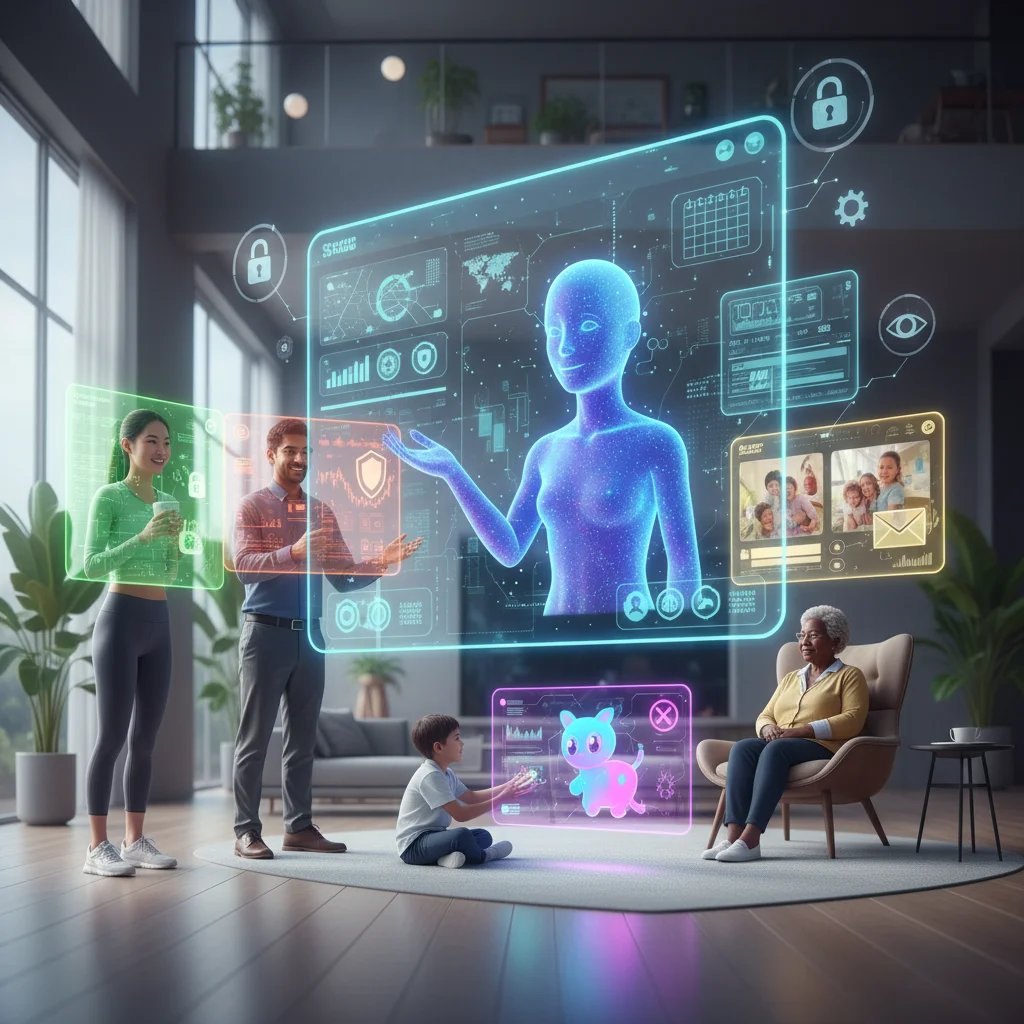
The year 2026 is rapidly approaching, and with it, a new era of technological advancement, particularly in the realm of Artificial Intelligence. Among the most transformative developments are the advancements in personalized AI assistants. These aren’t your typical voice-activated devices; we’re talking about sophisticated digital companions capable of anticipating needs, understanding nuanced emotions, and seamlessly integrating into every facet of our lives. However, as these intelligent systems become more entrenched, the critical question of privacy, especially for US consumers, looms larger than ever. This comprehensive exploration delves into the groundbreaking innovations we can expect by 2026 and the profound privacy implications that will inevitably follow.
The Evolution of Personalized AI Assistants: A Glimpse into 2026
The trajectory of AI development suggests that by 2026, personalized AI assistants will have moved beyond simple task execution to become truly proactive and predictive entities. Imagine an AI that not only manages your calendar but also suggests optimal routes based on real-time traffic and your stress levels, orders your favorite coffee precisely when you need it, and even curates personalized learning experiences based on your cognitive patterns. This level of personalization is not just about convenience; it’s about creating a truly symbiotic relationship between human and machine.
Advanced Contextual Understanding and Emotional Intelligence
One of the most significant leaps expected in personalized AI assistants is their enhanced ability to understand context and emotional cues. Current AI often struggles with ambiguity and relies heavily on explicit commands. By 2026, we anticipate AI systems that can infer intent from subtle vocal inflections, facial expressions (through integrated cameras in smart devices), and even physiological data from wearables. This emotional intelligence will allow assistants to offer more empathetic responses, tailor their communication style, and provide support that feels genuinely human-like. For instance, if your AI detects signs of stress, it might proactively suggest a calming activity, play soothing music, or even schedule a virtual therapy session.
Seamless Multi-Modal Interaction
The days of relying solely on voice commands will be a distant memory. 2026 will see personalized AI assistants engaging in seamless multi-modal interactions. This means effortlessly switching between voice, text, gesture, and even augmented reality interfaces. You might speak a command, then point to an object in your environment to provide further context, and the AI will respond with information overlaid onto your view. This fluidity will make interacting with AI feel less like using a tool and more like communicating with an intuitive partner.
Proactive and Predictive Capabilities
The hallmark of 2026’s personalized AI assistants will be their unparalleled proactive and predictive capabilities. Leveraging vast amounts of data – from your daily routines, preferences, health metrics, and even your social media activity – these AIs will anticipate your needs before you even articulate them. This could range from optimizing your home’s energy consumption based on your schedule and weather forecasts to suggesting relevant news articles, recommending new hobbies, or even identifying potential health issues based on subtle changes in your biometric data. The goal is to offload cognitive burden and enhance overall well-being.
Hyper-Personalized Learning and Development
Personalized AI assistants will also become invaluable tools for continuous learning and personal development. By analyzing your learning style, knowledge gaps, and career aspirations, these AIs can curate bespoke educational pathways, recommend relevant courses, and even act as personalized tutors. Imagine an AI that understands your struggle with a particular concept and adapts its teaching methods to suit your individual needs, providing real-time feedback and encouragement. This level of personalized education could revolutionize how we acquire new skills and knowledge.
The Intricate Web of Data: Fueling Personalization
The remarkable capabilities of these future personalized AI assistants are entirely dependent on data – vast amounts of highly personal data. To anticipate your needs, understand your emotions, and offer tailored recommendations, these AIs must collect, process, and analyze information about your life in unprecedented detail. This includes:
- Behavioral Data: How you interact with devices, apps, and services; your search history, browsing patterns, and online purchases.
- Biometric Data: Voice patterns, facial recognition data, heart rate, sleep patterns, and other health metrics from wearables.
- Location Data: Your movements, daily commutes, and places you frequent.
- Communication Data: The content of your messages, emails, and even voice calls (though ideally anonymized and encrypted).
- Preference Data: Your likes, dislikes, interests, and stated preferences across various platforms.
- Environmental Data: Information about your home environment, such as temperature, lighting, and smart appliance usage.
This extensive data collection is the engine of personalization, allowing the AI to build a comprehensive digital twin of your life. However, it also forms the bedrock of the most significant challenge: privacy.

Privacy Implications for US Consumers in 2026
The enhanced capabilities of personalized AI assistants bring with them a heightened level of privacy concerns for US consumers. The sheer volume and granularity of data being collected raise fundamental questions about ownership, control, security, and the potential for misuse. By 2026, these questions will be at the forefront of public discourse and regulatory debates.
Data Security and Breaches
The more data an AI assistant collects, the more attractive it becomes as a target for cybercriminals. A single data breach involving a highly personalized AI assistant could expose an individual’s entire digital life, from financial details and health records to intimate conversations and daily routines. The consequences of such breaches could be devastating, leading to identity theft, blackmail, and profound emotional distress. Companies developing these AIs will face immense pressure to implement state-of-the-art encryption, multi-factor authentication, and robust cybersecurity protocols, but no system is entirely impenetrable.
Consent and Transparency
The concept of informed consent becomes incredibly complex when dealing with personalized AI assistants that are constantly learning and inferring. Will consumers truly understand what data is being collected, how it’s being used, and with whom it’s being shared? The challenge lies in presenting this information in a way that is transparent, understandable, and actionable, rather than hidden within lengthy and opaque terms of service. By 2026, there will be a strong demand for standardized, user-friendly privacy dashboards that give consumers granular control over their data.
Algorithmic Bias and Discrimination
The data used to train personalized AI assistants can embed and amplify existing societal biases, leading to discriminatory outcomes. If an AI is trained on data that disproportionately represents certain demographics or contains biased information, its recommendations and decisions could inadvertently discriminate against certain groups. For example, a personalized health AI might offer suboptimal advice to individuals from underrepresented groups if its training data lacks sufficient diversity. Addressing algorithmic bias will require continuous auditing, diverse datasets, and ethical AI development practices.
Surveillance and Data Monetization
The potential for personalized AI assistants to be used for surveillance, either by corporations or governments, is a significant concern. The constant collection of personal data creates a detailed profile that could be exploited for targeted advertising, political manipulation, or even social scoring. Furthermore, companies might be tempted to monetize this rich data by selling it to third parties, further eroding consumer privacy. Clear regulations on data ownership, usage, and monetization will be crucial to prevent these abuses.
The Right to Be Forgotten and Data Portability
As our digital footprint grows with personalized AI assistants, the right to request the deletion of personal data (the ‘right to be forgotten’) and the ability to easily transfer data between services (data portability) become essential. Consumers should have the power to erase their digital past or switch AI providers without losing their personalized settings and data. Implementing these rights effectively across complex, interconnected AI ecosystems will be a major technical and legal challenge.
The Regulatory Landscape: US Responses to AI Privacy
In response to these growing privacy concerns, the US regulatory landscape is expected to evolve significantly by 2026. While the US currently lacks a single, comprehensive federal privacy law akin to Europe’s GDPR, the increasing ubiquity of personalized AI assistants will likely accelerate legislative efforts.
State-Level Regulations and Their Impact
States like California (CCPA/CPRA), Virginia (VCDPA), Colorado (CPA), and Utah (UCPA) have already enacted robust privacy laws. By 2026, we anticipate more states following suit, creating a patchwork of regulations that companies operating nationally will need to navigate. This fragmented approach can be challenging for businesses but offers consumers varying degrees of protection. The pressure for a federal standard will mount as personalized AI assistants become more powerful and pervasive.
Calls for Federal AI Privacy Legislation
There is a growing bipartisan recognition of the need for federal legislation specifically addressing AI and data privacy. By 2026, we could see proposals for a comprehensive federal privacy law that establishes national standards for data collection, usage, and security, with specific provisions for AI. This legislation would likely focus on consumer rights, including the right to access, correct, delete, and port data, as well as mandating transparency in AI decision-making processes and algorithmic auditing.
Sector-Specific Regulations and Ethical Guidelines
Beyond broad privacy laws, we can also expect sector-specific regulations. For instance, laws governing the use of personalized AI assistants in healthcare (HIPAA implications), finance, and education will likely be strengthened or introduced to protect sensitive data. Furthermore, governmental bodies and industry consortia will continue to develop ethical guidelines for AI development and deployment, emphasizing principles like fairness, accountability, and human oversight. These guidelines, while often not legally binding initially, can influence future legislation and industry best practices.
Enforcement and Accountability
The effectiveness of any privacy regulation hinges on its enforcement. By 2026, we will likely see increased resources allocated to regulatory bodies like the Federal Trade Commission (FTC) to investigate and penalize companies that violate AI privacy standards. There will also be a greater emphasis on corporate accountability, holding AI developers and deployers responsible for the ethical implications and privacy impact of their products. This could include requirements for Privacy by Design and Data Protection Impact Assessments (DPIAs) for AI systems.
Navigating the Future: Recommendations for Consumers and Developers
As we approach 2026, both consumers and developers of personalized AI assistants have crucial roles to play in shaping a future where innovation and privacy can coexist.
For Consumers: Taking Control of Your Digital Self
- Educate Yourself: Understand how your personalized AI assistants work, what data they collect, and what the privacy policies entail.
- Exercise Your Rights: Be aware of your data rights under existing and emerging privacy laws. Request access to your data, correction of inaccuracies, or deletion when appropriate.
- Configure Privacy Settings: Actively manage the privacy settings on your devices and AI assistants. Limit data collection where possible and opt out of unnecessary data sharing.
- Be Discerning: Choose AI services from companies with a strong track record of privacy protection and transparency.
- Advocate for Change: Support organizations and legislative efforts that champion stronger data privacy rights.
For Developers and Companies: Building Trust Through Ethical AI
- Privacy by Design: Integrate privacy considerations into every stage of AI development, from conception to deployment.
- Transparency and Clarity: Be crystal clear about data collection, usage, and sharing practices. Use plain language, not legal jargon.
- Robust Security: Invest heavily in state-of-the-art cybersecurity measures to protect sensitive user data.
- Minimizing Data Collection: Collect only the data that is strictly necessary for the AI to function effectively and provide genuine value to the user.
- Ethical AI Development: Actively work to identify and mitigate algorithmic bias. Prioritize fairness, accountability, and human oversight.
- User Control: Empower users with granular control over their data, allowing them to easily manage preferences and exercise their privacy rights.
- Compliance: Stay abreast of evolving state and federal privacy regulations and ensure full compliance.
Conclusion: A Balanced Future for Personalized AI Assistants
The advent of sophisticated personalized AI assistants by 2026 promises an unprecedented level of convenience, efficiency, and support in our daily lives. From hyper-contextual understanding to proactive assistance, these innovations have the potential to redefine human-computer interaction. However, this progress must be carefully balanced with robust privacy protections. For US consumers, the coming years will be a crucial period as legislators, technologists, and individuals grapple with the profound implications of living with increasingly intelligent and data-hungry AI companions.
The challenge is not to stifle innovation but to guide it towards an ethical and privacy-respecting future. By fostering transparency, empowering consumers, and enacting strong, enforceable regulations, we can harness the transformative power of personalized AI assistants while safeguarding the fundamental right to privacy. The conversation around personalized AI assistants and privacy is not just about technology; it’s about the kind of society we want to build – one where intelligence serves humanity, not the other way around.