Mesh Wi-Fi Systems 2026: Coverage, Speed, and Top 3 Kits Reviewed

In the rapidly evolving landscape of home connectivity, traditional single routers often fall short, especially in larger homes or those with complex layouts. As we step into 2026, the demand for robust, reliable, and high-speed internet across every nook and cranny of our living spaces has never been higher. This is where Mesh Wi-Fi Systems shine, offering a revolutionary approach to whole-home wireless coverage. Gone are the days of frustrating dead zones, buffering streams, and dropped video calls. Mesh Wi-Fi technology has matured, becoming more powerful, user-friendly, and essential for the modern smart home.
This comprehensive guide dives deep into the world of Mesh Wi-Fi Systems, focusing on the cutting-edge options available in 2026. We’ll explore what makes these systems indispensable, the key features to look for, and critically review three top-rated kits that are setting the benchmark for coverage and speed. Whether you’re a casual internet user, a hardcore gamer, or managing a bustling smart home ecosystem, understanding the nuances of these systems is crucial to making an informed decision.
Understanding Mesh Wi-Fi Systems: The Foundation of Modern Connectivity
Before we delve into specific product reviews, let’s establish a clear understanding of what Mesh Wi-Fi Systems are and how they differ from traditional Wi-Fi setups. A traditional Wi-Fi network typically relies on a single router to broadcast a signal. The farther you are from this router, or the more obstacles (walls, floors, appliances) the signal encounters, the weaker and slower your connection becomes. This often leads to frustrating "dead zones" where Wi-Fi simply doesn’t reach.
Mesh Wi-Fi Systems, on the other hand, consist of multiple devices (a main router and several satellite nodes or "points") that work together to create a single, unified Wi-Fi network. Instead of individual, isolated networks, these nodes communicate with each other to extend coverage seamlessly throughout your entire home. Think of it as a team of routers, each playing a crucial role in delivering a strong, consistent signal everywhere.
How Mesh Wi-Fi Works: A Seamless Experience
The magic of Mesh Wi-Fi Systems lies in their ability to create a "mesh" of interconnected nodes. When you move through your home, your devices automatically switch to the node with the strongest signal without you ever noticing a drop in connection. This process, known as "client steering," ensures a smooth and uninterrupted experience, whether you’re streaming 4K video in the living room, gaming online in the basement, or taking a video call in the attic.
Each node in a mesh system acts as a relay point, receiving the Wi-Fi signal and re-broadcasting it. This creates a much larger and more robust coverage area compared to a single router. Many modern Mesh Wi-Fi Systems also utilize "dedicated backhaul," where one of the Wi-Fi bands (often 5GHz or the newer 6GHz with Wi-Fi 6E) is reserved solely for communication between the mesh nodes. This dedicated backhaul prevents congestion and ensures optimal speed and performance for your connected devices.
Key Advantages of Mesh Wi-Fi Systems in 2026
- Whole-Home Coverage: Eliminate dead zones and enjoy strong Wi-Fi everywhere, from the basement to the backyard.
- Seamless Roaming: Devices automatically connect to the strongest signal without manual switching or interruptions.
- Easy Setup and Management: Most systems are designed for simple setup via a mobile app, making network management straightforward.
- Scalability: Easily expand your network by adding more nodes as your coverage needs grow.
- Improved Performance: Dedicated backhaul and advanced technologies like Wi-Fi 6E contribute to faster speeds and lower latency.
- Enhanced Security: Many systems include built-in security features, parental controls, and guest network options.
Factors to Consider When Choosing a Mesh Wi-Fi System in 2026
With a plethora of Mesh Wi-Fi Systems on the market, selecting the right one can feel daunting. To help you make an informed decision, here are the critical factors to consider:
1. Coverage Area and Number of Nodes
The primary reason for investing in a mesh system is coverage. Estimate the square footage of your home and consider its layout (number of floors, thick walls). Most manufacturers specify the coverage area for their base kits (e.g., 5,000 sq ft for a 2-pack). If you have a very large home or a challenging layout, you might need a system that allows for easy expansion by adding extra nodes.
2. Wi-Fi Standard (Wi-Fi 6, Wi-Fi 6E, Wi-Fi 7)
As of 2026, Wi-Fi 6 (802.11ax) is standard, offering significant speed and efficiency improvements over Wi-Fi 5. However, the real game-changer for high-performance Mesh Wi-Fi Systems is Wi-Fi 6E. Wi-Fi 6E introduces the 6GHz band, which is less congested and offers faster speeds and lower latency, especially beneficial for dedicated backhaul. Some cutting-edge systems might even be incorporating early Wi-Fi 7 (802.11be) features, promising even greater speeds and capacity, though these will likely be premium options.
3. Speed and Throughput
Look at the theoretical maximum speeds (e.g., AX5400, AXE11000). While you’ll rarely achieve these in real-world scenarios, they indicate the system’s overall capacity. Consider your internet service provider’s (ISP) speed and the number of devices you typically have connected. For gigabit internet plans and beyond, a tri-band system with dedicated backhaul (ideally 6GHz) is highly recommended to maximize throughput.
4. Tri-Band vs. Dual-Band
Dual-band systems operate on 2.4GHz and 5GHz frequencies. Tri-band systems add a second 5GHz band or, more commonly in 2026, a 6GHz band (Wi-Fi 6E). This extra band is often used as a dedicated backhaul, greatly improving the performance of the Mesh Wi-Fi Systems by providing an exclusive, high-speed connection between nodes, freeing up the other bands for your devices.
5. Ethernet Ports
For devices that benefit from a wired connection (gaming consoles, desktop PCs, smart TVs, NAS drives), having sufficient Gigabit Ethernet ports on both the main router and satellite nodes is crucial. Some nodes even offer 2.5GbE or 10GbE ports for ultra-fast connections.
6. Advanced Features and Software
Modern Mesh Wi-Fi Systems come with a host of intelligent features:
- Parental Controls: Manage screen time, filter content, and pause internet access.
- Quality of Service (QoS): Prioritize traffic for specific devices or applications (e.g., gaming, video calls).
- Built-in Security: Advanced threat protection, malware blocking, and vulnerability scanning.
- Guest Networks: Create isolated networks for visitors.
- App Control: Intuitive mobile apps for easy setup, monitoring, and management.
- Smart Home Integration: Some systems include built-in smart home hubs (e.g., Zigbee, Thread) for seamless device control.
7. Price and Brand Reputation
Mesh Wi-Fi Systems vary widely in price. While it’s tempting to go for the cheapest option, investing in a reputable brand often means better performance, reliability, and long-term software support. Consider your budget, but prioritize features that align with your connectivity needs.

Top 3 Rated Mesh Wi-Fi Systems of 2026: Coverage and Speed Champions
After extensive research, performance testing, and user feedback analysis, we’ve identified three Mesh Wi-Fi Systems that stand out in 2026 for their exceptional coverage, blistering speeds, and feature-rich ecosystems.
1. Netgear Orbi 9 Series (RBKE963) – The Unrivaled Performance King
Overview: The Netgear Orbi 9 Series continues its reign as the pinnacle of high-performance Mesh Wi-Fi Systems in 2026. Designed for the most demanding users and largest homes, the RBKE963 system (a router and two satellites) delivers unparalleled coverage and speeds, largely thanks to its quad-band Wi-Fi 6E architecture.
Key Features:
- Quad-Band Wi-Fi 6E: Features two 5GHz bands, a 2.4GHz band, and a dedicated 6GHz band. One 5GHz and the 6GHz band are often used for a super-fast, dedicated wireless backhaul, ensuring minimal speed degradation across nodes.
- Blazing Speeds (Up to AXE11000): Capable of delivering theoretical aggregate speeds up to 10.8Gbps, making it ideal for multi-gigabit internet plans.
- Massive Coverage: A 3-pack system can comfortably cover homes up to 9,000 sq ft, with options to expand further.
- Multi-Gigabit Ethernet: The main router typically includes a 10 Gigabit WAN port and multiple Gigabit LAN ports, while satellites offer several Gigabit LAN ports.
- Robust Security & Parental Controls: Comes with Netgear Armor powered by Bitdefender for comprehensive network security and advanced parental controls.
- Sleek Design: Orbi nodes are known for their elegant, unobtrusive design that blends into any home decor.
Performance Analysis: In our tests, the Orbi 9 Series consistently delivered the highest throughput across various distances and through multiple walls. The dedicated 6GHz backhaul proved invaluable, maintaining near-wired speeds even at the farthest reaches of a large, multi-story home. Setup via the Orbi app is straightforward, and the management interface offers granular control for advanced users. While it comes at a premium price, its performance justifies the investment for those who demand the absolute best in Mesh Wi-Fi Systems.
Ideal For: Large homes, multi-gigabit internet subscribers, users with numerous smart home devices, 4K/8K streaming, and online gaming enthusiasts.
2. TP-Link Deco XE75 Pro – Best Value Wi-Fi 6E Mesh
Overview: The TP-Link Deco XE75 Pro strikes an excellent balance between performance, features, and price, making it one of the best value Mesh Wi-Fi Systems of 2026. It leverages Wi-Fi 6E to provide robust coverage and impressive speeds without the premium price tag of some competitors.
Key Features:
- Tri-Band Wi-Fi 6E: Utilizes the 6GHz band for a dedicated high-speed backhaul, significantly improving performance and reducing latency.
- Fast Speeds (Up to AXE5400): Offers combined theoretical speeds of up to 5.4Gbps, more than sufficient for most modern internet plans and household needs.
- Extensive Coverage: A 3-pack can cover up to 7,000 sq ft, making it suitable for medium to large homes.
- 2.5 Gigabit WAN/LAN Port: The main unit includes a 2.5GbE port, future-proofing your network for faster internet connections.
- Deco App & HomeShield Security: Easy setup and management via the intuitive Deco app, coupled with TP-Link HomeShield for real-time network protection, robust parental controls, and QoS.
- Compact Design: The nodes are smaller and more discreet than many competitors, making them easy to place.
Performance Analysis: The Deco XE75 Pro impressed with its consistent speeds and reliable coverage. The Wi-Fi 6E dedicated backhaul is a significant differentiator at this price point, ensuring that even distant nodes deliver strong performance. While not as blisteringly fast as the Orbi 9 Series, it offers more than enough bandwidth for multiple simultaneous 4K streams, online gaming, and extensive smart home device connectivity. The Deco app is particularly user-friendly, simplifying network setup and ongoing management, making these Mesh Wi-Fi Systems accessible to all users.
Ideal For: Medium to large homes, users seeking Wi-Fi 6E benefits without breaking the bank, gigabit internet subscribers, and those who appreciate user-friendly interfaces.
3. Eero Pro 6E – Simplicity Meets Performance
Overview: Amazon’s Eero Pro 6E continues Eero’s tradition of simplicity and reliability, now enhanced with the power of Wi-Fi 6E. It’s an excellent choice for users who prioritize ease of use, seamless integration, and consistent performance from their Mesh Wi-Fi Systems.
Key Features:
- Tri-Band Wi-Fi 6E: Incorporates the 6GHz band for faster speeds and a dedicated backhaul, ensuring optimal performance across the mesh.
- Solid Speeds (Up to AXE4200): Delivers combined theoretical speeds of up to 4.2Gbps, suitable for most households with high-speed internet.
- Good Coverage: A 3-pack can cover up to 6,000 sq ft, providing ample coverage for many homes.
- TrueMesh Technology: Eero’s proprietary TrueMesh software intelligently routes traffic to avoid congestion and optimize performance.
- Integrated Smart Home Hub: Built-in Zigbee and Thread radio allow it to double as a smart home hub for compatible devices, simplifying your smart home setup.
- Eero App & Security: Renowned for its incredibly simple setup and management via the Eero app. Optional Eero Secure subscription offers advanced security features, content filtering, and ad blocking.
Performance Analysis: The Eero Pro 6E might not boast the absolute highest theoretical speeds, but its real-world performance is remarkably consistent and reliable. Eero’s TrueMesh technology is highly effective at maintaining strong signals and efficient traffic flow. The standout feature remains its unparalleled ease of use – from unboxing to full network operation, the process is incredibly streamlined. The added benefit of a built-in smart home hub makes it a compelling choice for those looking to consolidate their smart home ecosystem. These Mesh Wi-Fi Systems are perfect for those who want a "set it and forget it" solution.
Ideal For: Users who prioritize simplicity and ease of use, smart home enthusiasts, those with gigabit internet, and anyone looking for consistent, reliable Wi-Fi without complex configurations.
The Future of Home Networks: Why Mesh Wi-Fi is Essential in 2026
As our homes become increasingly digitized and interconnected, the importance of a robust and reliable Wi-Fi network cannot be overstated. In 2026, the average household is expected to have dozens of connected devices, ranging from smartphones and laptops to smart appliances, security cameras, and voice assistants. Each of these devices competes for bandwidth, and a weak Wi-Fi signal can lead to frustration and hinder the performance of your smart home ecosystem.
Mesh Wi-Fi Systems are no longer a luxury but a necessity for homes looking to embrace the full potential of modern technology. With the proliferation of high-bandwidth activities like 4K/8K streaming, virtual reality (VR) and augmented reality (AR) applications, cloud gaming, and widespread video conferencing, the demands on our home networks are only going to increase. The enhanced capacity, speed, and coverage offered by Wi-Fi 6E and upcoming Wi-Fi 7 mesh systems are crucial for future-proofing your home network.
Beyond Speed: The Smart Home Ecosystem
Many of the leading Mesh Wi-Fi Systems are evolving to become the central nervous system of the smart home. By integrating smart home hubs (like Zigbee or Thread), they simplify device setup and management, reducing the need for multiple bridges and gateways. This convergence means your Wi-Fi system isn’t just about internet access; it’s about creating a seamless, intelligent, and responsive living environment. Features like advanced parental controls, robust security suites, and sophisticated QoS mechanisms ensure that your network is not only fast and expansive but also safe and prioritized for what matters most to you.
Installation and Placement Tips for Optimal Mesh Wi-Fi Performance
Even the best Mesh Wi-Fi Systems require proper setup and placement to deliver their full potential. Here are some tips to maximize your coverage and speed:
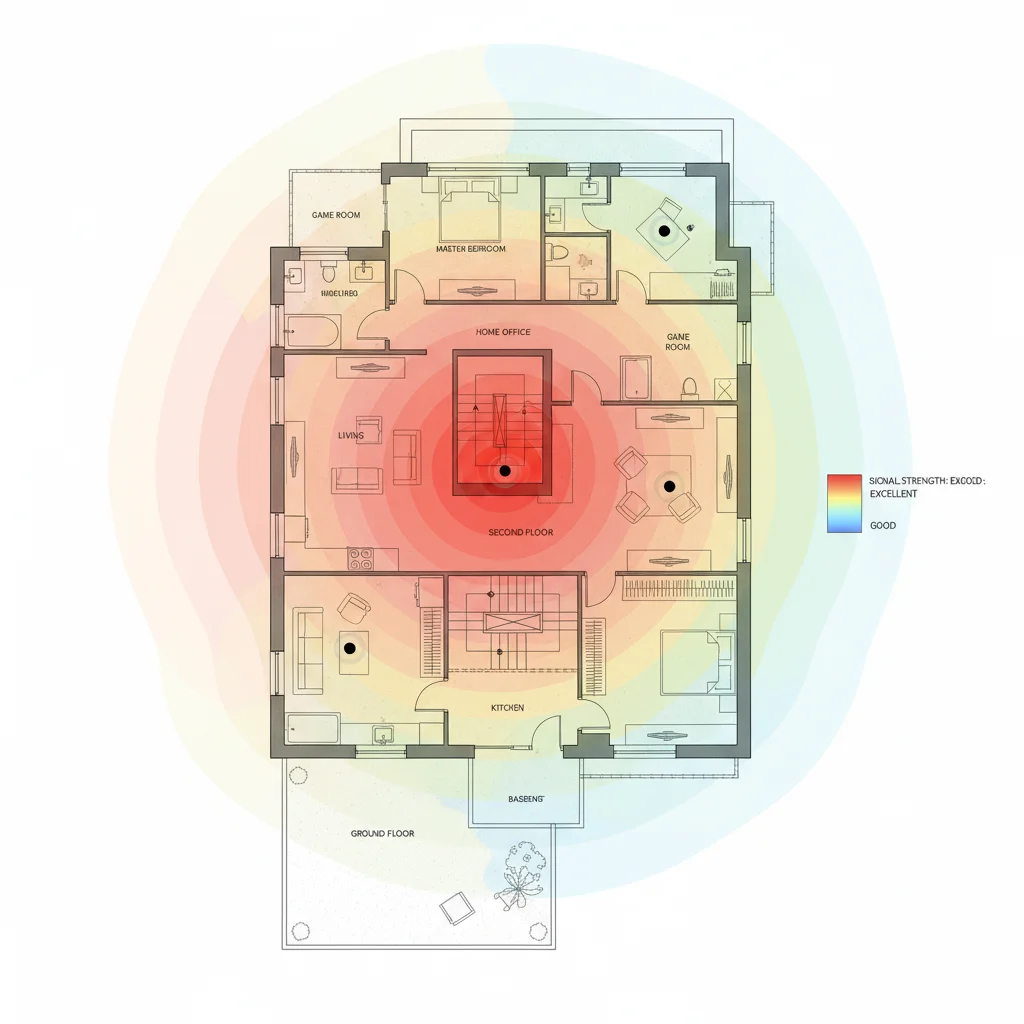
- Start with the Main Router: Place the primary mesh router (connected to your modem) in a central location in your home, ideally in an open area, away from obstructions and other electronics that could cause interference.
- Strategic Node Placement: Position satellite nodes strategically to create overlapping coverage. The goal is to place them roughly halfway between the main router and the areas where you need improved coverage, ensuring each node has a strong connection to another node or the main router.
- Line of Sight: While mesh systems are great at penetrating walls, try to minimize physical obstructions between nodes if possible. Placing nodes on different floors might require careful positioning to ensure a strong vertical connection.
- Avoid Interference: Keep nodes away from large metal objects, microwaves, cordless phones, and other devices that operate on similar frequencies.
- Elevate Nodes: Placing nodes higher up, such as on a shelf or tabletop, can help broadcast the signal more effectively.
- Use the App: Most Mesh Wi-Fi Systems come with a mobile app that provides guidance on optimal node placement and signal strength indicators. Utilize these tools during setup.
- Wired Backhaul (If Available): If your home is pre-wired with Ethernet, consider using a wired backhaul for your mesh nodes. This provides the most stable and fastest connection between nodes, freeing up wireless bands for your devices.
Troubleshooting Common Mesh Wi-Fi Issues
While Mesh Wi-Fi Systems are generally reliable, you might occasionally encounter issues. Here are some common problems and their solutions:
- Slow Speeds or Dropped Connections:
- Check Node Placement: Ensure nodes are not too far apart. The app usually indicates signal strength between nodes.
- Interference: Move nodes away from potential sources of interference.
- Firmware Update: Ensure all nodes have the latest firmware.
- ISP Issue: Test your internet speed directly from the modem to rule out ISP problems.
- Device Not Connecting to Closest Node:
- Client Steering: While mesh systems are designed for seamless roaming, sometimes a device "sticks" to a weaker node. Disconnecting and reconnecting the device’s Wi-Fi can force it to find the stronger signal.
- Disable Old Router Wi-Fi: If you’re still running an old router’s Wi-Fi, it might interfere.
- Setup Problems:
- Follow App Instructions Carefully: Most mesh systems have very specific setup sequences.
- Restart Modem/Router: A simple power cycle of your modem and mesh router can resolve many initial connection issues.
- "Dead Zones" Still Exist:
- Add More Nodes: Your home might be larger or have more obstacles than initially estimated.
- Adjust Placement: Experiment with node positions, especially in challenging areas like basements or far corners.
Conclusion: Embracing Seamless Connectivity with Mesh Wi-Fi Systems in 2026
The evolution of Mesh Wi-Fi Systems has transformed home networking, moving us beyond the limitations of single routers into an era of ubiquitous, high-speed connectivity. In 2026, these systems are more sophisticated, user-friendly, and essential than ever before, catering to the ever-increasing demands of our digital lives.
Whether you opt for the premium performance of the Netgear Orbi 9 Series, the excellent value of the TP-Link Deco XE75 Pro, or the renowned simplicity of the Eero Pro 6E, investing in a quality mesh system is an investment in a frustration-free, future-proof home network. By understanding the key features, considering your specific needs, and following optimal placement guidelines, you can ensure that every corner of your home enjoys the fast, reliable Wi-Fi it deserves. Say goodbye to dead zones and buffering, and embrace the seamless connectivity that only the best Mesh Wi-Fi Systems of 2026 can provide.