Top 5 Smart Home Hubs 2026: In-Depth US Review

The Top 5 Smart Home Hubs of 2026: An In-Depth Review for US Consumers
The year 2026 marks a significant evolution in smart home technology. As our homes become increasingly connected, the need for a central, intelligent command center – a smart home hub – has never been more critical. For US consumers, navigating the myriad of options available can be daunting. This comprehensive review aims to cut through the noise, offering an in-depth look at the Smart Home Hubs 2026 that truly stand out in terms of performance, compatibility, security, and user experience.
A smart home hub acts as the brain of your connected ecosystem, allowing disparate devices to communicate and work together seamlessly. Without a robust hub, your smart lights might not talk to your smart thermostat, and your security cameras might operate in isolation. In 2026, the best smart home hubs are not just bridges; they are intelligent orchestrators, capable of complex automation, advanced security protocols, and intuitive control, all while prioritizing user privacy.
This article will delve into the five leading Smart Home Hubs 2026, examining their core features, connectivity options, ecosystem compatibility, and overall value proposition for the American household. Whether you’re a smart home novice or a seasoned enthusiast looking to upgrade, our insights will guide you to make an informed decision for your digital abode.
Understanding the Evolving Landscape of Smart Home Hubs 2026
Before we dive into individual products, it’s crucial to understand what defines a top-tier smart home hub in 2026. The market has matured considerably, moving beyond simple device aggregation. Today’s leading hubs offer:
- Broad Protocol Support: Essential for compatibility across a wide range of devices. This includes Wi-Fi, Bluetooth, Zigbee, Z-Wave, Thread, and Matter. Matter, in particular, has become a game-changer, promising universal compatibility.
- Advanced Automation Capabilities: Beyond simple ‘if-then’ routines, hubs now support complex, multi-trigger automations based on presence detection, environmental sensors, time of day, and even AI-driven predictions.
- Robust Security Features: With more devices connected, cybersecurity is paramount. Top hubs offer end-to-end encryption, regular security updates, and local processing options to protect user data.
- Intuitive User Interface: Control should be effortless, whether through a dedicated app, voice commands, or a physical control panel.
- Edge Computing and AI Integration: Processing data locally reduces latency and improves privacy. AI assists in learning user habits and optimizing energy consumption.
- Energy Management: Integration with smart meters and energy-saving routines is becoming a standard feature, helping consumers reduce their carbon footprint and utility bills.
- Voice Assistant Integration: Seamless integration with popular voice assistants like Amazon Alexa, Google Assistant, and Apple Siri is expected.
These criteria form the backbone of our evaluation, ensuring that the recommended Smart Home Hubs 2026 are not just current but also future-proof.
1. Samsung SmartThings Hub (2026 Edition)
The Samsung SmartThings ecosystem has long been a dominant player in the smart home arena, and its 2026 iteration solidifies its position as a top contender for the title of best Smart Home Hubs 2026. Samsung has significantly refined its hardware and software, focusing on enhanced reliability, broader compatibility, and a more streamlined user experience.
Key Features and Improvements:
- Matter and Thread Native: The 2026 SmartThings Hub comes with native support for Matter and Thread protocols, making it incredibly versatile. This means seamless integration with virtually any Matter-certified device, regardless of brand, a massive leap forward for smart home interoperability.
- Enhanced Processing Power: A more powerful processor allows for faster response times and more complex local automations, reducing reliance on cloud services for critical routines. This improves both speed and privacy.
- Improved Zigbee and Z-Wave Radios: Enhanced radios provide a stronger, more reliable connection to a wider range of Zigbee and Z-Wave devices, extending the reach and stability of your smart home network.
- Intuitive SmartThings App: The companion app has undergone a major redesign, offering a cleaner interface, easier device setup, and more powerful automation creation tools. Users can now build intricate routines with a drag-and-drop interface.
- Advanced Energy Monitoring: SmartThings now offers deeper integration with smart energy meters and individual device energy monitoring, allowing users to track consumption and set up energy-saving automations.
- Samsung Ecosystem Integration: For those with Samsung appliances, TVs, and smartphones, the integration is unparalleled, creating a cohesive and intuitive smart living experience.
Pros for US Consumers:
- Extensive device compatibility due to Matter, Thread, Zigbee, and Z-Wave support.
- Robust automation capabilities with local processing.
- Strong security features and privacy controls.
- Excellent integration with Samsung’s vast product ecosystem.
- User-friendly app for both beginners and advanced users.
Cons:
- Initial setup can still be complex for users new to smart home technology.
- Some advanced features may require a learning curve.
The Samsung SmartThings Hub (2026 Edition) is an excellent choice for US consumers seeking a powerful, versatile, and future-proof smart home hub capable of managing a diverse array of devices and complex automations. Its commitment to Matter and Thread makes it a wise investment for years to come.
2. Apple HomePod Hub (Next Generation)
Apple’s foray into the smart home hub market has been characterized by its emphasis on security, privacy, and ease of use, particularly for those deeply embedded in the Apple ecosystem. The next-generation HomePod Hub, often simply referred to as the HomePod (2026), builds upon its predecessors’ strengths while addressing key limitations, positioning it as a strong contender among the Smart Home Hubs 2026.
Key Features and Improvements:
- Integrated with Apple HomeKit and Matter: The HomePod Hub serves as a central HomeKit hub, now with full Matter support, significantly broadening its device compatibility beyond just HomeKit-certified products. This is a crucial step for Apple in expanding its smart home reach.
- Enhanced Siri Intelligence: Siri has received substantial upgrades, offering more natural language processing, better contextual understanding, and faster response times for smart home commands. It can now handle more complex multi-step requests.
- Advanced Audio and Spatial Awareness: Beyond its hub capabilities, the HomePod maintains its reputation for superior audio quality. New spatial awareness features allow it to optimize sound output based on room acoustics, and also detect occupancy more accurately for automation triggers.
- UWB (Ultra-Wideband) for Precision: Integration of UWB technology enables precise location tracking of UWB-enabled devices (like iPhones) for highly accurate presence-based automations, such as adjusting lighting as you walk from one room to another.
- Unmatched Privacy and Security: Apple continues to prioritize user privacy with on-device processing for many requests and strong encryption for all communications, appealing strongly to privacy-conscious consumers.
- Thread Border Router: The HomePod acts as a Thread border router, enabling reliable and low-power communication for Thread-enabled smart devices, enhancing network stability and efficiency.
Pros for US Consumers:
- Seamless integration for Apple users with HomeKit and Matter.
- Superior privacy and security compared to many competitors.
- Excellent audio quality and enhanced Siri capabilities.
- Simple setup and intuitive control via the Home app.
- UWB technology for advanced presence detection.
Cons:
- Primarily caters to the Apple ecosystem; less appealing for Android or Windows users.
- Higher price point compared to some other hubs.
- Limited physical ports for wired connections.
For US consumers already invested in Apple’s ecosystem, the next-generation HomePod Hub is arguably the most polished and secure option among the Smart Home Hubs 2026, offering a premium experience with robust privacy features and expanding compatibility.
3. Amazon Echo Show 10 (4th Gen)
Amazon’s Echo Show line has always blended smart display functionality with smart home control, and the 4th generation Echo Show 10 (2026) elevates this concept, making it a powerful and visually engaging smart home hub. This device is particularly strong for those who want a central visual control panel and deep integration with Amazon’s vast Alexa ecosystem.
Key Features and Improvements:
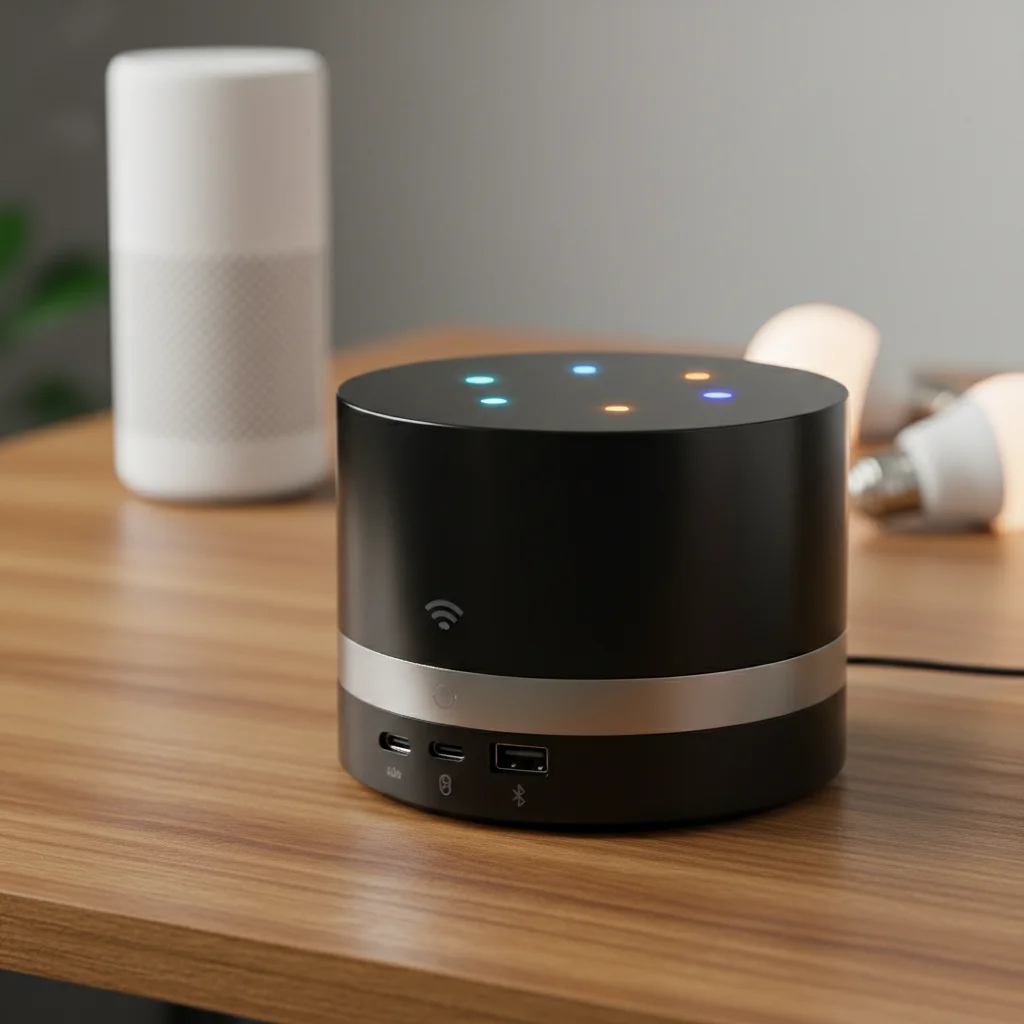
- Integrated Smart Home Hub (Zigbee, Thread, Matter): The 4th Gen Echo Show 10 includes a built-in Zigbee hub and acts as a Thread border router, now with full Matter controller capabilities. This makes it a highly capable central point for a wide range of smart devices.
- Dynamic Display and Camera: The signature rotating screen automatically turns to face you during video calls or while displaying information, enhancing interaction. The improved camera offers enhanced security monitoring and video calls.
- Advanced Alexa AI: Alexa’s intelligence has been refined, offering more nuanced understanding, personalized routines, and proactive suggestions based on learned habits.
- Enhanced Local Processing: More smart home commands and routines are processed locally, leading to faster execution and improved reliability, even if your internet connection is temporarily down.
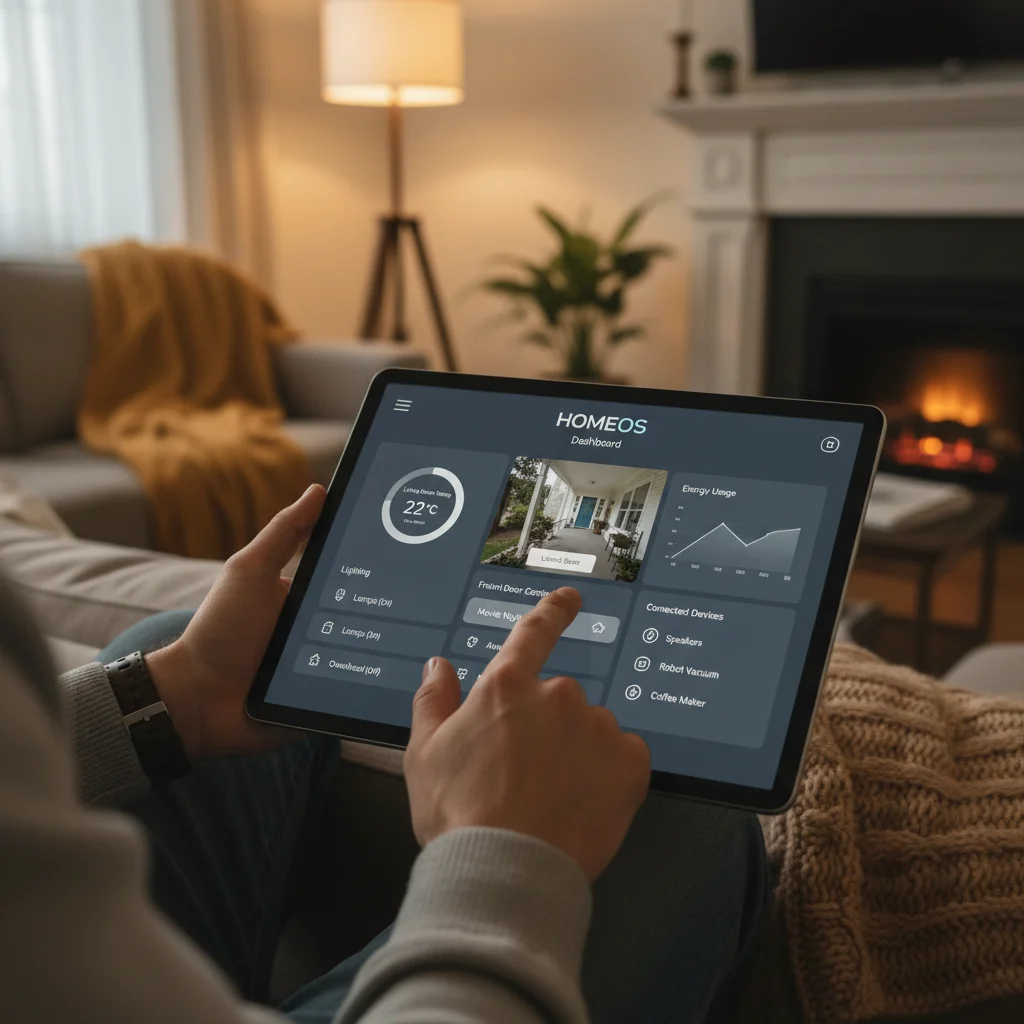
- Rich Visual Dashboard: The large display provides a comprehensive visual dashboard for your smart home, allowing you to see camera feeds, control lights, adjust thermostats, and manage routines with a touch.
- Energy Dashboard: A new, dedicated energy dashboard helps users monitor and manage their home’s energy consumption, with tips and automations to save power.
Pros for US Consumers:
- Excellent visual control panel for the smart home.
- Broad compatibility with Zigbee, Thread, and Matter devices.
- Deep integration with the Amazon Alexa ecosystem and services.
- Useful for video calls and entertainment in addition to smart home control.
- Improved local processing for reliability.
Cons:
- The rotating screen might not appeal to everyone.
- Privacy concerns for some due to Amazon’s data collection practices (though improving).
- Requires a consistent power source.
For US consumers looking for a visually rich, voice-controlled smart home hub that deeply integrates with Alexa and offers extensive device compatibility, the Amazon Echo Show 10 (4th Gen) is a compelling choice among the Smart Home Hubs 2026.
4. Hubitat Elevation C-9
The Hubitat Elevation has carved out a niche for itself among smart home enthusiasts who prioritize local control, privacy, and advanced customization. The C-9 model (2026) continues this tradition, offering significant hardware and software upgrades that solidify its position as a go-to choice for those seeking unparalleled control and robust performance without cloud dependency.
Key Features and Improvements:
- Primary Local Processing Hub: Hubitat’s core strength remains its commitment to local processing. Almost all automations and device commands run on the hub itself, ensuring lightning-fast response times and continued functionality even without an internet connection. This is a major differentiator for security and reliability.
- Enhanced Radios (Zigbee, Z-Wave Plus, Thread/Matter): The C-9 features state-of-the-art Zigbee and Z-Wave Plus radios for superior range and reliability. Crucially, it now includes a Thread radio and acts as a Matter controller, allowing it to integrate with the latest smart home devices.
- Powerful Automation Engine (Rule Machine 5.0): Hubitat’s Rule Machine is renowned for its depth and flexibility. Version 5.0 introduces an even more intuitive interface while retaining the ability to create incredibly complex, conditional automations.
- Robust Community Support: Hubitat boasts a highly active and knowledgeable user community, providing extensive documentation, custom drivers, and peer-to-peer support, which is invaluable for advanced users.
- Privacy-Focused Design: With minimal reliance on cloud services, Hubitat offers a higher degree of privacy, as your data and device behaviors largely stay within your home network.
- Compact and Reliable Hardware: The C-9 maintains a compact form factor with improved internal components for long-term stability and performance.
Pros for US Consumers:
- Unmatched local processing for speed, reliability, and privacy.
- Extensive support for Zigbee, Z-Wave, Thread, and Matter.
- Highly customizable and powerful automation capabilities.
- Strong community support and active development.
- Ideal for advanced users and those prioritizing data privacy.
Cons:
- Steeper learning curve for beginners compared to more consumer-friendly hubs.
- User interface, while improved, is less polished than some competitors.
- Lacks built-in voice assistant (relies on integration with external devices).
For US consumers who are technically inclined, value local control above all else, and demand the highest level of customization and privacy, the Hubitat Elevation C-9 is an exceptional choice among the Smart Home Hubs 2026. It offers a powerful foundation for a truly personalized smart home.
5. Google Nest Hub Max (3rd Gen)
Google’s Nest Hub Max has always been a strong contender in the smart display and smart home control space, and the 3rd generation (2026) consolidates its position as a versatile and intelligent hub, particularly for users deeply integrated into the Google ecosystem. It stands out for its proactive assistance, visual smart home control, and tight integration with Google Assistant.
Key Features and Improvements:
- Integrated Smart Home Hub (Zigbee, Thread, Matter): The 3rd Gen Nest Hub Max includes a built-in Zigbee radio and functions as a Thread border router and Matter controller, significantly expanding its compatibility with a wide array of smart home devices beyond just Google-branded ones.
- Enhanced Google Assistant: Google Assistant has become even more sophisticated, offering improved conversational abilities, proactive suggestions, and more accurate voice control for complex smart home routines.
- Improved Facial Recognition and Gesture Control: The front-facing camera now features more advanced facial recognition for personalized experiences and improved gesture controls for quick interactions without touch or voice.
- Ambient Computing Features: The device intelligently adapts to your environment, offering relevant information, displaying family photos, or suggesting routines based on time of day, presence, and learned habits.
- Seamless Google Ecosystem Integration: For users of Google services (Gmail, Calendar, Photos, YouTube) and Android devices, the integration is seamless, creating a highly cohesive digital experience.
- Sound Detection for Security: New sound detection capabilities can identify unusual noises (like glass breaking or smoke alarms) and send alerts, enhancing its role as a security device.
Pros for US Consumers:
- Excellent visual smart home control and dashboard.
- Deep integration with Google Assistant and Google services.
- Broad compatibility with Zigbee, Thread, and Matter devices.
- Proactive and intelligent ambient computing features.
- Useful for video calls, entertainment, and family organization.
Cons:
- Relies heavily on cloud processing for many functions.
- Privacy concerns for some users regarding Google’s data practices.
- Requires a Google account for full functionality.
The Google Nest Hub Max (3rd Gen) is an ideal choice for US consumers who want a visually appealing, voice-controlled smart home hub that offers proactive assistance and integrates seamlessly with the Google ecosystem. Its expanded compatibility with Matter and Thread makes it a strong all-rounder among the Smart Home Hubs 2026.
Key Considerations When Choosing Your Smart Home Hub in 2026
Selecting the right smart home hub isn’t a one-size-fits-all decision. As you consider the top Smart Home Hubs 2026, keep the following factors in mind:
Ecosystem Preference:
Are you an Apple, Google, or Amazon loyalist? Or do you prefer an open, platform-agnostic approach? Your existing devices and preferences will heavily influence the best hub for you. Apple HomeKit, Google Home, and Amazon Alexa each offer unique strengths and integrations.
Device Compatibility:
Beyond brand loyalty, consider the specific smart devices you currently own or plan to purchase. Ensure the hub supports the necessary communication protocols (Zigbee, Z-Wave, Thread, Matter, Wi-Fi, Bluetooth). Matter support in 2026 is almost a non-negotiable for future-proofing.
Automation Complexity:
How intricate do you want your smart home routines to be? Some hubs offer simple ‘if-then’ rules, while others provide powerful, multi-conditional programming interfaces. Hubitat, for example, excels in this area for advanced users.
Privacy and Security:
This is a critical concern. Evaluate each hub’s approach to data privacy, local processing capabilities, and encryption standards. If privacy is paramount, hubs with strong local control tend to be favored.
User Interface and Control:
Do you prefer voice control, a dedicated app, a physical control panel, or a combination? Smart displays like the Echo Show and Nest Hub Max offer visual dashboards, while others rely primarily on mobile apps.
Future-Proofing:
Technology evolves rapidly. A hub that supports emerging standards like Matter and Thread is more likely to remain relevant and compatible with new devices launched years down the line. Look for regular software updates and a commitment to new protocols.
Budget:
Smart home hubs vary in price. While it’s tempting to opt for the cheapest option, consider the long-term value, compatibility, and features offered. Investing a bit more upfront can save you headaches and limitations later.
The Role of Matter in Smart Home Hubs 2026
It’s impossible to discuss Smart Home Hubs 2026 without emphasizing the transformative impact of Matter. This new, open-source connectivity standard aims to unify the smart home, allowing devices from different manufacturers to communicate seamlessly. In 2026, a truly effective smart home hub will act as a Matter controller and often a Thread border router.
Why is this so important? Historically, smart homes have been fragmented. A Philips Hue light wouldn’t easily talk to a Ring doorbell without a specific integration or a brand-specific hub. Matter breaks down these silos, promising easier setup, greater reliability, and more choices for consumers. When selecting a hub, native Matter support is a strong indicator of future compatibility and ease of expansion for your smart home ecosystem.
Installation and Setup: Getting Started with Your Smart Home Hub
Once you’ve chosen your ideal smart home hub from our Smart Home Hubs 2026 list, the next step is installation and setup. While specific steps vary by device, some general best practices apply:
- Placement is Key: Position your hub centrally in your home, away from large metal objects or other wireless interference, to maximize its range for Zigbee, Z-Wave, and Thread devices.
- Power Up: Connect the hub to power and, if applicable, to your router via Ethernet for the most stable connection.
- Download the App: Install the companion app on your smartphone or tablet. This is usually where the initial setup wizard guides you.
- Create an Account: You’ll likely need to create an account with the hub’s manufacturer (e.g., Samsung, Google, Amazon, Apple, Hubitat).
- Connect to Wi-Fi: Follow the on-screen instructions to connect your hub to your home Wi-Fi network.
- Add Devices: Begin pairing your smart devices. Most apps will walk you through the process, which often involves putting the device into pairing mode and having the hub discover it.
- Configure Rooms and Zones: Organize your devices into logical rooms or zones within the app for easier management.
- Create Automations: Start building your first routines and automations. Begin with simple ones (e.g., ‘turn on lights at sunset’) and gradually move to more complex scenarios.
- Explore Advanced Features: Once comfortable, delve into advanced settings, custom dashboards, and third-party integrations to unlock the full potential of your smart home.
Remember that patience is a virtue during the initial setup. While Smart Home Hubs 2026 are more user-friendly than ever, a complex smart home can still require some fine-tuning.
The Future of Smart Home Hubs
Looking beyond 2026, the evolution of smart home hubs promises even more intelligence and autonomy. We can anticipate:
- Deeper AI Integration: Hubs will become even more predictive, anticipating needs based on learned patterns, environmental data, and biometric feedback (e.g., adjusting temperature based on your sleep cycle).
- Enhanced Edge AI: Further processing will move from the cloud to the device, improving privacy, speed, and reliability.
- Augmented Reality (AR) Control: Imagine pointing your phone at a light fixture and instantly controlling it via an AR overlay, or seeing real-time energy consumption data superimposed on your appliances.
- Self-Healing Networks: Smart home networks will become more resilient, automatically detecting and resolving connectivity issues.
- Energy Autonomy: Hubs will play a central role in managing home energy, integrating with solar panels, battery storage, and smart grids to optimize consumption and even sell excess energy back to the grid.
- Proactive Security: Beyond simple alerts, hubs will employ advanced AI to analyze patterns and proactively deter security threats before they escalate.
The trajectory for Smart Home Hubs 2026 and beyond is one of increased intelligence, seamless integration, and a focus on creating truly intuitive and responsive living environments.
Conclusion: Choosing the Best Smart Home Hub for Your US Home in 2026
The landscape of Smart Home Hubs 2026 offers an exciting array of sophisticated options for US consumers. Whether you prioritize deep ecosystem integration, unparalleled local control, visual dashboards, or robust privacy, there’s a hub designed to meet your needs.
The Samsung SmartThings Hub (2026 Edition) shines with its broad compatibility and refined app. The Apple HomePod Hub (Next Generation) is ideal for Apple loyalists seeking premium privacy and seamless integration. The Amazon Echo Show 10 (4th Gen) offers a powerful visual and voice-controlled experience, while the Google Nest Hub Max (3rd Gen) brings intelligent ambient computing to the forefront. For the advanced user who demands ultimate local control and customization, the Hubitat Elevation C-9 remains an unbeatable choice.
Ultimately, the best smart home hub for you will depend on your personal preferences, existing devices, and long-term smart home goals. By carefully considering the features, pros, and cons of these top contenders, you can confidently select a smart home hub that will serve as the intelligent foundation of your connected home for years to come.
Embrace the future of smart living with one of these leading Smart Home Hubs 2026, and transform your house into a truly intelligent and responsive home.