Quantum Cryptography’s Impact on US National Security by 2026
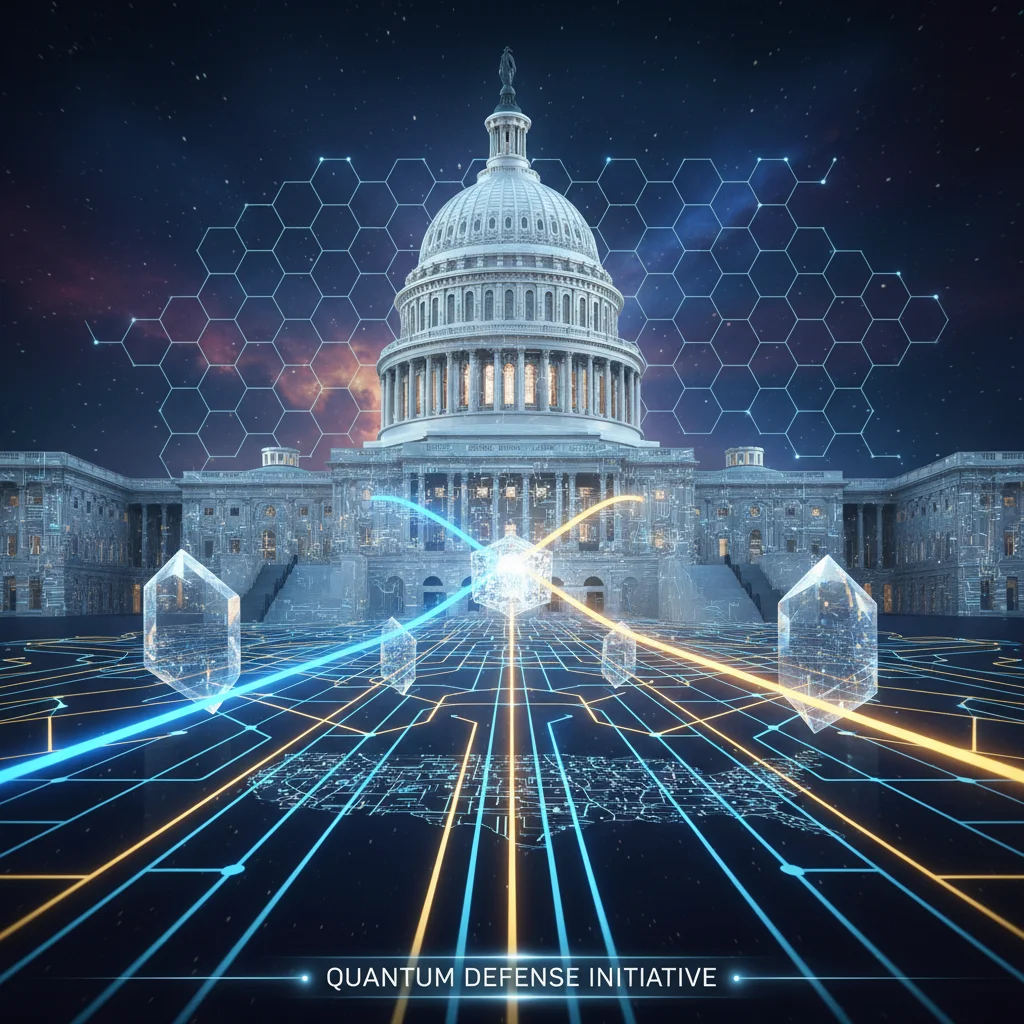
The Imperative of Quantum Cryptography for US National Security by 2026
The digital age, characterized by an unprecedented reliance on interconnected systems and vast data flows, has fundamentally reshaped the landscape of national security. As we rapidly approach 2026, the United States faces a looming technological revolution that promises to redefine the very foundations of digital security: quantum computing. While offering immense computational power for solving complex problems, quantum computers also pose an existential threat to current cryptographic standards. This article delves into the profound and multifaceted impact of quantum cryptography national security in the US by 2026, exploring the challenges, opportunities, and strategic imperatives for safeguarding critical infrastructure, intelligence, and defense capabilities.
The race for quantum supremacy is not merely an academic pursuit; it is a geopolitical contest with profound implications for global power dynamics. Nations investing heavily in quantum research understand that the ability to break or create unbreakable codes will be a decisive advantage in intelligence gathering, military operations, and economic competition. For the US, maintaining its technological edge and ensuring the integrity of its national security apparatus hinges on a proactive and comprehensive strategy for embracing and implementing quantum-resistant solutions.
Understanding the Quantum Threat to Current Cryptography
At the heart of the quantum security dilemma lies the potential of quantum computers to render conventional cryptographic algorithms obsolete. Modern encryption, such as RSA and Elliptic Curve Cryptography (ECC), relies on the computational difficulty of factoring large numbers or solving discrete logarithm problems. These mathematical challenges are practically insurmountable for even the most powerful classical supercomputers. However, quantum algorithms, notably Shor’s algorithm, can theoretically solve these problems exponentially faster, breaking much of the public-key infrastructure (PKI) that secures everything from online banking and email to classified government communications and military secrets.
The timeline for the development of a fault-tolerant, large-scale quantum computer capable of executing Shor’s algorithm effectively remains a subject of debate among experts. Estimates vary, but many anticipate that such a machine could emerge within the next decade, potentially even by 2026. This looming ‘Q-Day’ necessitates urgent action, as the data encrypted today, if intercepted and stored, could be decrypted in the future by a quantum adversary. This threat, known as ‘harvest now, decrypt later,’ underscores the immediate need for transitioning to quantum-resistant encryption.
Beyond breaking existing encryption, quantum computers could also compromise hashing functions and symmetric key algorithms, albeit with greater computational effort for the latter. The implications are staggering: compromised communications, stolen intellectual property, disrupted critical infrastructure, and a complete erosion of trust in digital systems. The integrity of US national security, therefore, depends on its ability to anticipate and mitigate these quantum threats.
The Promise of Quantum Cryptography National Security Solutions
While quantum computing poses a threat, quantum mechanics also offers solutions. Quantum cryptography national security encompasses two primary approaches to counter the quantum threat: Quantum Key Distribution (QKD) and Post-Quantum Cryptography (PQC).
Quantum Key Distribution (QKD): Unbreakable Communication
QKD leverages the fundamental principles of quantum mechanics, such as superposition and entanglement, to establish a cryptographically secure key between two parties. Unlike classical encryption, QKD’s security is not based on computational difficulty but on the laws of physics. Any attempt by an eavesdropper to intercept the quantum key automatically alters its quantum state, detectable by the communicating parties. This ‘eavesdropping detection’ mechanism makes QKD theoretically immune to any computational attack, including those from quantum computers.
By 2026, QKD is expected to see increased deployment in highly sensitive government and military applications where absolute security is paramount. Its primary use case involves securing point-to-point communication links for transmitting classified information, controlling critical infrastructure, or protecting strategic command and control systems. The US government, particularly agencies like the National Security Agency (NSA) and the Department of Defense (DoD), is actively exploring and investing in QKD technologies to secure their most vital communications.
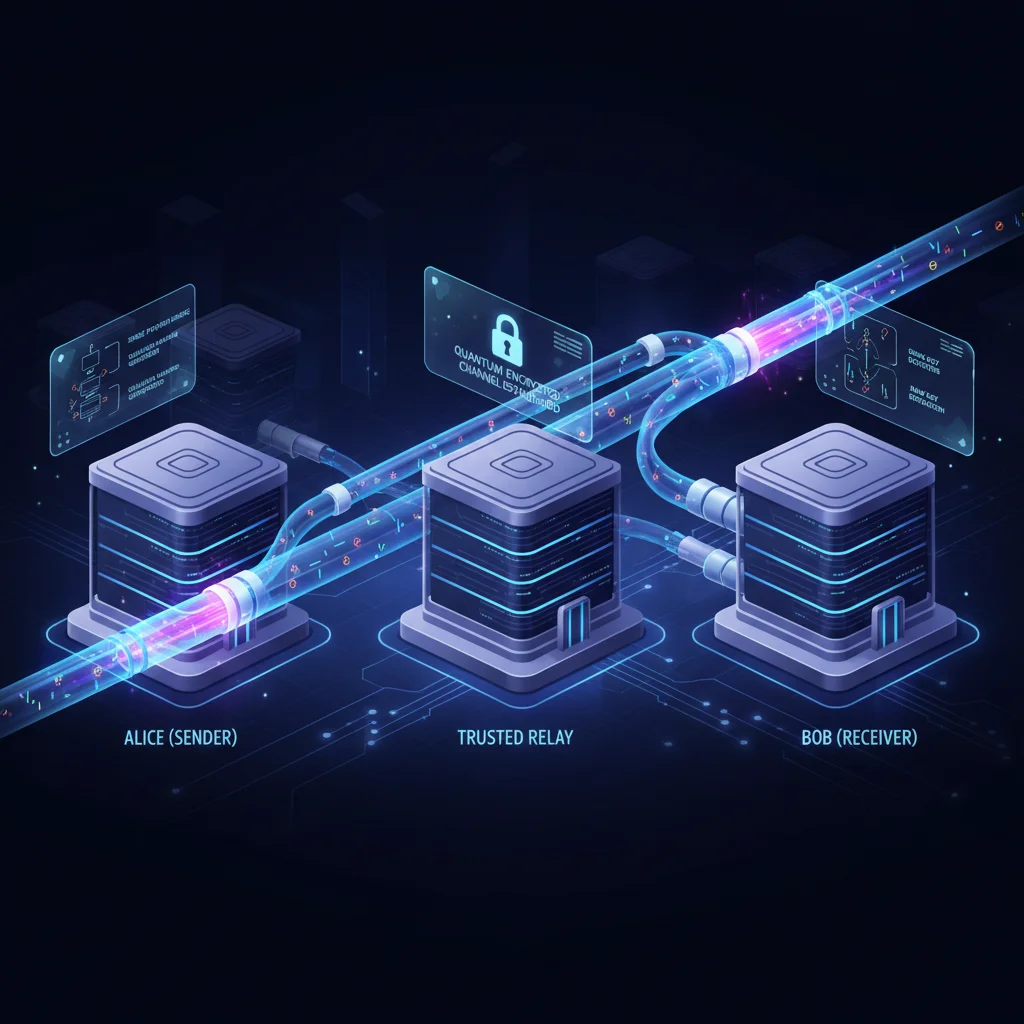
However, QKD has practical limitations. It requires dedicated fiber optic lines or free-space optical links, limiting its range and scalability. Integrating QKD into existing network infrastructure can be complex and costly. Despite these challenges, its ‘future-proof’ security makes it an indispensable component of a layered defense strategy for quantum cryptography national security.
Post-Quantum Cryptography (PQC): Software-Based Resilience
PQC refers to cryptographic algorithms that can run on classical computers but are designed to be resistant to attacks by quantum computers. These algorithms are based on different mathematical problems that are believed to be hard for both classical and quantum computers, such as lattice-based cryptography, code-based cryptography, multivariate polynomial cryptography, and hash-based cryptography.
The National Institute of Standards and Technology (NIST) has been leading a multi-year standardization process for PQC algorithms, with initial standards expected to be finalized by 2024. By 2026, the US government and critical infrastructure sectors will likely be in the midst of a significant transition, migrating their systems from vulnerable classical cryptography to these new PQC standards. This transition is crucial for securing a wide range of applications, including digital signatures, secure boot processes, and general data encryption across the internet.
PQC offers several advantages over QKD, including greater flexibility, lower deployment costs, and compatibility with existing network infrastructure. It can be implemented in software, making it easier to integrate into current systems. This makes PQC the more viable solution for securing the vast majority of digital communications and data storage for quantum cryptography national security.
Strategic Imperatives for US National Security by 2026
The window of opportunity to prepare for the quantum threat is rapidly closing. By 2026, the US must have made significant progress on several strategic imperatives to ensure robust quantum cryptography national security.
1. Accelerating Research and Development
Continued and expanded investment in quantum information science (QIS) is paramount. This includes funding basic research into new quantum algorithms and cryptographic primitives, as well as applied research into practical implementations of QKD and PQC. Collaboration between government agencies, academic institutions, and private industry is essential to accelerate innovation and translate breakthroughs into deployable technologies. The US must aim not just to catch up, but to lead in this critical domain.
2. Developing and Adopting PQC Standards
The NIST PQC standardization process is a critical first step. By 2026, the US government must have a clear roadmap for the widespread adoption of these new standards across all federal agencies. This involves updating hardware, software, and protocols, a monumental task requiring careful planning, significant resources, and a phased implementation approach. The private sector, particularly critical infrastructure operators, will also need guidance and incentives to adopt these quantum-resistant solutions.

3. Building a Quantum-Resilient Infrastructure
Beyond algorithms, the physical and logical infrastructure must be prepared. This includes assessing the ‘crypto-agility’ of existing systems – their ability to quickly swap out cryptographic algorithms. Developing hybrid crypto-systems that can operate with both classical and quantum-resistant algorithms during the transition phase will be crucial. Furthermore, identifying and protecting ‘long-lived’ data – information that needs to remain secure for decades – is a priority, as it is most vulnerable to the ‘harvest now, decrypt later’ threat.
4. Workforce Development and Education
A severe shortage of skilled professionals in quantum computing and quantum cryptography exists. By 2026, the US needs a robust pipeline of quantum engineers, cryptographers, and cybersecurity experts. This requires investing in STEM education from an early age, developing specialized university programs, and providing training and retraining opportunities for the existing cybersecurity workforce. Without the human capital, even the best technologies will remain underutilized.
5. International Collaboration and Diplomacy
Quantum cryptography national security is not solely a domestic issue. The US must engage in international collaboration with allies to share research, coordinate standardization efforts, and establish norms for the responsible development and use of quantum technologies. Diplomatic efforts will be necessary to prevent the weaponization of quantum capabilities by adversaries and to ensure a stable and secure global digital environment.
Challenges and Roadblocks Ahead
Despite the urgency and strategic importance, several challenges stand in the way of a smooth transition to quantum-resistant security.
Cost and Complexity of Migration
Migrating vast and complex IT infrastructures to new cryptographic standards is an undertaking of immense scale and cost. The US government operates countless systems, many of which are legacy systems that are difficult to update. Identifying all cryptographic dependencies, testing new algorithms, and deploying them without disrupting critical services will require meticulous planning and substantial financial investment. The estimated cost for a full quantum-safe migration across the US federal government could run into billions of dollars.
Performance Overhead of PQC
Some PQC algorithms may introduce performance overheads in terms of computational speed, memory usage, or bandwidth requirements compared to their classical counterparts. While ongoing research aims to optimize these algorithms, these overheads could be a concern for resource-constrained devices or high-throughput applications. Balancing security with performance will be a continuous challenge.
Quantum Algorithm Development and Evolution
The field of quantum computing is still evolving rapidly. New quantum algorithms might emerge that could break even the currently proposed PQC candidates. This necessitates a ‘crypto-agility’ mindset, where systems are designed to be easily updated with new cryptographic primitives as the quantum landscape changes. The threat is dynamic, and the defenses must be equally adaptable.
Supply Chain Risks
The transition to quantum-safe hardware and software introduces new supply chain risks. Ensuring that the components and software used to implement quantum-resistant solutions are trustworthy and free from vulnerabilities or backdoors will be critical. This requires rigorous vetting processes and a focus on domestic capabilities where possible.
The Role of the Private Sector
While government agencies will lead the charge in securing classified systems, the private sector plays an equally vital role in quantum cryptography national security. Critical infrastructure, including energy grids, financial systems, transportation networks, and communication providers, are predominantly privately owned and operated. These sectors are prime targets for cyberattacks and must adopt quantum-resistant solutions to protect the nation’s economic stability and public safety.
Tech companies are at the forefront of developing quantum computing and quantum cryptography solutions. Their innovation is essential for creating the tools and technologies needed for the transition. Collaboration between government and industry through public-private partnerships, information sharing, and joint research initiatives will be crucial for a successful national migration.
Looking Beyond 2026: The Quantum Internet and Future Security
While the immediate focus for quantum cryptography national security is on protecting against quantum attacks on classical systems, the long-term vision includes the development of a ‘quantum internet.’ This future network would leverage quantum phenomena like entanglement to enable fundamentally new forms of secure communication and distributed quantum computing. A fully realized quantum internet could offer unparalleled security and capabilities, but its development is still in its early stages.
By 2026, initial experimental quantum networks may begin to emerge, demonstrating the feasibility of long-distance QKD and entanglement distribution. These early networks will lay the groundwork for future advancements and represent another frontier in the ongoing quest for ultimate digital security. The US must strategically invest in this long-term vision to ensure it remains a leader in the quantum era.
Conclusion
The year 2026 represents a critical juncture for quantum cryptography national security in the United States. The convergence of rapidly advancing quantum computing capabilities and the inherent vulnerabilities of current cryptographic standards demands immediate and decisive action. Adopting a comprehensive strategy that encompasses accelerated R&D, PQC standardization and deployment, infrastructure resilience, workforce development, and international collaboration is not merely advantageous; it is an existential imperative.
The transition to a quantum-resistant future will be complex, costly, and fraught with challenges. However, the alternative – a future where adversaries can effortlessly compromise the nation’s most sensitive data and critical systems – is unacceptable. By proactively embracing the quantum revolution and strategically implementing robust quantum cryptographic solutions, the US can safeguard its national security interests, maintain its technological leadership, and ensure a secure digital future for decades to come.