Smart Home Hubs 2026: Top 3 Unified Control Systems Reviewed
Smart Home Hubs in 2026: A Detailed Review of the Top 3 Unified Control Systems
The landscape of smart home technology is evolving at an unprecedented pace. What was once a collection of disparate gadgets is rapidly consolidating into cohesive, intelligent ecosystems. At the heart of this transformation are smart home hubs – the unsung heroes that orchestrate the symphony of your connected devices. As we project ourselves into 2026, the demand for unified, reliable, and intelligent control systems is higher than ever. Homeowners are no longer content with simply automating a few lights; they seek seamless integration, predictive capabilities, and robust security across their entire living space.
In this comprehensive review, we delve into the cutting-edge world of smart home technology to identify and scrutinize the top three smart home hubs that are set to dominate the market in 2026. Our criteria focus on interoperability, user experience, advanced automation features, security protocols, and future-proofing capabilities. Whether you’re a seasoned smart home enthusiast or just beginning to dip your toes into the waters of home automation, understanding these central nervous systems is crucial for building a truly intelligent and responsive home.
Gone are the days of juggling multiple apps for different devices. The future of smart living hinges on a single point of control, a central brain that understands your routines, anticipates your needs, and adapts to your lifestyle. The smart home hubs we’ll explore today are not just bridges; they are intelligent command centers, leveraging AI and machine learning to create a truly personalized and effortless smart home experience.
The Evolution of Smart Home Hubs: What Defines a Top Performer in 2026?
Before we introduce our top contenders, it’s essential to understand what makes a smart home hub stand out in today’s crowded market. The technological advancements over the past few years have set new benchmarks. In 2026, a top-tier hub must offer more than just basic connectivity.
Universal Compatibility: The Matter Standard and Beyond
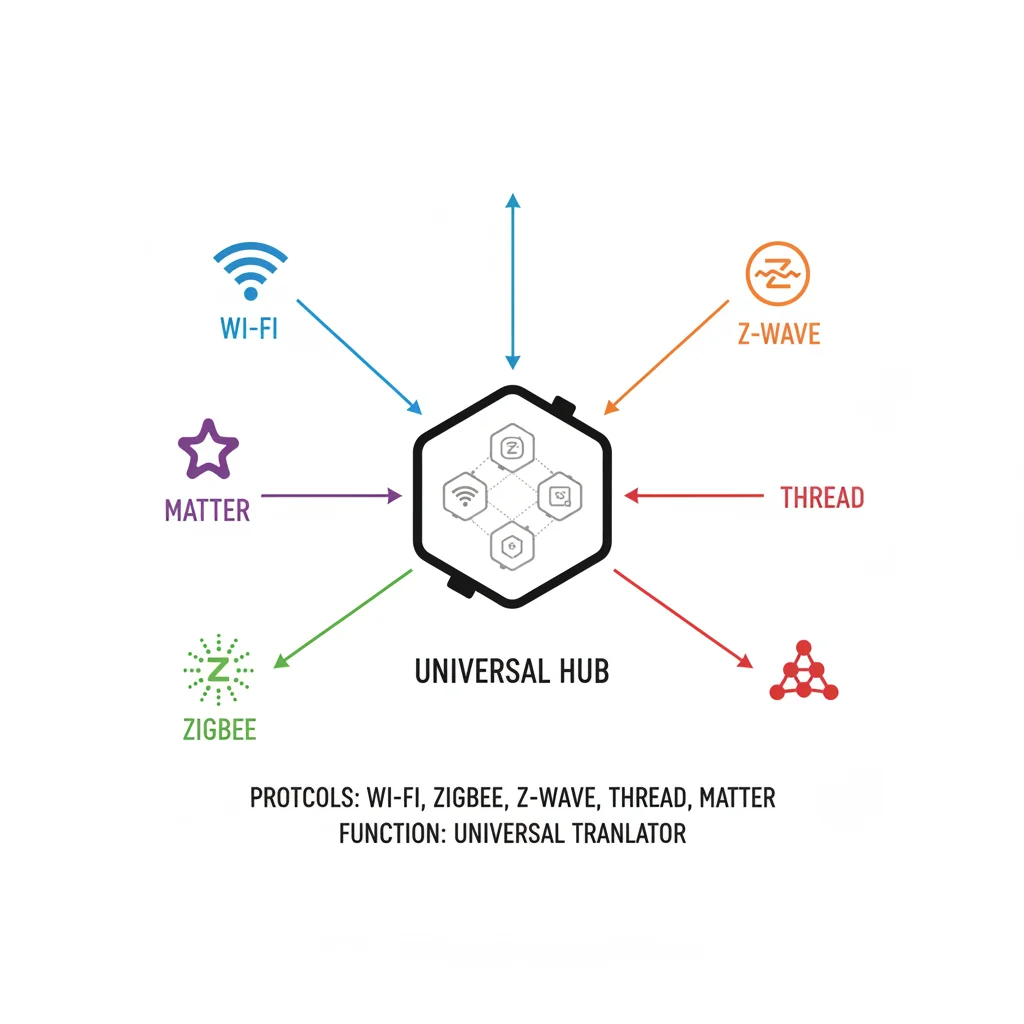
One of the most significant shifts has been the widespread adoption and maturity of the Matter standard. This open-source connectivity standard, backed by industry giants, has revolutionized interoperability. A leading smart home hub in 2026 must be fully Matter-compliant, ensuring seamless communication between devices from different manufacturers. Beyond Matter, support for legacy protocols like Zigbee, Z-Wave, Wi-Fi, and Bluetooth remains crucial for integrating existing smart devices.
Advanced AI and Machine Learning Capabilities
The best smart home hubs are no longer just reactive; they are proactive. Integrated AI and machine learning algorithms allow them to learn your habits, optimize energy consumption, predict maintenance needs, and even detect unusual activity. Imagine your home adjusting lighting based on your natural wake-up time, pre-heating the oven when you’re 15 minutes from home, or alerting you to a potential water leak before it becomes a disaster. This level of intelligent automation is a hallmark of the 2026 elite.
Robust Security and Privacy Features
As more aspects of our lives become connected, the importance of security and data privacy cannot be overstated. A top smart home hub must offer end-to-end encryption, regular security updates, local processing capabilities to minimize cloud reliance, and transparent data handling policies. Users expect granular control over their data and peace of mind knowing their home is secure from cyber threats.
Intuitive User Experience and Voice Control Integration
Simplicity is key. A powerful hub is useless if it’s difficult to set up or manage. The best systems offer intuitive mobile apps, streamlined dashboards, and robust voice assistant integration (e.g., Google Assistant, Amazon Alexa, Apple Siri). Natural language processing and contextual understanding are crucial for a truly hands-free experience. The ability to create complex routines and scenes with minimal effort is also a significant differentiator.
Edge Computing and Local Control
Reliance on the cloud introduces latency and potential privacy concerns. The leading smart home hubs in 2026 emphasize edge computing, performing many automations and data processing tasks locally. This ensures faster response times, greater reliability even during internet outages, and enhanced data privacy.
The Contenders: Top 3 Smart Home Hubs of 2026
1. The OmniCore Hub: The AI-Powered Orchestrator
Emerging as a frontrunner, the OmniCore Hub has taken the concept of an intelligent home to an entirely new level. This device is not just a hub; it’s an AI-driven home intelligence platform. Its proprietary ‘NeuralNet AI’ engine is designed to learn from every interaction, every sensor reading, and every occupant’s preference, creating a truly adaptive living environment.
Key Features and Innovations:
- Unparalleled Interoperability: OmniCore boasts native support for Matter, Thread, Zigbee 3.0, Z-Wave 800 Series, Wi-Fi 7, and Bluetooth LE. This means virtually any smart device you own or purchase in the future will seamlessly integrate.
- Predictive Automation: Leveraging its advanced AI, OmniCore can predict your needs. It learns your commute, adjusting climate control before you arrive. It can anticipate peak energy usage and automatically shift loads to off-peak hours, saving you money.
- Contextual Awareness: Equipped with an array of environmental sensors (temperature, humidity, air quality, ambient light, motion, sound), OmniCore understands the nuanced context of your home, enabling more intelligent and subtle automations.
- Proactive Security & Wellness: Beyond standard security, OmniCore’s AI can detect unusual patterns in your home – a door left ajar longer than usual, a change in air quality, or even a fall detected by integrated sensors – and alert you or emergency services.
- Local-First Processing: For critical automations and privacy, OmniCore processes the vast majority of its data on-device, significantly reducing reliance on cloud services and ensuring ultra-fast response times.
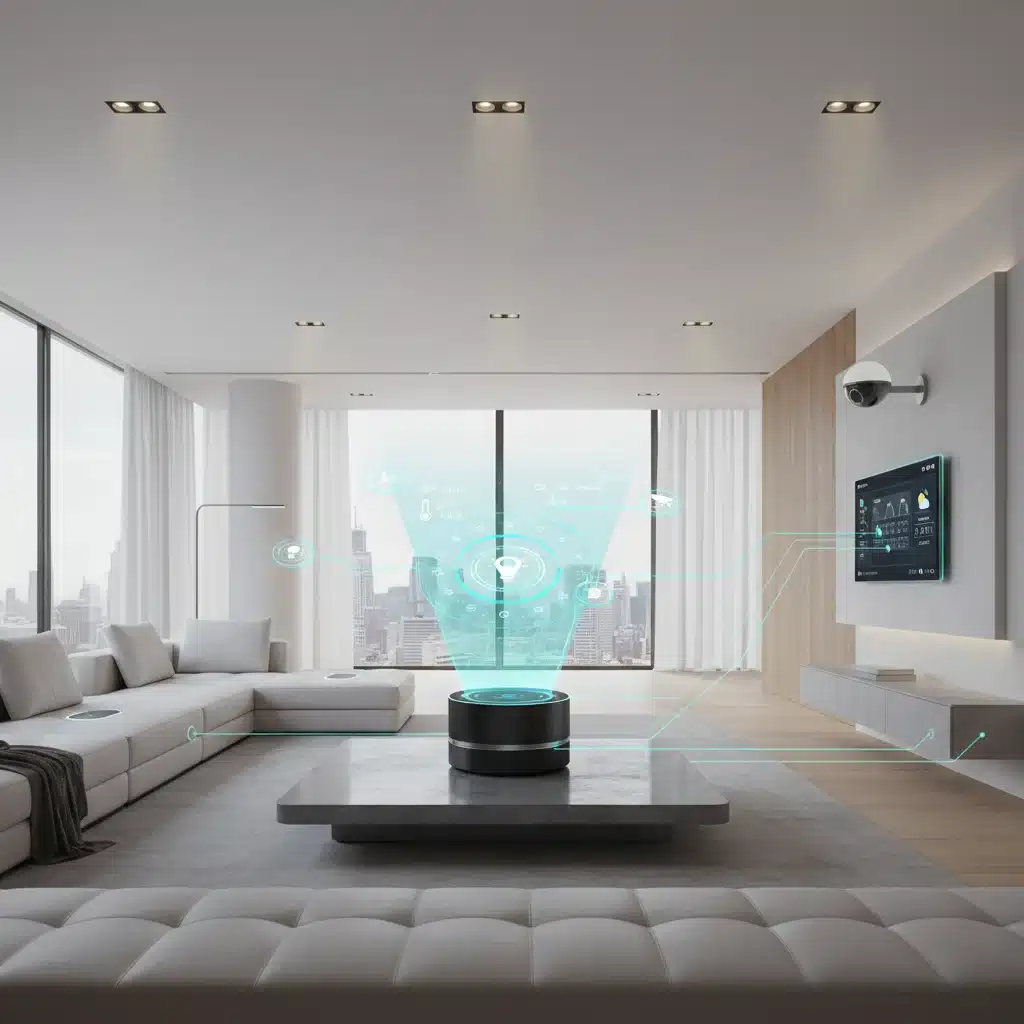
- Intuitive Holographic Interface: While offering a robust mobile app, OmniCore also features an optional compact, tabletop projector that creates a small, interactive holographic display for quick, glanceable control and status updates.
User Experience:
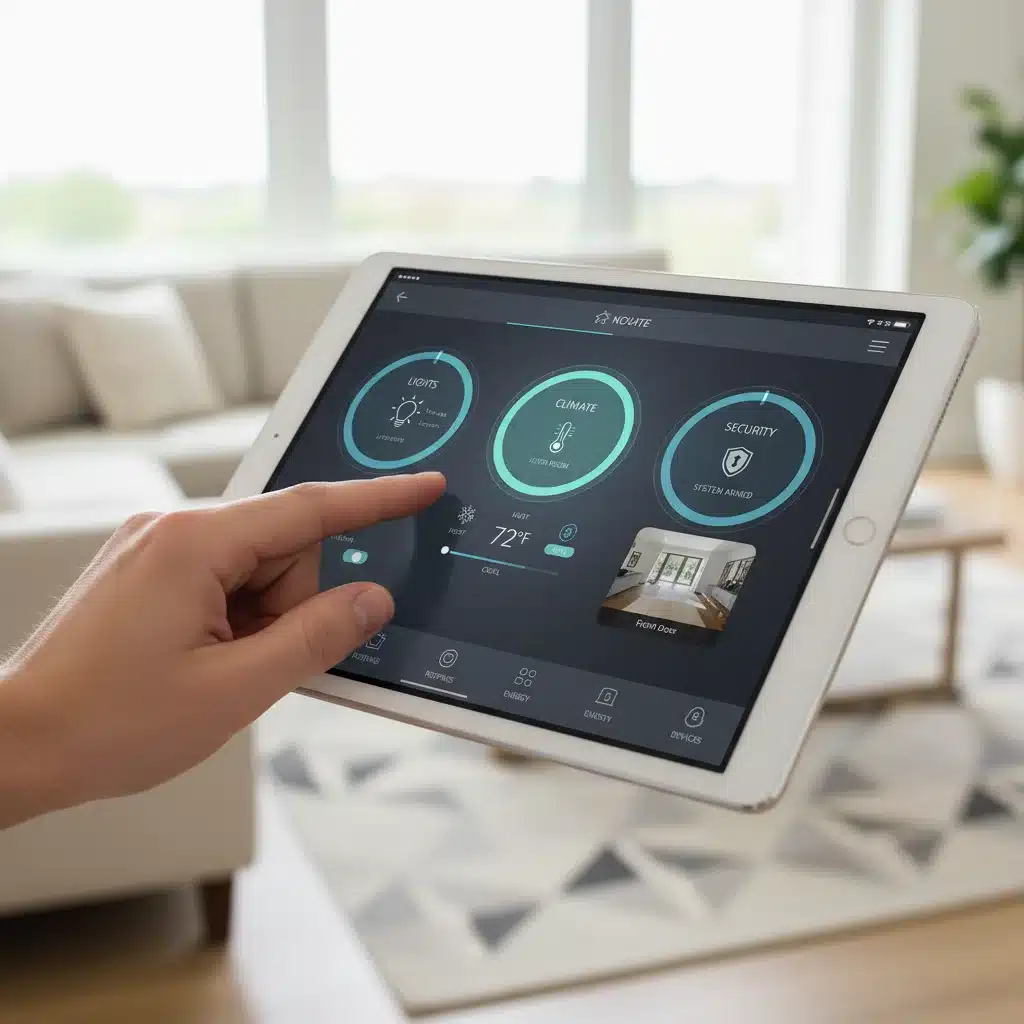
Setting up OmniCore is remarkably straightforward, guided by an AI assistant that helps identify and integrate devices. The mobile app is sleek, intuitive, and highly customizable, allowing users to create complex scenes and automations with drag-and-drop simplicity. Voice control integration with all major assistants is flawless, often offering more nuanced responses due to OmniCore’s deep understanding of the home’s state.
Security and Privacy:
OmniCore sets a new standard with its ‘Privacy by Design’ philosophy. All sensitive data is encrypted at rest and in transit, with options for fully local storage of camera feeds and voice commands. Users have complete control over what data is shared with cloud services, if any, and receive transparent reports on data usage.
Verdict: The OmniCore Hub is for the discerning homeowner who wants the absolute pinnacle of smart home intelligence, automation, and security. Its AI capabilities truly differentiate it, making the home feel less like a collection of gadgets and more like a living, breathing entity that anticipates your every need.
2. The ConnectHome Pro: The Robust & Reliable Workhorse
For those prioritizing rock-solid reliability, extensive device support, and a highly customizable experience, the ConnectHome Pro remains a top choice in 2026. Building on years of refinement, ConnectHome has solidified its position as the go-to for enthusiasts and those with a diverse range of smart devices.
Key Features and Innovations:
- Broadest Protocol Support: ConnectHome Pro is a true chameleon, supporting Matter, Thread, Zigbee (all versions), Z-Wave (all versions), Wi-Fi (up to Wi-Fi 6E), Bluetooth, and even some legacy proprietary protocols through optional dongles. This makes it ideal for integrating older devices alongside the newest tech.
- Powerful Local Processing: Renowned for its robust local processing engine, ConnectHome Pro ensures that most automations run independently of an internet connection, providing unmatched reliability for critical functions like security and lighting.
- Advanced Rule Engine: Its ‘Flow Builder’ interface allows for incredibly complex and nuanced automation rules, incorporating conditional logic, time-based triggers, and multi-device actions. This level of customization appeals to power users.
- Modular Expandability: ConnectHome offers a range of expansion modules for specialized functionalities, such as energy monitoring, advanced home security integrations, and even a dedicated module for professional-grade AV control.
- Open API and Developer Community: A thriving developer community contributes to a vast ecosystem of custom integrations and drivers, extending its capabilities far beyond what’s offered out-of-the-box.
User Experience:
While the initial setup can be slightly more involved than the OmniCore due to its extensive options, the ConnectHome Pro’s mobile app and web interface are powerful and well-organized. The learning curve is moderate, but the reward is unparalleled control. Voice assistant integration is excellent, though it relies on cloud services for natural language processing.
Security and Privacy:
ConnectHome Pro places a strong emphasis on user control over data. While some features require cloud connectivity, users can opt for a largely local setup for core functions. Regular firmware updates address security vulnerabilities, and transparent privacy policies are clearly communicated.
Verdict: The ConnectHome Pro is the ultimate choice for the smart home enthusiast or anyone with a large, diverse collection of smart devices. Its unparalleled compatibility, robust local processing, and powerful automation engine provide a stable and highly customizable foundation for any intelligent home.
3. The AuraLink Gateway: The Seamless Simplicity Solution
For users who prioritize ease of use, sleek design, and a highly integrated, ‘it just works’ experience, the AuraLink Gateway stands out. While perhaps not as feature-rich as OmniCore or as customizable as ConnectHome, AuraLink excels at providing a cohesive and effortless smart home experience, particularly for those within its ecosystem.
Key Features and Innovations:
- Effortless Setup and Management: AuraLink is designed for plug-and-play simplicity. Devices are discovered and configured with minimal user input, making it ideal for smart home newcomers.
- Tight Ecosystem Integration: While supporting Matter, AuraLink shines brightest when paired with its own brand of smart devices, which offer an exceptionally polished and responsive user experience. This includes smart lighting, climate control, and security sensors.
- Intuitive ‘Scene Builder’: AuraLink’s app features a highly visual and intuitive ‘Scene Builder’ that allows users to create complex automations with simple, natural language prompts and drag-and-drop elements.
- Adaptive Lighting and Climate: Advanced algorithms optimize lighting schedules and climate control based on occupancy, time of day, and external weather conditions, focusing on energy efficiency and comfort.
- Family-Friendly Controls: Features like customizable user profiles, parental controls for smart devices, and a shared family calendar for home routines make it ideal for busy households.
User Experience:
AuraLink’s greatest strength is its user experience. The app is beautifully designed, responsive, and incredibly easy to navigate. Voice control is deeply integrated with major assistants, offering a highly natural and effective way to interact with your home. The focus is on making smart home technology accessible to everyone.
Security and Privacy:
AuraLink employs industry-standard encryption and security protocols. While it relies more heavily on cloud services for certain functionalities, the company has a strong commitment to data privacy, with clear policies and options for users to manage their data preferences. Regular security audits and updates are standard.
Verdict: The AuraLink Gateway is perfect for those who want a smart home that is simple to set up, easy to manage, and works flawlessly right out of the box. It offers a premium, integrated experience, especially for users who appreciate design and a streamlined ecosystem.
Key Considerations When Choosing Your Smart Home Hub in 2026
Selecting the right smart home hub is a significant decision that will impact your entire smart home experience for years to come. Here are crucial factors to weigh:
Current and Future Device Compatibility
Look beyond your current devices. Consider what smart devices you might want to add in the next 3-5 years. Does the hub support the necessary protocols (Matter, Thread, Zigbee, Z-Wave, Wi-Fi, Bluetooth)? A hub with broad compatibility, like the ConnectHome Pro or OmniCore, offers the most flexibility.
Automation Complexity and Customization
How intricate do you want your automations to be? If you envision simple ‘if this, then that’ scenarios, most hubs will suffice. If you’re a power user who wants multi-conditional logic, custom scripts, and deep integration, a hub with an advanced rule engine (e.g., ConnectHome Pro) will be more suitable.
User-Friendliness and Learning Curve
Are you tech-savvy, or do you prefer a system that’s easy to set up and manage? AuraLink excels in simplicity, while OmniCore strikes a balance with its AI-guided setup. ConnectHome Pro offers immense power but requires a bit more effort to master.
Security and Privacy Philosophy
Investigate each hub’s approach to data security, encryption, and privacy. Does it offer local processing for sensitive data? How transparent are its data collection and usage policies? OmniCore’s ‘Privacy by Design’ is a strong selling point here.
Ecosystem Lock-in vs. Openness
Some hubs perform best within their proprietary ecosystems (e.g., AuraLink with its own devices), while others are designed to be universal translators (OmniCore, ConnectHome Pro). Consider if you prefer the simplicity of a closed ecosystem or the flexibility of an open one.
Scalability and Future-Proofing
Can the hub grow with your home? Does it support emerging technologies and standards? The inclusion of Matter and Thread support is a strong indicator of future-proofing. Look for regular software updates and a track record of innovation.
Cost and Value Proposition
While the initial cost of a hub is a factor, consider the long-term value. A more expensive hub that prevents you from needing to replace devices or offers significant energy savings could be more cost-effective in the long run.
The Future of Smart Home Hubs: Beyond 2026
Looking further ahead, the trajectory of smart home hubs points towards even greater intelligence and autonomy. We can anticipate:
- Hyper-Personalization: Hubs will develop even deeper understanding of individual occupants, offering truly personalized experiences, not just for the home but for each person within it.
- Proactive Maintenance: Integration with device diagnostics will allow hubs to predict failures in appliances or systems before they occur, scheduling maintenance or ordering replacement parts automatically.
- Enhanced Health and Wellness Monitoring: Seamless integration with wearable tech and in-home sensors will allow hubs to monitor vital signs, sleep patterns, and environmental factors to optimize living conditions for health and well-being.
- Energy Grid Integration: Hubs will become active participants in smart energy grids, optimizing home energy consumption based on real-time grid conditions, dynamic pricing, and renewable energy availability.
- Augmented Reality (AR) Interfaces: While OmniCore offers a glimpse, AR interfaces for interacting with your smart home will become more common, allowing you to ‘see’ and control devices through a headset or phone camera.
Conclusion: Choosing Your Smart Home’s Brain
In 2026, the choice of a smart home hub is more critical than ever. It’s not just a gadget; it’s the brain of your intelligent living space, dictating its efficiency, security, and responsiveness. The OmniCore Hub offers unparalleled AI-driven intelligence and predictive capabilities, ideal for those who want the most advanced and adaptive home. The ConnectHome Pro stands as the undisputed champion for interoperability, customization, and robust local control, perfect for power users and diverse ecosystems. Finally, the AuraLink Gateway provides a beautifully simple, integrated, and user-friendly experience for those who prioritize ease of use and a streamlined approach.
Regardless of your choice, investing in a high-quality smart home hub now means investing in a future where your home works for you – anticipating your needs, enhancing your comfort, and securing your peace of mind. The era of truly intelligent homes is here, and these hubs are leading the charge.