Smart Cities US: 3 Technologies Driving Urban Transformation by 2026
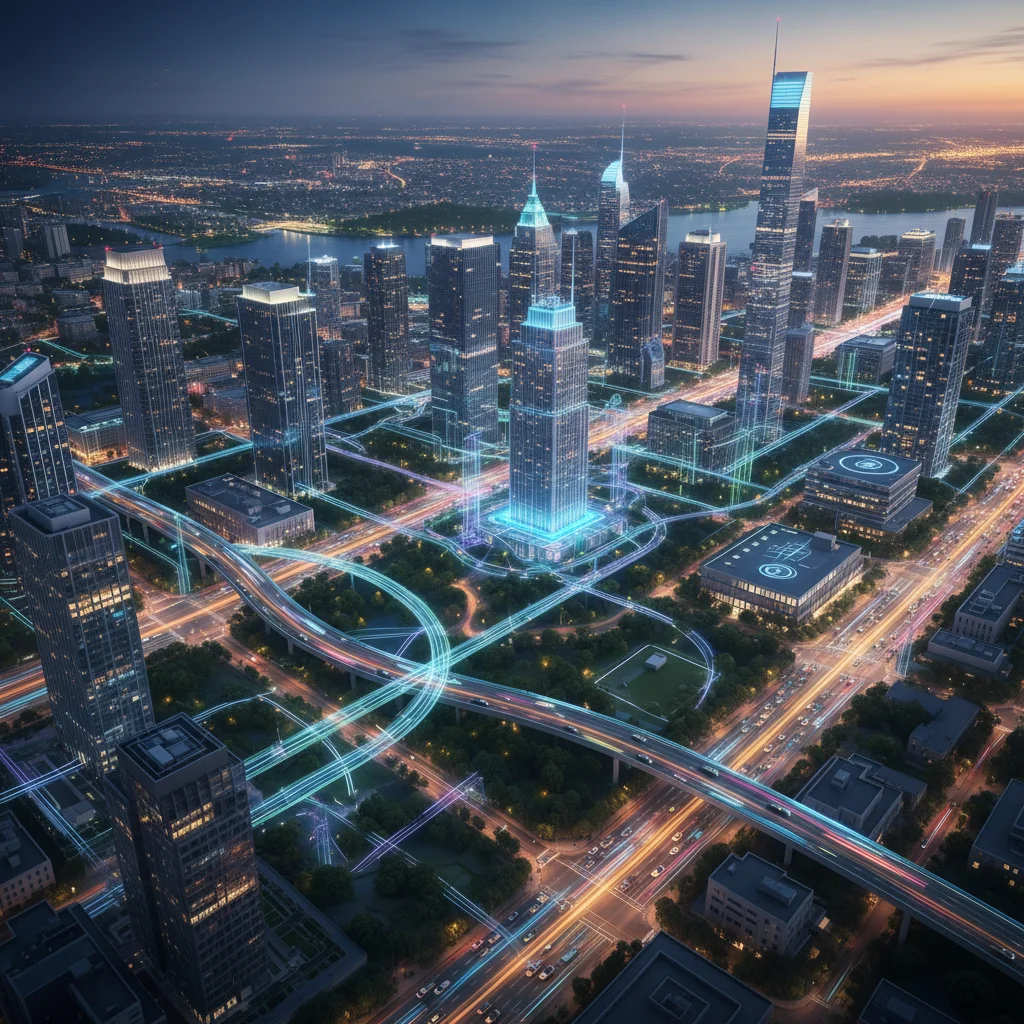
The concept of Smart Cities US is no longer a futuristic dream but a rapidly unfolding reality. As we approach 2026, American urban centers are increasingly leveraging cutting-edge technologies to enhance livability, sustainability, and economic prosperity. This transformation is driven by a confluence of factors, including rapid urbanization, the imperative for environmental resilience, and the desire to create more efficient and responsive public services. The goal is to build cities that are not only technologically advanced but also human-centric, addressing the complex needs of their diverse populations.
The journey towards becoming a truly smart city involves a holistic approach, integrating various technological solutions across different urban domains. From intelligent transportation systems to smart energy grids and data-driven public safety initiatives, the scope is vast. This article will delve into the three most influential technologies that are currently catalyzing this urban revolution across the United States: the Internet of Things (IoT), Artificial Intelligence (AI), and 5G connectivity. These technologies, often working in tandem, form the backbone of the next generation of urban infrastructure, promising a future where cities are more connected, efficient, and resilient.
Understanding the impact of these technologies is crucial for policymakers, urban planners, technology developers, and citizens alike. The implications extend beyond mere convenience, touching upon critical aspects such as resource management, public health, economic development, and social equity. As US cities continue to evolve, the strategic implementation of these technologies will determine their capacity to adapt to future challenges and opportunities, ultimately shaping the quality of life for millions of Americans. Let’s explore how these three technological pillars are setting the stage for a transformative urban landscape by 2026.
The Internet of Things (IoT): The Sensory Network of Smart Cities US
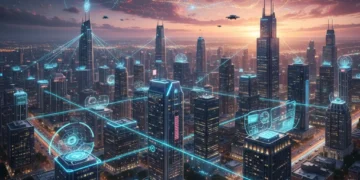
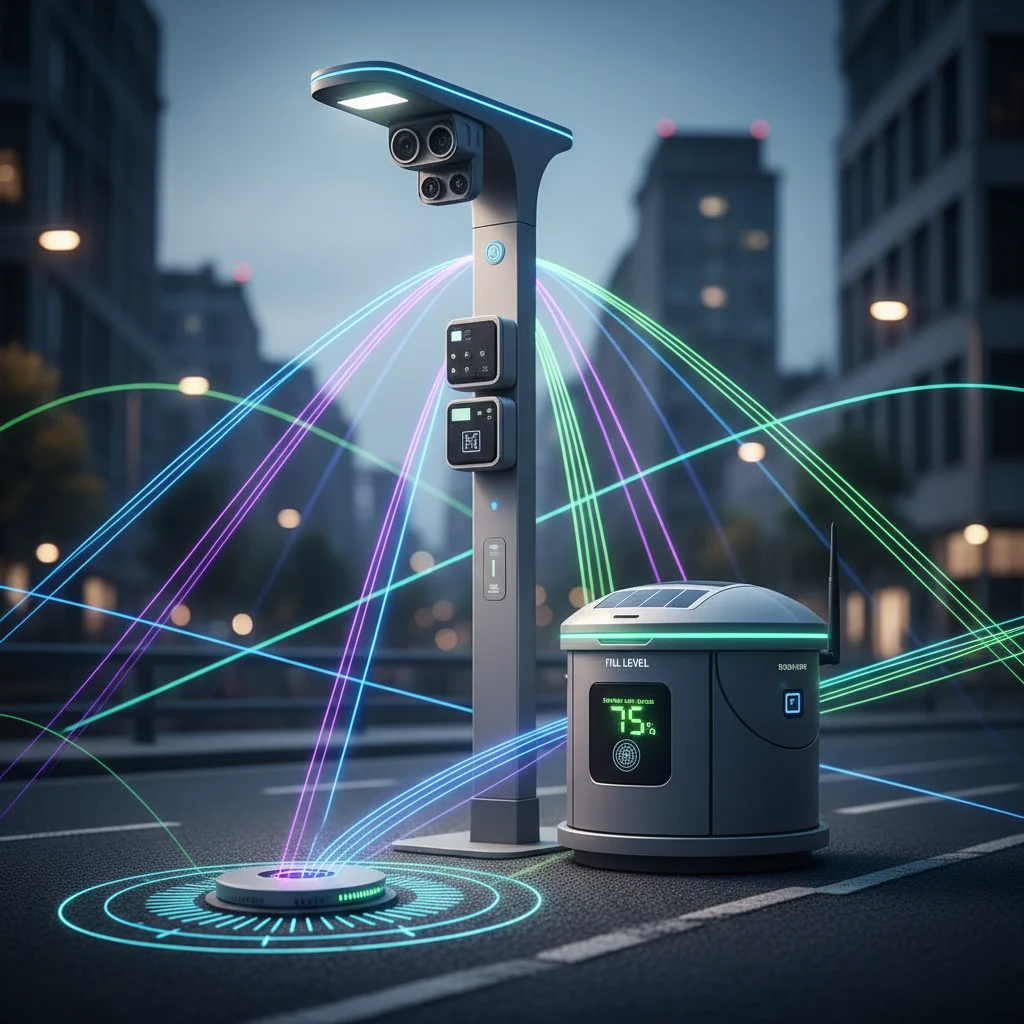
At the heart of every Smart Cities US initiative lies the Internet of Things (IoT). IoT refers to a vast network of interconnected physical objects embedded with sensors, software, and other technologies for the purpose of connecting and exchanging data with other devices and systems over the internet. In an urban context, this translates into millions of sensors deployed across the city, collecting real-time data on everything from traffic flow and air quality to waste levels and structural integrity of buildings. This continuous stream of data provides an unprecedented level of insight into urban operations, enabling cities to make more informed decisions and optimize their services.
Real-Time Data Collection and Analysis
One of the primary benefits of IoT in smart cities is its ability to facilitate real-time data collection. Imagine streetlights that dim or brighten based on ambient light and pedestrian presence, or waste bins that signal when they need emptying. These are not isolated innovations but part of a larger, interconnected system. Traffic sensors monitor congestion, helping to optimize signal timings and reroute vehicles to reduce delays. Environmental sensors track air pollution, noise levels, and water quality, providing crucial data for public health initiatives and environmental protection. This constant flow of information allows city administrators to identify patterns, predict issues, and respond proactively, transforming reactive governance into predictive management.
For instance, in many US cities, IoT-enabled parking systems are reducing urban congestion by guiding drivers to available spots, thereby cutting down on search time and associated emissions. Similarly, smart water meters are detecting leaks in real-time, preventing water waste and conserving a vital resource. The aggregation and analysis of this data, often facilitated by cloud computing, are critical for understanding urban dynamics and creating targeted interventions. The sheer volume and velocity of data generated by IoT devices necessitate advanced analytical tools to extract meaningful insights, paving the way for truly data-driven urban planning.
Enhancing Public Safety and Emergency Response
IoT also plays a pivotal role in enhancing public safety within Smart Cities US. Connected surveillance cameras, equipped with advanced analytics, can detect unusual activities or potential threats, alerting law enforcement in real-time. Smart fire detectors and emergency systems can provide immediate alerts and precise location information, significantly reducing response times. Wearable devices for first responders can monitor their vital signs and location, ensuring their safety in hazardous situations. Beyond emergency response, IoT sensors can be used for structural health monitoring of bridges and buildings, providing early warnings of potential failures and preventing disasters.
Furthermore, smart streetlights equipped with gunshot detection technology are being piloted in several cities, offering another layer of security. The integration of these various IoT applications creates a comprehensive safety net, making cities safer and more secure for residents and visitors alike. The ability to quickly gather and disseminate critical information during emergencies is a game-changer, allowing for more coordinated and effective responses. This interconnectedness is not just about technology; it’s about creating a more responsive and resilient urban fabric that can withstand and recover from unforeseen events.
Sustainable Resource Management
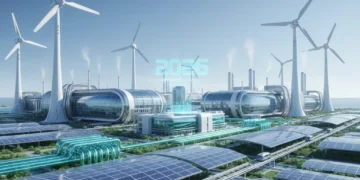
Sustainability is a core tenet of the Smart Cities US movement, and IoT is instrumental in achieving environmental goals. Smart grids, powered by IoT, optimize energy distribution, integrate renewable energy sources, and enable demand-side management. This means homes and businesses can adjust their energy consumption based on real-time pricing and availability, leading to significant energy savings and reduced carbon footprints. Smart waste management systems, as mentioned earlier, not only reduce collection costs but also encourage recycling and reduce landfill waste by optimizing routes and schedules based on actual fill levels.
Moreover, IoT-enabled environmental monitoring provides granular data on air and water quality, helping cities to identify pollution hotspots and implement targeted mitigation strategies. Smart irrigation systems in parks and public spaces use soil moisture sensors and weather data to optimize water usage, preventing overwatering and conserving precious resources. These sustainable practices, driven by IoT, are crucial for building environmentally responsible cities that can thrive in the face of climate change. The data collected by these sensors empowers urban planners to make evidence-based decisions that lead to a greener, more sustainable future for all.
Artificial Intelligence (AI): The Brain of Smart Cities US
While IoT provides the senses for Smart Cities US, Artificial Intelligence (AI) serves as the brain, processing the vast amounts of data collected by IoT devices to derive actionable insights and automate complex processes. AI, encompassing machine learning, deep learning, and natural language processing, allows cities to move beyond mere data collection to intelligent decision-making and predictive analytics. Its applications in urban environments are diverse, ranging from optimizing traffic flow to enhancing public services and improving urban planning.
Optimizing Urban Mobility and Transportation
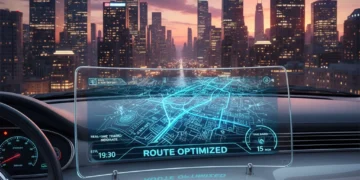
One of the most impactful applications of AI in smart cities is in the realm of transportation. AI algorithms can analyze real-time traffic data from IoT sensors, historical patterns, and even social media feeds to predict congestion, optimize traffic signal timings, and suggest alternative routes. This not only reduces travel times and fuel consumption but also minimizes emissions, contributing to cleaner air. Autonomous vehicles, though still in their nascent stages of widespread adoption, are heavily reliant on AI for navigation, perception, and decision-making, promising a future of safer and more efficient transportation.
Furthermore, AI-powered public transit systems can dynamically adjust routes and schedules based on demand, improving efficiency and rider satisfaction. Ride-sharing optimization, smart parking solutions, and even predictive maintenance for public transportation vehicles are all enhanced by AI. By intelligently managing the flow of people and goods, AI helps to create a more fluid and less stressful urban experience. The ability of AI to learn from vast datasets and adapt to changing conditions makes it an invaluable tool for tackling the complex challenges of urban mobility.
Enhancing Public Services and Governance
AI is also revolutionizing public services and governance within Smart Cities US. Chatbots and virtual assistants powered by natural language processing (NLP) are providing citizens with instant access to information and services, streamlining interactions with city departments. AI can analyze citizen feedback and social media data to gauge public sentiment, helping city officials understand community needs and concerns more effectively. In urban planning, AI can simulate the impact of new developments, infrastructure projects, or policy changes, allowing planners to make more informed decisions about resource allocation and land use.
Predictive policing, while a controversial topic, is another area where AI is being explored to identify crime hotspots and allocate resources more effectively. However, it is crucial that these applications are implemented with strong ethical guidelines and safeguards against bias. AI-driven systems can also optimize energy consumption in public buildings, manage waste collection schedules, and even monitor public health trends to predict outbreaks and allocate medical resources. The potential for AI to create more responsive, efficient, and citizen-centric governance is immense, provided it is deployed responsibly and equitably.
Predictive Maintenance and Infrastructure Management
Maintaining urban infrastructure is a colossal and costly task. AI-powered predictive maintenance offers a solution by analyzing data from IoT sensors embedded in bridges, roads, and utilities to predict when maintenance is needed, rather than relying on fixed schedules or reactive repairs. This proactive approach can significantly reduce operational costs, extend the lifespan of infrastructure, and prevent costly breakdowns or safety hazards. For example, AI can detect subtle changes in the structural integrity of a bridge or identify anomalies in water pipes that indicate an impending leak.
This capability is particularly vital for aging infrastructure in many US cities. By identifying potential issues before they escalate, AI helps cities to allocate their maintenance budgets more effectively and ensure the continuous, safe operation of critical urban systems. The combination of IoT for data collection and AI for analysis creates a powerful synergy that transforms infrastructure management from a reactive burden into a strategic asset. This intelligent oversight ensures that urban assets are not only functional but also resilient and sustainable for future generations.
5G Connectivity: The Nervous System of Smart Cities US
The third critical technology underpinning the evolution of Smart Cities US is 5G connectivity. While IoT provides the data and AI processes it, 5G offers the ultra-fast, low-latency, and highly reliable network infrastructure necessary for these technologies to operate at their full potential. Without robust connectivity, the vision of a truly smart city, with its myriad connected devices and real-time data flows, would remain largely unrealized. 5G is not just a faster version of 4G; it represents a fundamental shift in network capabilities, enabling new paradigms of urban development.
Enabling Real-Time Communication and Data Transfer
The massive amounts of data generated by IoT devices and processed by AI algorithms require a network that can handle high bandwidth and deliver data with minimal delay. 5G’s enhanced mobile broadband (eMBB) capabilities provide the necessary speed, allowing for near-instantaneous communication between devices, sensors, and central processing units. This is crucial for applications that demand real-time responsiveness, such as autonomous vehicles, remote-controlled drones for infrastructure inspection, and augmented reality (AR) applications for urban planning or tourism.
For example, an autonomous vehicle needs to communicate with other vehicles, traffic signals, and roadside infrastructure in milliseconds to ensure safe operation. Similarly, remote surgery or emergency telemedicine in urban areas would rely heavily on 5G’s low latency to ensure critical data is transmitted without delay. The ability to transfer large video files from surveillance cameras or high-resolution sensor data in real-time opens up new possibilities for public safety, traffic management, and environmental monitoring. 5G is the conduit through which the smart city’s nervous system operates, ensuring that information flows freely and efficiently.
Supporting Massive IoT Deployments
One of 5G’s most significant contributions to Smart Cities US is its capacity to support massive machine-type communication (mMTC). This means that 5G networks are designed to efficiently connect millions of IoT devices within a small geographical area, consuming minimal power and ensuring reliable communication. This capability is essential for the widespread deployment of sensors across an urban landscape, from smart meters and environmental sensors to connected public transportation and smart infrastructure. Without mMTC, the sheer scale of IoT integration required for a truly smart city would be impractical.
This robust connectivity enables cities to deploy a dense network of sensors without overwhelming the existing infrastructure, making it feasible to collect granular data across all urban domains. The efficiency of 5G in handling a high density of devices also means that cities can expand their smart initiatives without significant infrastructure bottlenecks. This scalability is a key factor in the long-term viability and evolution of smart city projects, ensuring that as more devices come online, the network can seamlessly accommodate them.
Enabling New Urban Applications and Services
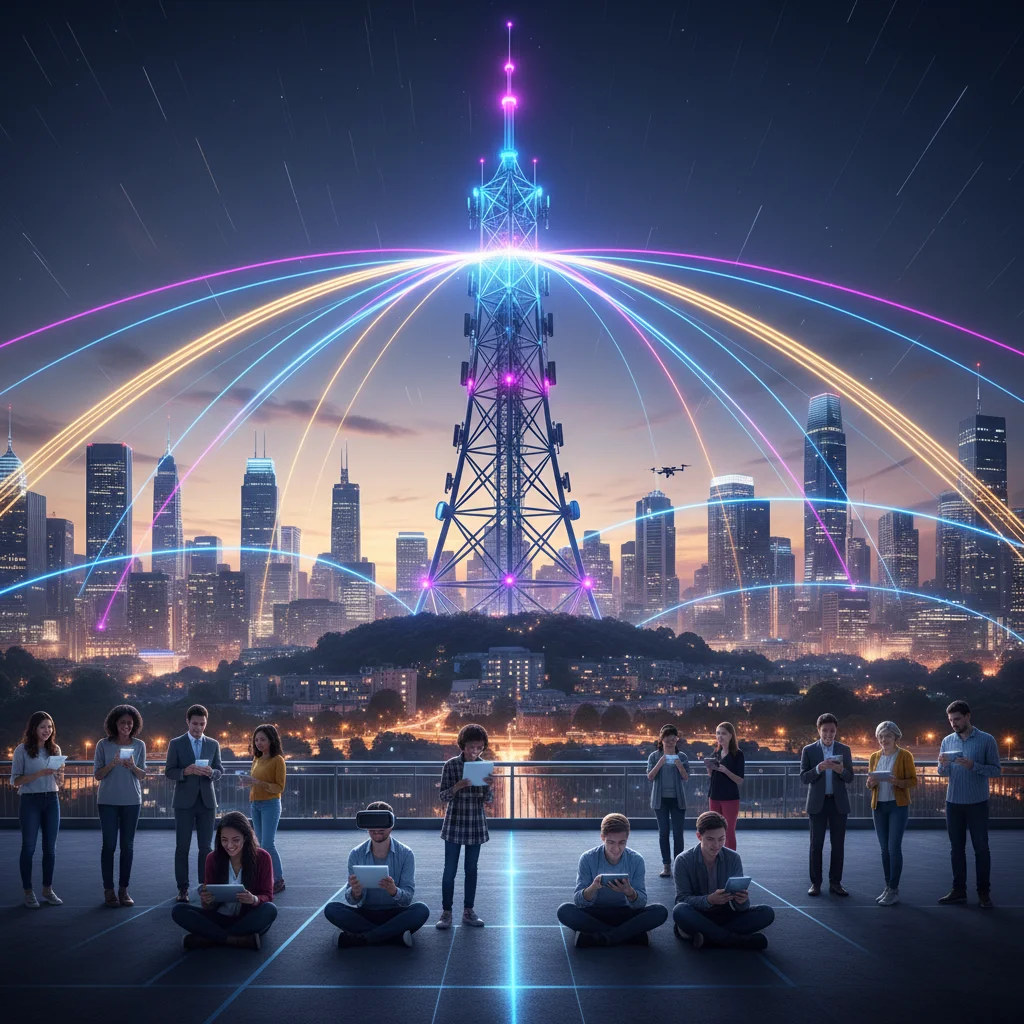
Beyond simply supporting existing technologies, 5G’s advanced capabilities are also enabling entirely new urban applications and services. Enhanced mobile broadband (eMBB) allows for high-definition video streaming, immersive virtual reality (VR) experiences for tourism or urban planning, and rich multimedia content delivery. Ultra-reliable low-latency communication (URLLC) is critical for mission-critical applications such as autonomous vehicles, industrial automation, and remote healthcare, where even a millisecond of delay can have significant consequences.
Imagine smart intersections that communicate with vehicles to prevent collisions, or public safety drones that provide real-time aerial surveillance with high-definition video feeds. These applications, once the stuff of science fiction, are becoming a reality thanks to 5G. Furthermore, the combination of 5G with edge computing allows for data processing to occur closer to the source, reducing latency even further and enabling faster decision-making. This distributed intelligence is vital for creating highly responsive and adaptive urban environments. The transformative power of 5G extends beyond connectivity; it is a catalyst for innovation, fostering an ecosystem where new smart city solutions can flourish.
Challenges and Future Outlook for Smart Cities US
While the promise of Smart Cities US is immense, their development is not without challenges. Data privacy and security are paramount concerns, as the widespread collection of personal and urban data raises questions about surveillance, data breaches, and algorithmic bias. Cities must implement robust cybersecurity measures and establish clear ethical guidelines for data usage to build public trust. Ensuring equitable access to smart city technologies and services is also crucial to prevent the creation of digital divides and ensure that all residents benefit from urban innovation.
Funding for smart city initiatives remains another significant hurdle. While the long-term benefits are clear, the initial investment in infrastructure, sensors, and software can be substantial. Public-private partnerships, federal grants, and innovative financing models will be essential to overcome these financial barriers. Furthermore, interoperability between different systems and platforms is key to creating a truly integrated smart city. Standards and open data initiatives will help ensure that various technologies can communicate seamlessly, avoiding fragmented solutions.
Looking towards 2026 and beyond, the trajectory for Smart Cities US is one of continuous evolution and integration. We can expect to see further advancements in AI, with more sophisticated algorithms capable of handling complex urban challenges. The deployment of 5G will become more pervasive, extending its reach to even more remote and underserved areas, further democratizing access to smart city services. The synergy between IoT, AI, and 5G will only strengthen, leading to more intelligent automation, predictive capabilities, and personalized urban experiences.
The focus will also shift increasingly towards citizen engagement and co-creation. Smart cities are not just about technology; they are about improving the quality of life for residents. Involving citizens in the planning and implementation processes will be vital to ensure that smart city solutions are truly responsive to their needs and aspirations. This collaborative approach will foster a sense of ownership and ensure that technology serves humanity, rather than the other way around.
Conclusion: A Smarter Future for US Urban Centers
The transformation of American urban centers into Smart Cities US by 2026 is being powerfully driven by three foundational technologies: the Internet of Things (IoT), Artificial Intelligence (AI), and 5G connectivity. IoT provides the essential sensory layer, collecting vast amounts of real-time data that reveal the pulse of the city. AI acts as the intelligent interpreter, analyzing this data to derive actionable insights, optimize services, and enable predictive capabilities. Finally, 5G offers the high-speed, low-latency, and robust network infrastructure that binds these components together, ensuring seamless communication and enabling new, innovative applications.
From optimizing traffic flow and enhancing public safety to promoting sustainable resource management and improving citizen engagement, these technologies are collectively reshaping the urban landscape. They are creating cities that are more efficient, more resilient, and more responsive to the needs of their inhabitants. While challenges related to data privacy, security, funding, and equity remain, the ongoing commitment to innovation and collaborative governance promises to overcome these hurdles.
As we move closer to 2026, the continued integration and advancement of IoT, AI, and 5G will undoubtedly lead to even more sophisticated and impactful smart city solutions. The vision of a truly intelligent urban ecosystem, where technology seamlessly integrates with daily life to create more livable, sustainable, and prosperous communities, is not just a possibility—it is becoming a tangible reality across the United States. The future of Smart Cities US is bright, promising a new era of urban innovation that will benefit generations to come.