Essential Cybersecurity Updates for US Small Businesses Q2 2026

In an increasingly digital landscape, cybersecurity is no longer an optional add-on but a fundamental necessity, particularly for small businesses. While large corporations often have dedicated teams and extensive budgets, small businesses are frequently seen as easier targets by cybercriminals due to perceived vulnerabilities and fewer resources. The stakes are incredibly high; a single cyberattack can lead to devastating financial losses, irreparable reputational damage, and even business closure. As we approach Q2 2026, the cybersecurity landscape is evolving at an unprecedented pace, bringing with it new threats and, crucially, new regulatory expectations and best practices that US small businesses must adopt to survive and thrive.
This comprehensive guide will delve into five critical cybersecurity updates and strategic imperatives that every US small business owner needs to be aware of and implement by Q2 2026. These aren’t merely suggestions; they are vital components of a robust defense strategy designed to protect your assets, your customers’ data, and your business’s future. From enhanced data protection measures to proactive threat intelligence, we will explore each update in detail, providing actionable insights and practical steps to ensure your enterprise remains secure in the face of sophisticated cyber threats.
The Evolving Threat Landscape: Why Small Businesses Are Prime Targets
Before we dive into the specific updates, it’s crucial to understand why small business cybersecurity is such a critical concern. Cybercriminals often view small businesses as the ‘low-hanging fruit.’ They might not possess the same level of security infrastructure as larger enterprises, yet they often hold valuable data, such as customer information, proprietary business secrets, and financial records. A successful breach can not only compromise this data but also disrupt operations, leading to significant downtime and loss of revenue. The cost of a data breach for small businesses is often disproportionately high, with many failing to recover within six months of an attack.
Furthermore, the nature of cyber threats is constantly changing. What was considered cutting-edge protection a few years ago might now be obsolete. Phishing attacks are becoming more sophisticated, ransomware is more prevalent, and supply chain attacks are increasingly targeting smaller vendors as a gateway to larger organizations. This dynamic environment necessitates continuous vigilance and adaptation, making these forthcoming updates not just relevant, but absolutely essential for the sustained operation and growth of any US small business.
The US government and various industry bodies are also increasing their focus on bolstering the cybersecurity posture of small and medium-sized enterprises (SMEs). This means that beyond simply protecting your business, there’s a growing imperative to comply with evolving regulations and industry standards. Failing to meet these standards can result in hefty fines, legal repercussions, and a significant loss of customer trust. Therefore, understanding and implementing these critical updates by Q2 2026 is not just about security; it’s about compliance and long-term business viability.
1. Enhanced Data Protection and Privacy Regulations Compliance
The landscape of data protection and privacy is continually shifting, with new regulations emerging and existing ones being strengthened. For US small businesses, compliance with these regulations isn’t merely a legal obligation; it’s a cornerstone of building customer trust and safeguarding sensitive information. By Q2 2026, we anticipate a more rigorous enforcement and potentially expanded scope of data protection laws, requiring small businesses to re-evaluate and enhance their data handling practices.
Understanding the Regulatory Environment
While the US doesn’t have a single overarching federal data privacy law akin to Europe’s GDPR, there’s a complex patchwork of federal and state-specific regulations. These include, but are not limited to, HIPAA for healthcare information, GLBA for financial institutions, and a growing number of state-level privacy laws like the California Consumer Privacy Act (CCPA) and its successor, the California Privacy Rights Act (CPRA), the Virginia Consumer Data Protection Act (VCDPA), the Colorado Privacy Act (CPA), and others. The trend is clear: more states are enacting their own comprehensive privacy laws, creating a fragmented but increasingly stringent regulatory framework.
By Q2 2026, it is highly probable that more states will have implemented similar privacy regulations, or existing ones will have been updated to include stricter requirements for data collection, storage, processing, and deletion. Small businesses that operate across state lines, or even within a single state with robust privacy laws, must be prepared to navigate this intricate web of compliance.
Key Actions for Enhanced Data Protection:
- Data Mapping and Inventory: The first step is to understand what data your business collects, where it’s stored, how it’s processed, and who has access to it. This ‘data map’ is crucial for identifying sensitive information and assessing risks.
- Privacy Policy Updates: Your privacy policy must be clear, concise, and accurately reflect your current data practices. It needs to inform users about what data is collected, why, how it’s used, and their rights regarding their data. This should be regularly reviewed and updated, especially in light of new regulations.
- Consent Management: Implement robust mechanisms for obtaining and managing user consent for data collection and processing, particularly for personal data. This often involves clear opt-in options and easy ways for users to withdraw consent.
- Data Minimization: Adopt practices to collect only the data that is absolutely necessary for your business operations. Storing less sensitive data reduces your risk exposure in the event of a breach.
- Data Retention Policies: Establish clear policies for how long different types of data are retained and ensure secure deletion processes are in place once data is no longer needed.
- Vendor Due Diligence: If you use third-party vendors (e.g., cloud providers, marketing platforms) that handle customer data, ensure they are also compliant with relevant data protection regulations and have strong security measures in place. Review their contracts and conduct regular assessments.
- Data Breach Notification Protocols: Develop and regularly test a clear, actionable plan for responding to data breaches, including timely notification procedures as mandated by various laws.
Investing in compliance now will not only protect your business from legal penalties but also build a stronger foundation of trust with your customers, which is invaluable in today’s privacy-conscious market. Small business cybersecurity must encompass this regulatory awareness.
2. Mandatory Adoption of Multi-Factor Authentication (MFA) Across All Critical Systems
One of the simplest yet most effective cybersecurity measures is Multi-Factor Authentication (MFA). Despite its proven efficacy in preventing unauthorized access, many small businesses still lag in its universal implementation. By Q2 2026, the expectation, and in many cases the requirement, for MFA across all critical business systems, applications, and user accounts will become non-negotiable. This isn’t just about protecting passwords; it’s about adding essential layers of security that significantly deter cybercriminals.
Why MFA is Critical
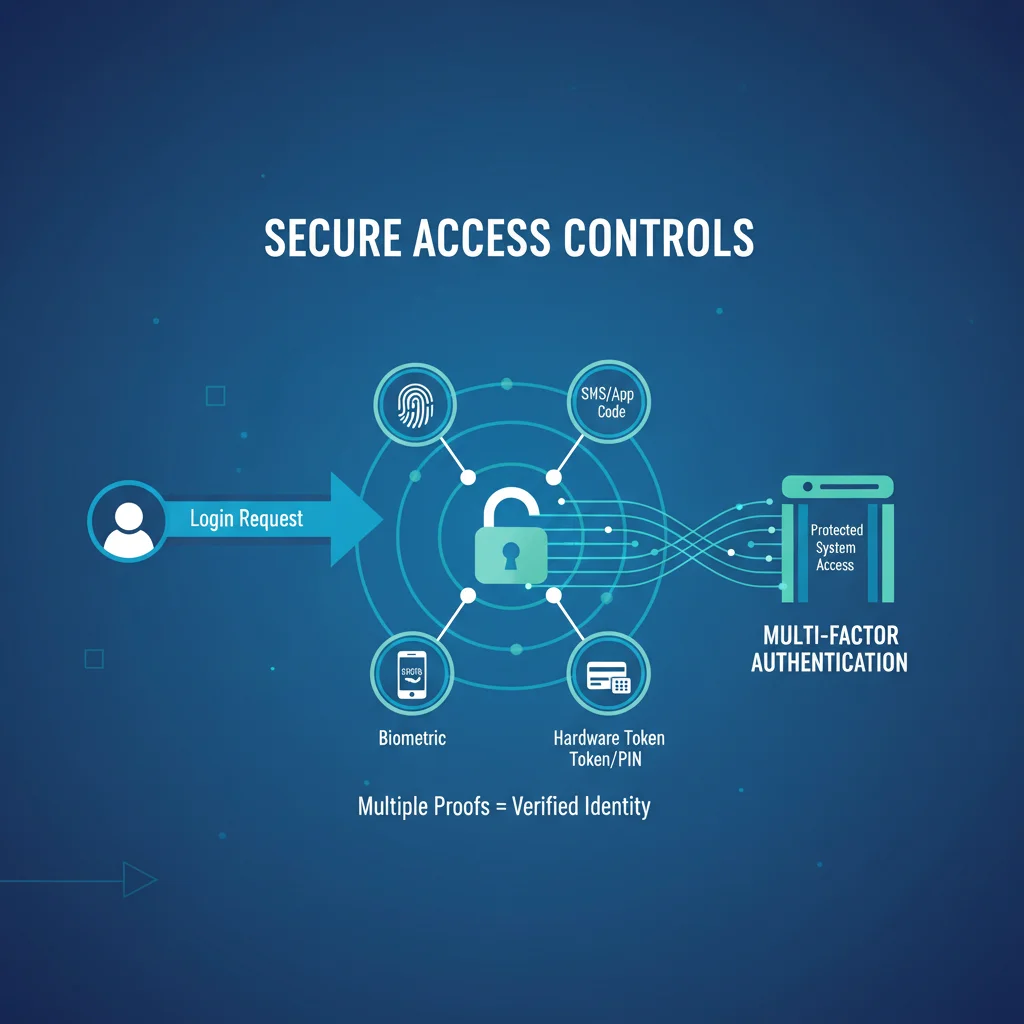
Passwords alone are no longer sufficient to protect accounts. They can be stolen through phishing, brute-force attacks, or credential stuffing (using leaked credentials from other breaches). MFA adds at least one additional verification step beyond just a password, such as a code sent to a mobile device, a biometric scan (fingerprint or face ID), or a physical security key. This means that even if a cybercriminal obtains an employee’s password, they still cannot access the account without the second factor.
Industry bodies like NIST (National Institute of Standards and Technology) and government agencies have long advocated for MFA. Insurance providers are also increasingly making MFA a prerequisite for obtaining cyber insurance policies, reflecting its status as a fundamental security control. Failing to implement MFA leaves your business highly vulnerable to common attack vectors that exploit weak or stolen credentials.
Implementing Universal MFA: Key Steps
- Identify Critical Systems: Start by identifying all systems and applications that store sensitive data or provide access to critical business operations. This includes email, cloud storage, CRM, ERP, financial software, remote access tools (VPNs), and administrative portals.
- Choose Appropriate MFA Methods: Evaluate different MFA methods based on your business needs, user experience, and security requirements. Options include:
- Authenticator Apps: Google Authenticator, Microsoft Authenticator, Authy (time-based one-time passwords – TOTP).
- SMS/Email OTPs: While convenient, these are generally less secure than authenticator apps due to potential SIM-swapping attacks. Use with caution for highly sensitive accounts.
- Biometrics: Fingerprint or facial recognition on devices.
- Hardware Security Keys: FIDO2/WebAuthn compatible keys (e.g., YubiKey) offer the strongest protection against phishing.
- Phased Rollout: Implement MFA in stages, starting with your most privileged users (administrators, IT staff) and accounts with access to the most sensitive data. Then, gradually roll it out to all employees and all critical systems.
- Employee Training and Support: Provide clear instructions and training to all employees on how to set up and use MFA. Emphasize its importance and address any concerns. Offer ongoing support to ensure smooth adoption.
- Enforce Policies: Establish and enforce policies that mandate MFA for all designated systems. Regularly audit to ensure compliance. Consider implementing conditional access policies that require MFA based on user location, device, or access attempt context.
- Review and Update: Regularly review your MFA implementation to ensure it remains effective against new threats and aligns with evolving best practices.
Universal MFA is a non-negotiable security baseline for Q2 2026. Prioritizing this will significantly bolster your small business cybersecurity posture against a vast array of common cyberattacks.
3. Proactive Threat Intelligence and Incident Response Planning
Historically, many small businesses have adopted a reactive approach to cybersecurity, addressing threats only after they have occurred. This is no longer sustainable. By Q2 2026, a proactive stance, combining threat intelligence with robust incident response planning, will be paramount. This means understanding potential threats before they materialize and having a clear, actionable plan to mitigate damage if a breach does occur.
The Power of Threat Intelligence
Threat intelligence involves collecting, processing, and analyzing information about current and emerging cyber threats. For small businesses, this doesn’t necessarily mean hiring a team of intelligence analysts, but rather leveraging available resources and services to stay informed. Understanding the types of attacks prevalent in your industry, common vulnerabilities, and the tactics of specific threat actors can empower you to implement preventative measures.
Sources of threat intelligence can include industry-specific security reports, government advisories (e.g., from CISA – Cybersecurity and Infrastructure Security Agency), security blogs, and even subscription services that provide tailored threat feeds. The goal is to move from simply reacting to known attacks to anticipating and preparing for potential ones.

Developing a Robust Incident Response Plan
Even with the best preventative measures, breaches can happen. A well-defined incident response plan (IRP) is crucial for minimizing the impact of an attack, ensuring business continuity, and complying with notification requirements. Many small businesses either lack an IRP or have one that is outdated and untested. By Q2 2026, a comprehensive and regularly tested IRP will be a critical component of small business cybersecurity.
Key Elements of an Effective IRP:
- Preparation: This phase involves establishing an incident response team, defining roles and responsibilities, creating communication channels, and developing playbooks for various incident types (e.g., ransomware, data breach, phishing). It also includes having up-to-date backups and forensic tools.
- Identification: How will you detect an incident? This involves monitoring systems, logs, and network traffic for suspicious activity. Early detection is key to limiting damage.
- Containment: Once an incident is identified, the immediate goal is to prevent it from spreading. This might involve isolating affected systems, disconnecting networks, or shutting down specific services.
- Eradication: After containment, the focus shifts to removing the threat entirely. This includes patching vulnerabilities, cleaning infected systems, and ensuring the threat is fully eliminated.
- Recovery: Restoring affected systems and data to normal operation. This involves using clean backups, verifying system integrity, and monitoring for any recurrence of the incident.
- Post-Incident Analysis (Lessons Learned): After an incident, conduct a thorough review to understand what happened, why it happened, and how to prevent similar incidents in the future. Update your IRP and security controls based on these lessons.
It’s not enough to just have a plan; you must regularly test it through tabletop exercises or simulations to ensure your team knows how to act under pressure. This proactive approach to threats and a well-rehearsed response plan are indispensable for any small business aiming for resilience by Q2 2026.
4. Mandatory Cybersecurity Awareness Training and Phishing Simulations
While technology plays a crucial role in cybersecurity, the human element remains the weakest link in many organizations. Employees, often unknowingly, can become entry points for cyberattacks through social engineering tactics like phishing, spear-phishing, and pretexting. By Q2 2026, simply having an annual training module will no longer suffice; mandatory, continuous, and interactive cybersecurity awareness training, coupled with regular phishing simulations, will be essential for all US small businesses.
Why Human-Centric Security is Paramount
Cybercriminals are increasingly targeting individuals rather than purely technical vulnerabilities. A well-crafted phishing email can trick an employee into revealing credentials, clicking a malicious link, or downloading malware, bypassing even the most sophisticated technical defenses. A single click from an unaware employee can compromise an entire network. Therefore, empowering employees to recognize and report threats is a critical layer of defense.
Moreover, regulatory bodies and cyber insurance providers are placing greater emphasis on demonstrable employee training programs. Lack of adequate training can be viewed as negligence, potentially impacting liability in the event of a breach.
Key Components of Effective Training Programs:
- Regular and Mandatory Training: Move beyond annual, generic training. Implement quarterly or bi-annual training sessions that are engaging, relevant to current threats, and mandatory for all employees, from entry-level staff to senior management.
- Interactive Content: Use a variety of formats, including videos, quizzes, interactive modules, and real-life examples. Make the training relatable and actionable.
- Focus on Key Threat Vectors: Training should cover common threats such as:
- Phishing and Spear Phishing: How to identify suspicious emails, links, and attachments.
- Ransomware: Understanding how it works and what to do if an attack occurs.
- Strong Passwords and MFA: Best practices for creating and managing secure credentials.
- Social Engineering: Recognizing attempts to manipulate individuals into divulging confidential information.
- Safe Browsing Habits: Identifying secure websites and avoiding risky downloads.
- Physical Security: Protecting devices, sensitive documents, and access to physical premises.
- Phishing Simulations: Regularly conduct simulated phishing attacks to test employee awareness and response. These simulations should be educational, providing immediate feedback to those who fall for the bait, and offering additional training. The goal is not to shame, but to educate and improve.
- Clear Reporting Mechanisms: Ensure employees know how and to whom to report suspicious emails, activities, or potential security incidents. This should be a simple, non-punitive process.
- Leadership Buy-in: Cybersecurity training must be championed by leadership to underscore its importance and encourage employee participation.
By Q2 2026, a well-trained, cyber-aware workforce will be an indispensable asset for any small business. Investing in continuous education for your employees is one of the most cost-effective strategies for strengthening your overall small business cybersecurity posture.
5. Regular Security Audits, Vulnerability Assessments, and Penetration Testing
Just as you wouldn’t expect a car to run indefinitely without maintenance, you cannot expect your cybersecurity defenses to remain effective without regular scrutiny. Many small businesses neglect to regularly audit their systems, assess vulnerabilities, or conduct penetration tests. By Q2 2026, these practices will transition from optional best practices to near-mandatory requirements for maintaining a robust small business cybersecurity framework.
The Importance of Continuous Assurance
Even with the best intentions and initial security implementations, configurations can drift, new vulnerabilities can emerge in software, and new devices can be introduced without proper security hardening. Regular security audits, vulnerability assessments, and penetration testing provide an objective evaluation of your security posture, identifying weaknesses before malicious actors can exploit them.
These activities are also increasingly required by regulatory bodies and are often a prerequisite for cyber insurance policies. Demonstrating a proactive approach to identifying and remediating security flaws showcases due diligence and a commitment to protecting data.
Understanding the Differences and Their Benefits:
- Security Audits: These are comprehensive reviews of your security policies, procedures, and controls against established standards (e.g., NIST Cybersecurity Framework, ISO 27001). Audits assess whether your documented security practices are being followed and are effective. They often involve reviewing documentation, interviewing staff, and examining system configurations.
- Vulnerability Assessments (VAs): VAs use automated tools to scan systems, networks, and applications for known security weaknesses (vulnerabilities). They identify potential entry points for attackers and provide a list of vulnerabilities with their severity rankings. VAs are typically non-intrusive and can be performed frequently to catch newly discovered vulnerabilities.
- Penetration Testing (Pen Testing): Pen testing is a more active and simulated cyberattack conducted by ethical hackers. They attempt to exploit identified vulnerabilities to gain unauthorized access to systems or data, mimicking real-world attack scenarios. Pen tests go beyond identifying vulnerabilities; they demonstrate whether those vulnerabilities are exploitable and what the potential impact would be.
Implementing a Regular Security Assurance Program:
- Establish a Schedule: Determine a regular cadence for each activity. Vulnerability assessments might be quarterly or even monthly, while penetration tests could be annual or semi-annual, depending on your risk profile and budget. Security audits should be conducted annually or whenever significant changes to your IT environment or regulations occur.
- Prioritize Remediation: Identifying vulnerabilities is only half the battle. Crucially, you must have a process in place to prioritize and remediate the discovered weaknesses promptly.
- Consider External Expertise: For small businesses, conducting these activities internally can be challenging. Engaging reputable third-party security firms for VAs and pen tests can provide unbiased, expert analysis and help you meet compliance requirements.
- Document Everything: Maintain detailed records of all assessments, tests, findings, and remediation actions. This documentation is vital for compliance, demonstrating due diligence, and tracking improvements over time.
- Budget Allocation: Factor these essential security services into your annual IT budget. Viewing them as an investment rather than an expense is crucial for long-term business resilience.
By Q2 2026, a continuous cycle of auditing, assessing, and testing will be a hallmark of a secure small business. This proactive approach ensures that your defenses are not only in place but are also effective against the latest threats.
Conclusion: Securing Your Small Business Future by Q2 2026
The digital economy offers unparalleled opportunities for growth and innovation, but it also presents a complex and ever-evolving threat landscape. For US small businesses, the period leading up to Q2 2026 marks a critical juncture where proactive and strategic cybersecurity measures will determine resilience and long-term success. The five critical updates outlined in this guide — enhanced data protection and privacy compliance, mandatory multi-factor authentication, proactive threat intelligence and incident response planning, continuous cybersecurity awareness training, and regular security audits — are not merely technical tasks but foundational pillars for safeguarding your enterprise.
Adopting these measures requires commitment, resources, and a shift in mindset from viewing cybersecurity as a cost to recognizing it as an indispensable investment. The potential costs of a cyberattack — financial, reputational, and operational — far outweigh the expense of implementing robust security controls. By embracing these updates, small businesses can not only mitigate risks but also build customer trust, ensure regulatory compliance, and foster a secure environment where innovation can flourish.
Start planning and implementing these changes today. Engage with cybersecurity professionals, leverage available government resources (like those from CISA and NIST), and prioritize the security of your digital assets. The future of your small business depends on your ability to adapt and secure your operations against the threats of tomorrow. Make small business cybersecurity a top priority, and you’ll be well-positioned for sustained success beyond Q2 2026.