Top Gaming Monitors 2026: High Refresh Rate Displays Reviewed
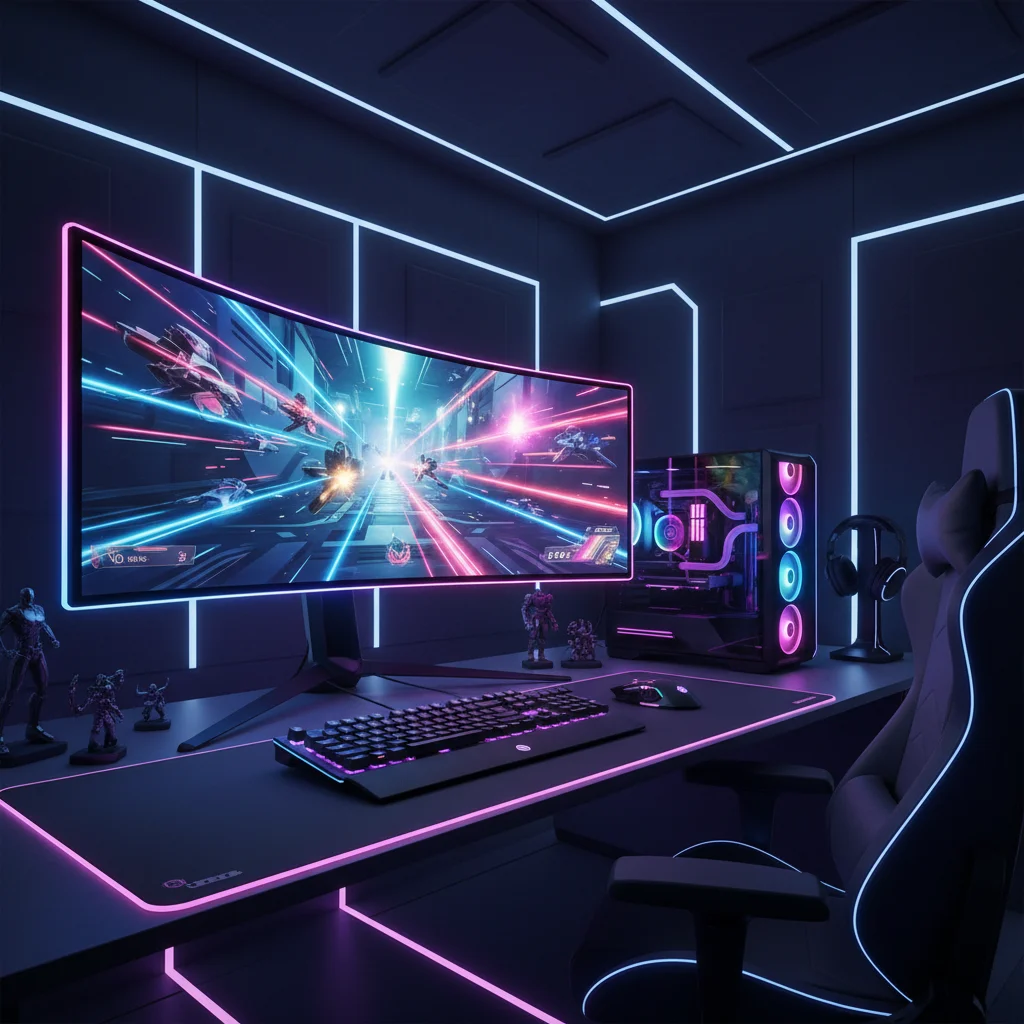
In the ever-evolving landscape of PC gaming, technological advancements relentlessly push the boundaries of immersion and competitive edge. As we step into 2026, one component remains paramount for any serious gamer: the monitor. Specifically, high refresh rate monitors have transcended from a luxury to a fundamental necessity, offering unparalleled fluidity and responsiveness that can be the decisive factor in fast-paced games. This comprehensive review delves into five of the most anticipated and high-performing high refresh rate monitors of 2026, dissecting their features, performance, and overall value to help you make an informed decision.
The quest for the perfect gaming display often boils down to a delicate balance of refresh rate, resolution, panel type, response time, and adaptive sync technologies. With manufacturers constantly innovating, 2026 promises a lineup of displays that not only meet but exceed the expectations of even the most discerning gamers. From professional esports athletes to casual enthusiasts seeking the ultimate visual experience, understanding the nuances of these cutting-edge devices is crucial.
Our focus today is squarely on the cream of the crop – displays engineered to deliver buttery-smooth visuals and instantaneous input, making every frame count. We’ll explore the latest advancements in OLED and Mini-LED technology, examine the impact of higher refresh rates on gameplay, and scrutinize the build quality and ergonomic design that contribute to a superior gaming setup. Prepare to elevate your gaming experience as we uncover the best high refresh rate monitors available this year.
The Significance of High Refresh Rate Monitors in 2026
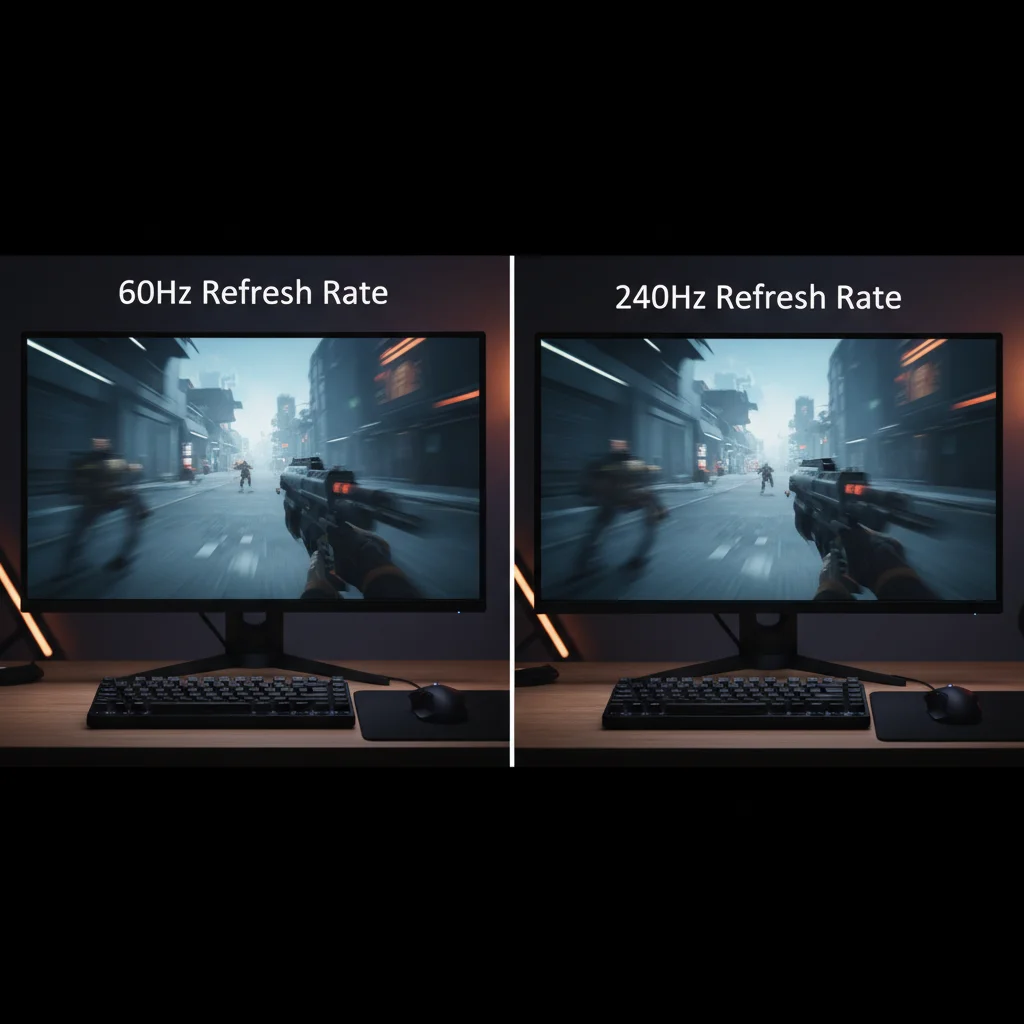
Before diving into individual reviews, let’s briefly re-establish why high refresh rate monitors are non-negotiable for modern gaming. A monitor’s refresh rate, measured in Hertz (Hz), indicates how many times per second the display can draw a new image. A standard office monitor typically operates at 60Hz. However, for gaming, especially competitive titles like first-person shooters (FPS) or racing games, a higher refresh rate—144Hz, 240Hz, 360Hz, or even higher—translates directly to a smoother, more responsive visual experience. This reduction in motion blur and input lag can significantly impact reaction times and overall gameplay performance.
In 2026, with graphics cards capable of pushing hundreds of frames per second in many titles, pairing them with a monitor that can display those frames is essential to unlock their full potential. Without a high refresh rate display, those extra frames generated by your GPU are essentially wasted, leading to a less fluid experience than your hardware is capable of delivering. This is where high refresh rate monitors truly shine, offering a noticeable competitive advantage and a more immersive visual feast.
Beyond competitive advantages, the sheer visual comfort of a high refresh rate display is undeniable. Even in non-gaming applications, moving your mouse cursor or scrolling through web pages feels incredibly smooth and responsive, making for a more pleasant overall computing experience. As technology progresses, the baseline expectation for gaming displays continues to rise, solidifying the position of high refresh rate monitors as a core component of any serious gaming rig.
Key Technologies Driving High Refresh Rates
Several underlying technologies contribute to the exceptional performance of 2026’s high refresh rate monitors. Panel types like OLED and advanced IPS (In-Plane Switching) are leading the charge. OLED panels, known for their perfect blacks and infinite contrast, are increasingly capable of achieving incredibly high refresh rates and near-instantaneous response times, making them a top choice for premium gaming experiences. IPS panels, while traditionally slower, have seen significant improvements, offering wide viewing angles and excellent color accuracy alongside impressive refresh rates.
Adaptive Sync technologies, such as NVIDIA G-Sync and AMD FreeSync, are also crucial. These technologies synchronize the monitor’s refresh rate with the GPU’s frame rate, eliminating screen tearing and minimizing stuttering. This ensures a consistently smooth visual experience, even when frame rates fluctuate. The integration of these technologies into high refresh rate monitors is now standard, providing a seamless and tear-free gaming environment.
Furthermore, advancements in display interfaces like DisplayPort 2.1 and HDMI 2.1 are vital for transmitting the massive bandwidth required for high resolutions at high refresh rates. These standards enable monitors to deliver stunning visual fidelity without compromise, ensuring that gamers can enjoy the full potential of their hardware. The synergy of these technologies is what makes the 2026 lineup of high refresh rate monitors truly exceptional.
Reviewing the Top 5 High Refresh Rate Monitors of 2026
Now, let’s dive into the specifics. We’ve meticulously selected five monitors that represent the pinnacle of gaming display technology in 2026. Each offers a unique blend of features, performance, and price point, catering to different needs and preferences within the high-performance gaming segment.
1. QuantumView XG360 OLED Pro
Overview
The QuantumView XG360 OLED Pro stands as a testament to what cutting-edge display technology can achieve. This 27-inch 1440p QD-OLED monitor boasts an astonishing 360Hz refresh rate, delivering an unrivaled level of fluidity. Its QD-OLED panel ensures vibrant colors, true blacks, and an infinite contrast ratio, making every scene pop with incredible depth and realism. Designed for the most demanding competitive gamers and visual enthusiasts, the XG360 OLED Pro is a true flagship among high refresh rate monitors.
Performance and Features
With a 0.03ms GtG response time, motion blur is practically non-existent on the XG360 OLED Pro. This near-instantaneous pixel response, combined with the 360Hz refresh rate, provides an exceptionally clear and responsive image, crucial for twitch-reflex games. It supports both NVIDIA G-Sync Ultimate and AMD FreeSync Premium Pro, ensuring tear-free gaming across different GPU ecosystems. The monitor also features a peak brightness of 1300 nits, offering stunning HDR performance that truly elevates supported content.
Connectivity options are robust, including DisplayPort 2.1, HDMI 2.1, and a USB-C port with power delivery, allowing for versatile connections to PCs, consoles, and laptops. Ergonomically, the stand offers full adjustability – tilt, swivel, pivot, and height – ensuring optimal viewing comfort during long gaming sessions. The slim bezels contribute to an immersive multi-monitor setup, making it ideal for those who demand expansive screen real estate.
Verdict
The QuantumView XG360 OLED Pro is arguably the best overall gaming monitor of 2026 for those who prioritize uncompromised performance and visual fidelity. Its combination of QD-OLED technology, an extremely high refresh rate, and comprehensive features makes it a powerhouse. The price point is premium, but for serious gamers and content creators, it represents an investment in the ultimate visual experience. This is a prime example of how high refresh rate monitors are pushing boundaries.
2. ApexVision Ultima 4K 240Hz
Overview
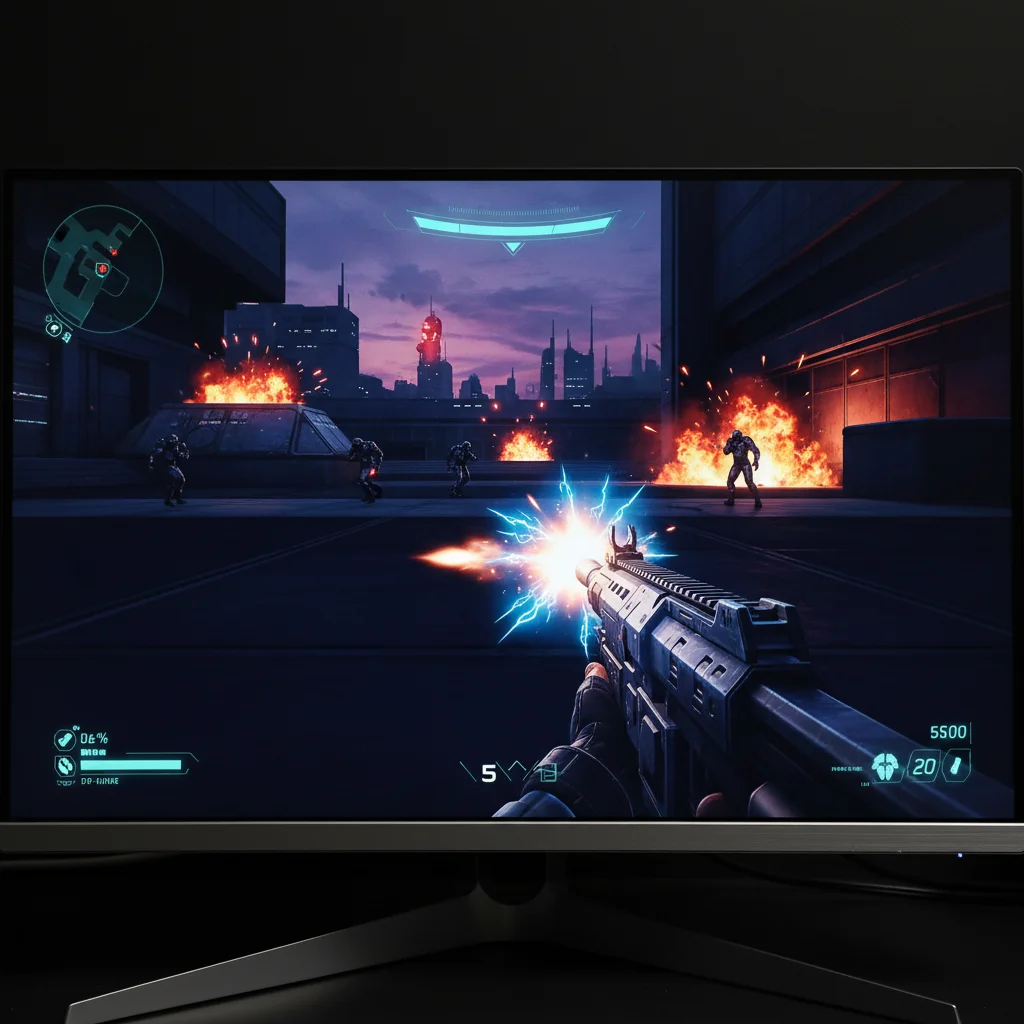
For gamers who refuse to compromise on resolution, the ApexVision Ultima 4K 240Hz is a dream come true. This 32-inch Mini-LED display brings true 4K resolution (3840×2160) together with an impressive 240Hz refresh rate. It’s a monitor designed for those who want to experience games in breathtaking detail without sacrificing the smooth gameplay offered by high refresh rate monitors. The Mini-LED backlight technology provides thousands of local dimming zones, resulting in exceptional contrast and HDR performance.
Performance and Features
The Ultima 4K 240Hz boasts a GtG response time of 1ms, ensuring minimal ghosting even at its high refresh rate. Its Mini-LED panel, with over 2000 local dimming zones, achieves a peak brightness of 1600 nits, making HDR content incredibly impactful. Color accuracy is superb, covering 98% of the DCI-P3 color space, making it suitable for both gaming and professional content creation. NVIDIA G-Sync Ultimate certification guarantees a fluid and tear-free experience.
Connectivity is robust, featuring two DisplayPort 2.1 ports and two HDMI 2.1 ports, ensuring compatibility with the latest graphics cards and next-gen consoles. The monitor also includes a built-in KVM switch, a convenient feature for users with multiple PCs. The stand is fully ergonomic, and the build quality feels exceptionally premium, justifying its position as a high-end display among high refresh rate monitors.
Verdict
The ApexVision Ultima 4K 240Hz is the top choice for gamers who demand the best of both worlds: stunning 4K resolution and a blazing-fast 240Hz refresh rate. While it requires a powerful GPU to drive games at these settings, the visual payoff is immense. It’s a premium product with a premium price, but for those seeking the ultimate 4K gaming experience, it’s an investment that delivers. This monitor perfectly exemplifies the evolution of high refresh rate monitors into the 4K realm.
3. SwiftEdge Pro 240Hz IPS
Overview
The SwiftEdge Pro 240Hz IPS is designed for competitive gamers who prioritize speed and responsiveness in a more accessible package. This 27-inch 1440p IPS monitor delivers a rapid 240Hz refresh rate and a 1ms GtG response time, making it an excellent choice for esports titles where every millisecond counts. While not an OLED, its advanced IPS panel offers excellent color reproduction and wide viewing angles, making it a versatile option.
Performance and Features
The core strength of the SwiftEdge Pro lies in its raw speed. The 240Hz refresh rate, combined with the low 1ms response time, ensures an incredibly smooth and blur-free image, ideal for fast-paced action. It supports AMD FreeSync Premium and is NVIDIA G-Sync Compatible, providing adaptive sync benefits regardless of your graphics card. Brightness levels are robust for an IPS panel, reaching 400 nits typical and 600 nits peak for HDR content, offering a decent HDR experience.
Connectivity includes DisplayPort 1.4 and HDMI 2.0, which are sufficient for its resolution and refresh rate. It also integrates a USB hub for convenient peripheral connection. The stand is fully ergonomic, allowing for a comfortable setup, and the build quality is solid and reliable. This monitor focuses on delivering core gaming performance without the ultra-premium price tag of OLED or Mini-LED options, making it one of the most attractive high refresh rate monitors for the price.
Verdict
For competitive gamers on a slightly tighter budget who still demand top-tier performance, the SwiftEdge Pro 240Hz IPS is an outstanding choice. It offers the speed and responsiveness needed for competitive play without the higher cost associated with more exotic panel technologies. It strikes a fantastic balance between performance, features, and value, cementing its place as a strong contender among high refresh rate monitors.
4. LuminaCurve 34 Ultrawide OLED
Overview
The LuminaCurve 34 Ultrawide OLED caters to gamers who crave an expansive, immersive experience. This 34-inch ultrawide (3440×1440) QD-OLED monitor combines a 175Hz refresh rate with a dramatic 1800R curve, pulling you deeper into your games. The ultrawide aspect ratio is perfect for simulation, RPGs, and strategy games, offering a panoramic view that standard monitors simply cannot match. Its QD-OLED panel ensures all the benefits of OLED technology: perfect blacks, vibrant colors, and lightning-fast response times.
Performance and Features
The 175Hz refresh rate, while not the highest on this list, is more than sufficient for an ultrawide display, providing a smooth and responsive experience across its vast canvas. The 0.03ms GtG response time is characteristic of QD-OLED, eliminating motion blur entirely. With G-Sync Ultimate and FreeSync Premium Pro support, screen tearing is a non-issue. HDR performance is exceptional, with deep blacks and a peak brightness that makes highlights truly stand out, further enhancing the immersive quality of the ultrawide format.
Connectivity includes DisplayPort 1.4 and HDMI 2.1, along with a convenient USB hub. The stand offers tilt and height adjustment, though pivot functionality is typically absent on ultrawide curved monitors. The build quality is premium, and the slim bezels contribute to the overall immersive feel. The LuminaCurve 34 Ultrawide OLED is a prime example of how high refresh rate monitors can be tailored for specific, highly immersive experiences.
Verdict
For gamers seeking the ultimate immersive ultrawide gaming experience, the LuminaCurve 34 Ultrawide OLED is an unparalleled choice. Its combination of QD-OLED technology, a dramatic curve, and a respectable high refresh rate makes it a standout. While ultrawide gaming requires a powerful GPU, the visual payoff and increased field of view are incredibly rewarding. It’s a premium monitor for a premium experience, solidifying its place among the elite high refresh rate monitors.
5. Helios 25-inch 500Hz eSports
Overview
The Helios 25-inch 500Hz eSports monitor is a specialized tool built for one purpose: unadulterated speed in competitive esports. This 25-inch 1080p Fast IPS display pushes the boundaries with an astounding 500Hz refresh rate, making it the fastest monitor on our list. While its 1080p resolution might seem modest in 2026, it’s a deliberate choice to ensure that even mid-range GPUs can consistently hit extremely high frame rates, fully utilizing the monitor’s capabilities. It’s designed for professional players where every single frame and millisecond matters.
Performance and Features
The 500Hz refresh rate, combined with a 0.5ms GtG response time (with overdrive), provides an almost surreal level of motion clarity. This monitor is all about reducing input lag and maximizing responsiveness, giving competitive players the absolute best chance to react instantly. It supports both NVIDIA G-Sync and AMD FreeSync, ensuring perfectly synchronized frame delivery. Brightness is solid for an IPS panel, and color accuracy is good, though not its primary focus.
Connectivity includes DisplayPort 2.1 and HDMI 2.1, ensuring sufficient bandwidth for the extreme refresh rate. The stand is fully ergonomic, robust, and designed for stability during intense gaming. Additional features often include a built-in crosshair, dark stabilizer, and other competitive gaming enhancements. This monitor is the embodiment of a specialized tool among high refresh rate monitors, focusing purely on raw speed.
Verdict
For the most hardcore competitive esports players who prioritize frame rate and response time above all else, the Helios 25-inch 500Hz eSports monitor is the ultimate weapon. Its 1080p resolution allows for easier frame rate achievement, and the dizzying 500Hz refresh rate offers an unparalleled competitive edge. It’s a niche product, but for its intended audience, it’s unsurpassed. It represents the extreme end of what high refresh rate monitors can offer in terms of pure speed.
Understanding Key Monitor Specifications for High Refresh Rate Monitors
When evaluating high refresh rate monitors, several specifications go hand-in-hand with the refresh rate itself. Understanding these will help you make an informed decision tailored to your specific gaming needs and budget.
Panel Type: OLED vs. IPS vs. VA
- OLED (Organic Light-Emitting Diode): Offers perfect blacks, infinite contrast, and incredibly fast response times (often 0.03ms GtG). Pixels light up individually. Ideal for stunning visuals and competitive play, but typically more expensive and can have burn-in concerns (though greatly reduced in 2026 models).
- IPS (In-Plane Switching): Known for excellent color accuracy and wide viewing angles. Modern ‘Fast IPS’ panels can achieve very high refresh rates (up to 500Hz) and low response times (1ms GtG), making them a strong contender for gaming. Generally a good balance of performance and price.
- VA (Vertical Alignment): Offers good contrast ratios (better than IPS, not as good as OLED) and decent viewing angles. Can achieve high refresh rates, but historically have slower response times, leading to more ghosting, especially in darker scenes. Advancements have made ‘Fast VA’ panels more competitive, but they are generally less common in the ultra-high refresh rate segment for 2026.
Response Time (GtG vs. MPRT)
Response time measures how quickly pixels can change color. For high refresh rate monitors, a low response time is crucial to minimize motion blur and ghosting.
- GtG (Gray-to-Gray): Measures the time it takes for a pixel to transition from one shade of gray to another. This is generally the most relevant metric for competitive gaming. Aim for 1ms GtG or lower for optimal performance on high refresh rate displays.
- MPRT (Moving Picture Response Time): Measures how long a pixel remains visible on screen. This is often achieved through backlight strobing (Motion Blur Reduction features), which can reduce perceived motion blur but might introduce flicker or reduce brightness. It’s a different metric than GtG and shouldn’t be directly compared.
Resolution: 1080p, 1440p, 4K, Ultrawide
The resolution dictates the sharpness and detail of the image. The choice depends on your GPU’s power and your preference.
- 1080p (1920×1080): Easiest to drive at very high frame rates, making it ideal for extreme competitive gaming where absolute speed is paramount (e.g., the Helios 500Hz).
- 1440p (2560×1440): The sweet spot for many gamers in 2026, offering a significant visual upgrade over 1080p without being as demanding as 4K. Many high refresh rate monitors in this category offer excellent performance.
- 4K (3840×2160): Delivers incredible detail and clarity. Requires a very powerful GPU to achieve high frame rates at 4K, especially with high refresh rates.
- Ultrawide (e.g., 3440×1440): Offers an immersive panoramic view, excellent for many game genres. Demanding on GPUs due to the increased pixel count.
Adaptive Sync: G-Sync vs. FreeSync
These technologies synchronize the monitor’s refresh rate with your GPU’s frame rate to eliminate screen tearing and stuttering.
- NVIDIA G-Sync: Requires a dedicated hardware module in the monitor. Offers excellent performance and features (like variable overdrive). G-Sync Ultimate is the premium tier.
- AMD FreeSync: An open standard that is more widely adopted and often found on more affordable monitors. FreeSync Premium and Premium Pro offer additional features like LFC (Low Framerate Compensation) and HDR support.
- G-Sync Compatible: Many FreeSync monitors are certified by NVIDIA as ‘G-Sync Compatible,’ meaning they work well with NVIDIA GPUs using NVIDIA’s software-based G-Sync.
Ensuring your chosen high refresh rate monitors support adaptive sync is crucial for a smooth gaming experience.
Choosing the Right High Refresh Rate Monitor for You
With such a diverse range of high refresh rate monitors available in 2026, selecting the perfect one can feel daunting. Here’s a breakdown of factors to consider:
Your Gaming Priorities
- Competitive Esports: If every millisecond counts, prioritize the highest refresh rate (360Hz+) and lowest response time (0.03-1ms GtG) on a 1080p or 1440p panel. The Helios 500Hz is a prime example.
- Immersive Single-Player & RPGs: Focus on resolution, panel quality (OLED/Mini-LED for HDR), and potentially an ultrawide form factor. A 144Hz-240Hz refresh rate is still highly desirable. The LuminaCurve 34 or ApexVision Ultima 4K would fit well here.
- All-Around Gaming: A balance of 1440p resolution, 144Hz-240Hz refresh rate, and a good IPS or OLED panel offers a versatile experience. The QuantumView XG360 OLED Pro or SwiftEdge Pro 240Hz IPS are excellent choices.
Your GPU Power
A high refresh rate monitor is only as good as the graphics card driving it. Ensure your GPU can consistently push high frame rates at your desired resolution. There’s little point in a 240Hz 4K monitor if your GPU can only manage 60-80 FPS in your favorite games. Match your monitor to your system’s capabilities.
Budget Considerations
The price spectrum for high refresh rate monitors in 2026 is wide. OLED and Mini-LED displays at high resolutions and refresh rates command premium prices. IPS alternatives offer excellent performance at more accessible price points. Determine your budget and look for the best balance of features within that range.
Ergonomics and Design
Don’t overlook the importance of a good stand (tilt, swivel, pivot, height adjustment) and comfortable viewing angles. Features like USB hubs, KVM switches, and VESA mount compatibility can also enhance your overall setup.
The Future of High Refresh Rate Monitors Beyond 2026
The innovation in high refresh rate monitors shows no signs of slowing down. Beyond 2026, we can anticipate even higher refresh rates becoming standard across more resolutions. Micro-LED technology, offering the best of both OLED and Mini-LED without their drawbacks, is on the horizon, promising even brighter, more vibrant, and faster displays. Greater integration of AI-powered scaling and upsampling technologies within monitors themselves could further enhance visual quality without burdening GPUs as much.
Wireless display technologies are also maturing, potentially leading to truly cable-free high refresh rate monitors with minimal latency. Furthermore, advancements in flexible and rollable display technology could revolutionize form factors, offering new ways to interact with our games and content. The journey towards pixel-perfect, instantaneous visual experiences continues, promising an exciting future for gamers everywhere.
Conclusion
The year 2026 presents an incredible array of high refresh rate monitors, each pushing the boundaries of what’s possible in gaming displays. Whether you’re a competitive esports player chasing every last frame, an immersive enthusiast seeking stunning visuals, or someone looking for a balanced all-rounder, there’s a monitor on this list—or one inspired by these technologies—that will perfectly suit your needs.
From the unparalleled fluidity of the QuantumView XG360 OLED Pro to the breathtaking 4K clarity of the ApexVision Ultima 4K 240Hz, and the sheer speed of the Helios 25-inch 500Hz eSports, the choices are more exciting than ever. Remember to consider your personal gaming style, the power of your GPU, and your budget when making your final decision. Investing in a high refresh rate monitor is one of the most impactful upgrades you can make to your gaming setup, transforming your experience with buttery-smooth motion and lightning-fast responsiveness.
Embrace the future of gaming with one of these top-tier high refresh rate monitors and prepare to see your games in a whole new light. The difference is not just noticeable; it’s game-changing.