Generative AI Tools 2026: Revolutionizing US Content Creation
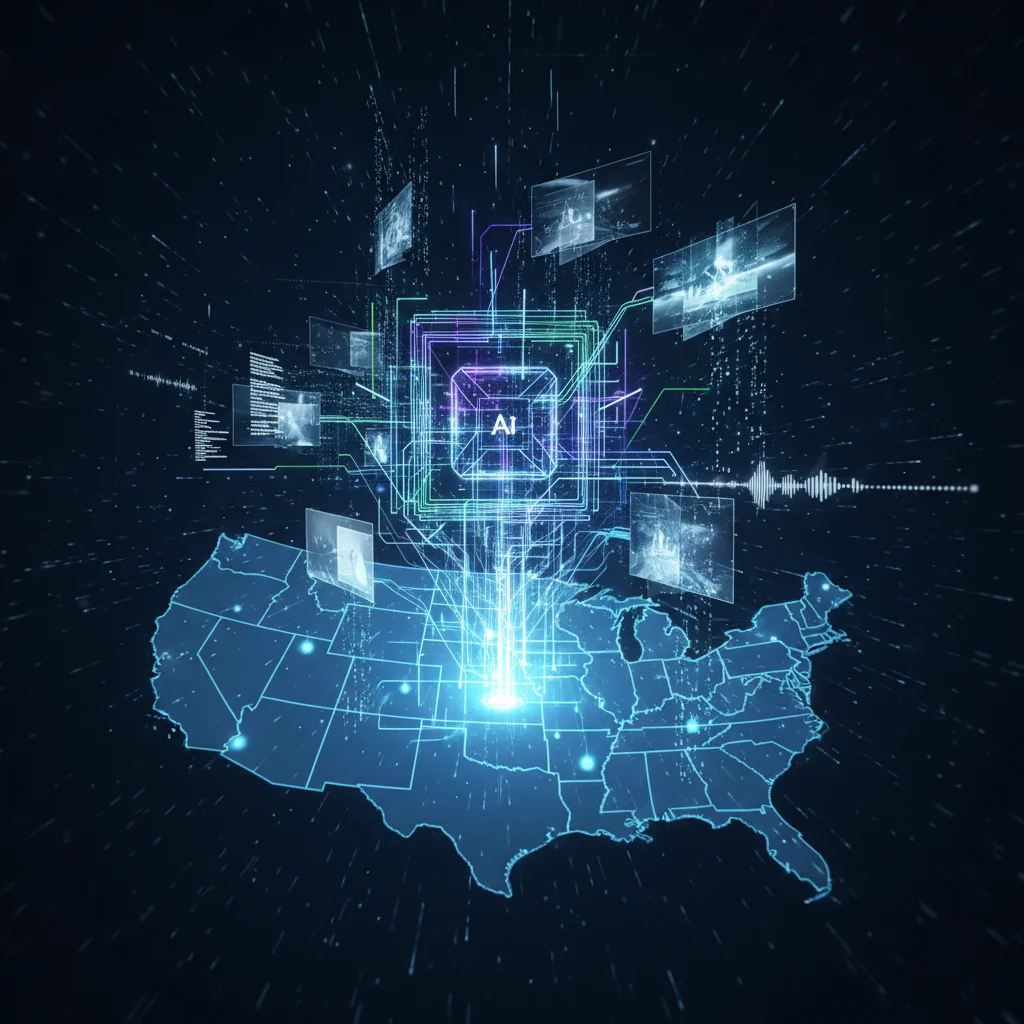
The pace of technological advancement is nothing short of breathtaking, and nowhere is this more evident than in the realm of Artificial Intelligence. Specifically, generative AI is rapidly emerging as a transformative force, fundamentally reshaping how businesses and individuals create content. As we look towards 2026, the United States is poised to witness an unprecedented integration of these sophisticated tools across various industries. This article will delve into the rise of generative AI and highlight five pivotal tools that are set to redefine content creation in the US landscape.
The Rise of Generative AI: 5 Tools Transforming Content Creation in the US for 2026
In an increasingly digital world, content is king. From marketing copy and social media posts to intricate design elements and immersive video experiences, the demand for high-quality, engaging content is insatiable. However, the traditional methods of content creation are often time-consuming, resource-intensive, and can struggle to keep up with the sheer volume required. This is where generative AI content steps in, offering a paradigm shift in efficiency, scalability, and creative potential.
By 2026, the influence of generative AI will be pervasive, not just in tech-forward companies but across small businesses, educational institutions, and even individual creators throughout the United States. These tools leverage advanced machine learning models to produce novel content—be it text, images, audio, or video—that is often indistinguishable from human-created work. The implications for productivity, innovation, and competitive advantage are enormous.
Understanding and adopting these tools will be crucial for anyone looking to stay ahead in the evolving digital economy. This comprehensive guide will explore the underlying principles of generative AI, its current impact, and a forward-looking perspective on the specific tools that will dominate the US content creation scene in the coming years. Prepare to witness a revolution in how we conceive, produce, and interact with digital content.
What is Generative AI? A Core Understanding
Before we dive into the specific tools, it’s essential to grasp the fundamental concept of generative AI. At its core, generative AI refers to a category of artificial intelligence algorithms that can generate new and original content. Unlike discriminative AI, which focuses on classifying or predicting based on existing data, generative AI learns the patterns and structures of input data to produce entirely new outputs that share similar characteristics.
These sophisticated models, often built upon architectures like Generative Adversarial Networks (GANs) or Transformers, are trained on vast datasets of text, images, or audio. Through this training, they develop an intricate understanding of grammar, syntax, style, artistic composition, and even emotional nuances. Once trained, they can then be prompted to create unique pieces of content that adhere to specific parameters or styles.
The magic of generative AI lies in its ability to go beyond simple automation. It doesn’t just rearrange existing elements; it creates genuinely novel content. For instance, a generative AI model trained on millions of articles can write a new article on a given topic, complete with unique phrasing and arguments. Similarly, an image generator can conjure up an entirely new visual scene based on a text description. This capability to produce original output is what makes Generative AI Content so groundbreaking.
The applications are incredibly diverse. In the US, businesses are already leveraging generative AI for rapid prototyping of designs, automated content marketing, personalized customer experiences, and even advanced scientific research. As the technology matures, its integration into daily workflows will become increasingly seamless, making it an indispensable asset for any content creator. The continuous refinement of these algorithms means that by 2026, the quality and versatility of AI-generated content will reach unprecedented levels, challenging our traditional notions of creativity.
The Current Impact of Generative AI on Content Creation in the US
Even today, the impact of generative AI on content creation in the US is substantial and growing. Companies are reporting significant increases in efficiency and output, allowing them to scale their content efforts without proportional increases in human resources. This technology is not just about replacing human effort; it’s about augmenting human creativity and enabling creators to focus on higher-level strategic thinking and refinement.
Automated Content Generation
One of the most immediate impacts is the automation of routine content generation. This includes everything from drafting email newsletters and social media captions to generating product descriptions and basic news articles. While human oversight remains crucial for accuracy and brand voice, generative AI handles the heavy lifting of initial drafts, freeing up human writers for more complex, creative, and strategic tasks. This capability to rapidly produce Generative AI Content is a game-changer for digital marketing agencies and e-commerce platforms.
Personalization at Scale
Generative AI allows for unprecedented levels of personalization. Imagine generating thousands of unique marketing messages, each tailored to an individual customer’s preferences and past interactions. This level of customization, previously impossible to achieve manually, is now within reach, leading to higher engagement rates and improved customer satisfaction. US marketers are quickly realizing the competitive edge this offers.
Accelerated Design and Prototyping
For visual content, generative AI is revolutionizing design workflows. Graphic designers can use AI to generate multiple variations of a logo, website layout, or advertisement in minutes, significantly speeding up the ideation and prototyping phases. This iterative process allows for more experimentation and ultimately, better design outcomes. The creative industries in the US are embracing these tools to push the boundaries of visual content.
Enhanced Creativity and Idea Generation
Beyond automation, generative AI serves as a powerful brainstorming partner. Stuck on a creative block? AI can offer fresh perspectives, generate diverse ideas for storylines, marketing campaigns, or artistic concepts. It acts as a catalyst for human creativity, presenting possibilities that might not have been considered otherwise. This collaborative aspect is key to the future of Generative AI Content.
The current landscape demonstrates that generative AI is not a fleeting trend but a foundational technology that is already embedding itself into the fabric of content creation across the US. As these tools become more sophisticated and accessible, their influence will only intensify, paving the way for the next generation of digital experiences.
Forecasting 2026: The Evolution of Generative AI Content
Looking ahead to 2026, the evolution of generative AI is expected to accelerate dramatically, reaching new levels of sophistication and integration. We can anticipate several key trends that will shape how Generative AI Content is produced and consumed in the US.
Hyper-Personalization and Dynamic Content
By 2026, generative AI will enable hyper-personalization that goes beyond current capabilities. Content will not just be tailored to individual preferences but will dynamically adapt in real-time based on user interaction, context, and even emotional state. Imagine a website where the entire layout, imagery, and text rearrange themselves to best suit your current mood and needs, all generated on the fly by AI.
Multimodal Content Generation
Current generative AI often specializes in one modality (text, image, audio). By 2026, we will see a significant shift towards truly multimodal AI that can seamlessly generate content across different formats. An AI might be able to take a text prompt and produce a complete package: a written article, accompanying images, a short video summary, and even a voiceover, all cohesively branded and styled. This will dramatically streamline complex content projects.
Ethical AI and Responsible Content Creation
As generative AI becomes more powerful, the discussion around ethical AI and responsible content creation will intensify. By 2026, we can expect more robust frameworks, regulations, and built-in guardrails within AI tools to address issues like deepfakes, misinformation, intellectual property, and algorithmic bias. The focus will be on ensuring that Generative AI Content is not only innovative but also trustworthy and ethically sound.
Creative Partnership, Not Replacement
The narrative will increasingly shift from AI replacing human creators to AI acting as an indispensable creative partner. By 2026, the most successful content creators in the US will be those who master the art of prompt engineering and effectively collaborate with AI tools, using them to amplify their vision and execute complex ideas with unprecedented speed and scale. The synergy between human intuition and AI’s processing power will define the next era of content.
Accessibility and Democratization of High-Quality Content
Advanced generative AI tools will become more accessible to a wider audience. Small businesses, independent artists, and non-profits in the US will be able to produce high-quality, professional-grade content that was once only within the reach of large corporations with substantial budgets. This democratization of content creation will foster a new wave of innovation and entrepreneurship.
These trends paint a picture of a future where Generative AI Content is not just a novelty but an integral, sophisticated, and ethically managed component of the creative process, driving efficiency and opening up new frontiers for expression across the United States.
Top 5 Generative AI Tools Transforming Content Creation in the US for 2026
The market for generative AI tools is dynamic and competitive, with new innovations emerging constantly. However, certain platforms are distinguishing themselves through their capabilities, user adoption, and strategic development. Here are five generative AI tools that are set to significantly transform content creation in the US by 2026, each offering unique strengths and applications.
1. Advanced Text Generation Platforms (e.g., GPT-X Series, Claude, Gemini)
While specific models evolve rapidly, the underlying technology of large language models (LLMs) will remain paramount. Platforms like OpenAI’s GPT-X series, Anthropic’s Claude, and Google’s Gemini are at the forefront of text generation. By 2026, these models will boast even greater contextual understanding, nuanced writing styles, and the ability to produce long-form content with remarkable coherence and factual accuracy (though human review will always be essential).
- Key Features:
- Long-form content creation: Generating entire articles, reports, scripts, and even book chapters.
- Style adaptation: Mimicking specific tones, voices, and branding guidelines.
- Multi-language support: Seamless translation and content generation across diverse linguistic markets within the US and globally.
- Summarization and extraction: Efficiently condensing information and extracting key insights from large datasets.
- Impact on US Content Creation: These platforms will become indispensable for content marketers, journalists, academic writers, and corporate communicators, drastically reducing the time spent on drafting and editing. The ability to churn out high-quality Generative AI Content at scale will be a major differentiator.
2. Sophisticated Image and Video Generators (e.g., Midjourney, RunwayML, Adobe Firefly)
Visual content is king, and generative AI is revolutionizing its production. Tools like Midjourney, known for its artistic prowess, RunwayML for video generation and editing, and Adobe Firefly for seamless integration into creative workflows, are leading the charge. By 2026, these platforms will offer photorealistic outputs, advanced animation capabilities, and intuitive control over complex scenes.
- Key Features:
- Text-to-image/video: Creating stunning visuals from simple text prompts.
- Object manipulation: Adding, removing, or altering elements within images and videos with precision.
- Style transfer and artistic filters: Applying diverse artistic styles to existing or generated content.
- 3D asset generation: Creating models and environments for virtual reality, gaming, and architectural visualization.
- Impact on US Content Creation: Graphic designers, video editors, advertisers, and game developers will leverage these tools to rapidly prototype ideas, create unique visual assets, and produce high-quality multimedia content without extensive manual labor or costly stock photography. The democratization of high-end visual Generative AI Content will be profound.
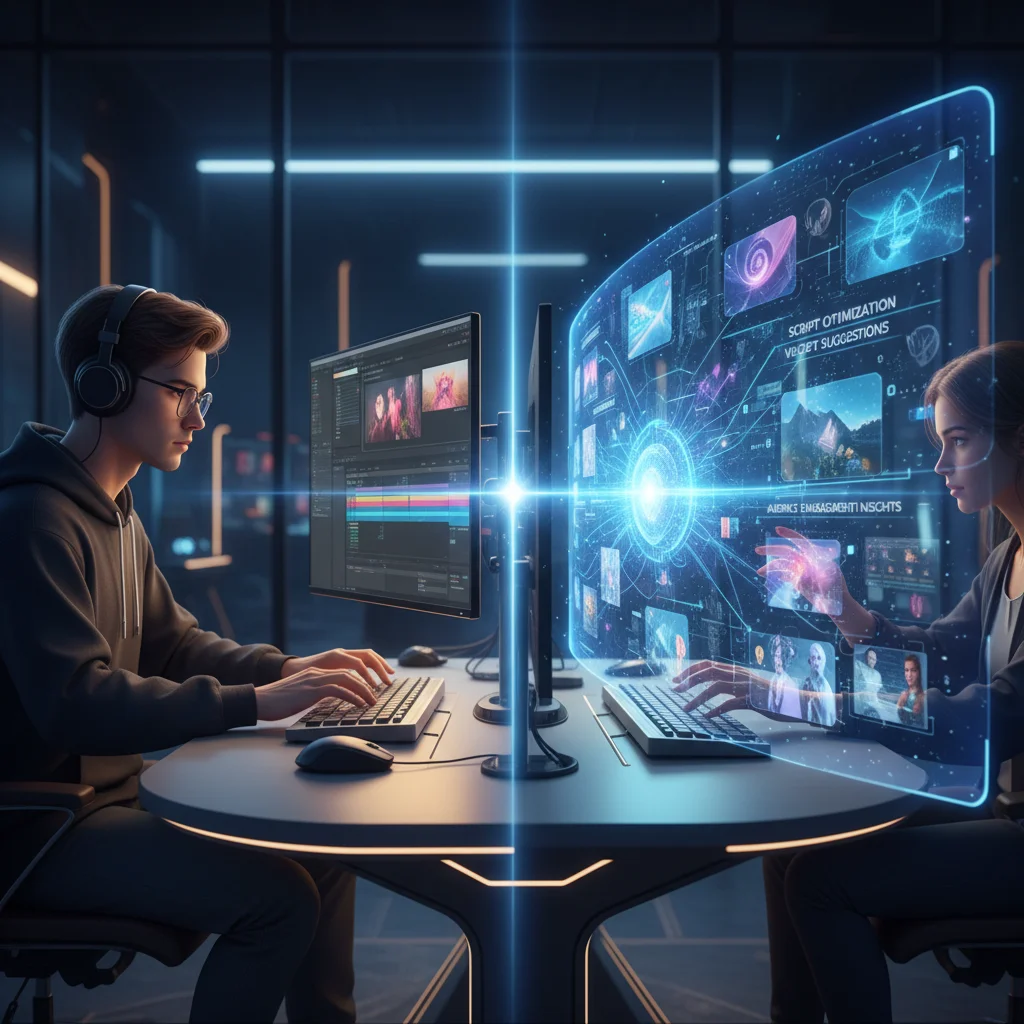
3. AI-Powered Audio and Music Composition Tools (e.g., AIVA, Soundraw, Google Lyra)
The auditory landscape is also ripe for AI transformation. Tools like AIVA (Artificial Intelligence Virtual Artist) for music composition, Soundraw for royalty-free music generation, and Google’s research into advanced audio synthesis (like Lyra for speech) will become mainstream. By 2026, these tools will offer nuanced control over musical genres, emotional tones, and realistic voice synthesis.
- Key Features:
- Custom music generation: Composing original soundtracks for videos, podcasts, and games based on mood, tempo, and instrumentation.
- Voice synthesis and cloning: Generating realistic voiceovers in various languages and even replicating specific vocal tones.
- Sound effect design: Creating bespoke sound effects for immersive experiences.
- Audio editing and mastering: AI-assisted tools for refining and optimizing audio quality.
- Impact on US Content Creation: Podcasters, filmmakers, advertisers, and game developers will be able to create bespoke audio experiences without needing extensive musical or sound engineering expertise. This will significantly reduce production costs and time for high-quality audio Generative AI Content.
4. Interactive Content and Experience Generators (e.g., AI-driven chatbots, personalized storytelling engines)
Beyond static content, generative AI is moving into creating dynamic, interactive experiences. This includes highly sophisticated AI-driven chatbots for customer service and personalized marketing, as well as engines that can generate branching narratives for games, educational modules, or interactive advertisements. By 2026, these tools will offer seamless, human-like interactions and adaptive content delivery.
- Key Features:
- Dynamic conversational AI: Generating natural language responses for complex inquiries.
- Personalized user journeys: Adapting content and interactions based on individual user behavior and preferences.
- Interactive narrative generation: Creating unique story paths and character dialogues for games and simulations.
- Virtual assistant development: Building more intelligent and capable AI assistants for various applications.
- Impact on US Content Creation: Businesses will transform customer engagement with highly personalized and efficient interactive Generative AI Content. Educators will create adaptive learning materials, and the entertainment industry will offer incredibly immersive and unique experiences to consumers.
5. AI-Powered Code and Web Development Assistants (e.g., GitHub Copilot, Replit AI)
While often overlooked in content creation discussions, code is a fundamental form of content, especially for digital products and platforms. Tools like GitHub Copilot and Replit AI are revolutionizing how developers write code by suggesting lines of code, functions, and even entire algorithms. By 2026, these assistants will be far more intelligent, capable of generating complex applications from high-level prompts.
- Key Features:
- Code autocompletion and suggestion: Speeding up development by predicting and suggesting code snippets.
- Function and algorithm generation: Creating complete blocks of code based on natural language descriptions.
- Bug detection and fixing: Identifying and even suggesting solutions for coding errors.
- Automated documentation: Generating clear and concise documentation for codebases.
- Impact on US Content Creation: This will accelerate the development of all digital content platforms, tools, and applications. Websites, mobile apps, and custom software that power content experiences will be built faster and more efficiently, leading to a richer and more dynamic digital ecosystem for Generative AI Content.
These five categories represent the vanguard of generative AI tools that will shape content creation in the US by 2026. Their continuous development and widespread adoption will not only enhance efficiency but also unlock unprecedented creative possibilities across all sectors.
Challenges and Ethical Considerations for Generative AI Content
While the potential of generative AI is immense, its rapid advancement also brings forth a unique set of challenges and ethical considerations that must be addressed, particularly as these tools become more entrenched in the US content creation landscape. Navigating these complexities will be critical for responsible innovation.
Accuracy and Factual Veracity
One of the primary concerns with Generative AI Content, especially text-based output, is ensuring factual accuracy. AI models learn from vast datasets, and if those datasets contain biases or inaccuracies, the generated content can reflect them. Furthermore, AI can ‘hallucinate,’ producing plausible-sounding but entirely false information. This necessitates rigorous human oversight and fact-checking, particularly in fields like journalism, healthcare, and finance.
Copyright and Intellectual Property
The legal landscape surrounding AI-generated content and intellectual property is still evolving. Who owns the copyright to an image or piece of music created by an AI? What if the AI was trained on copyrighted material without explicit permission? These questions are complex and will require new legal frameworks and industry standards to ensure fair compensation for creators and clarity on ownership, especially within the US legal system.
Bias and Fairness
AI models are only as unbiased as the data they are trained on. If training data reflects societal biases (e.g., gender, race, socioeconomic status), the AI can perpetuate or even amplify these biases in its generated content. This could lead to discriminatory language, stereotypical imagery, or unfair representations. Developing diverse and representative datasets, along with implementing bias detection and mitigation techniques, is paramount for ethical Generative AI Content.
Deepfakes and Misinformation
The ability of generative AI to create highly realistic images, audio, and video (deepfakes) presents a significant risk of misinformation and malicious use. This technology could be used to manipulate public opinion, spread propaganda, or impersonate individuals. Combating deepfakes will require a multi-faceted approach involving advanced detection tools, media literacy education, and robust platform policies.
Job Displacement and Workforce Adaptation
As AI automates more aspects of content creation, concerns about job displacement are natural. While many believe AI will augment rather than replace human workers, there will undoubtedly be shifts in job roles and skill requirements. The US workforce will need to adapt, focusing on skills that complement AI, such as critical thinking, creativity, prompt engineering, and ethical oversight. Investment in re-skilling and up-skilling programs will be crucial.
Transparency and Attribution
It will become increasingly important to be transparent about when content has been generated or assisted by AI. Clear attribution mechanisms could help maintain trust and distinguish human-created content from AI-generated content, especially in sensitive areas. Establishing clear guidelines for disclosure will be a key challenge for content creators and platforms alike.
Addressing these challenges is not merely a technical problem; it requires a concerted effort from technologists, policymakers, ethicists, and the public. As Generative AI Content becomes more sophisticated by 2026, proactive measures will be essential to harness its benefits while mitigating its risks, ensuring a future where AI serves humanity responsibly.
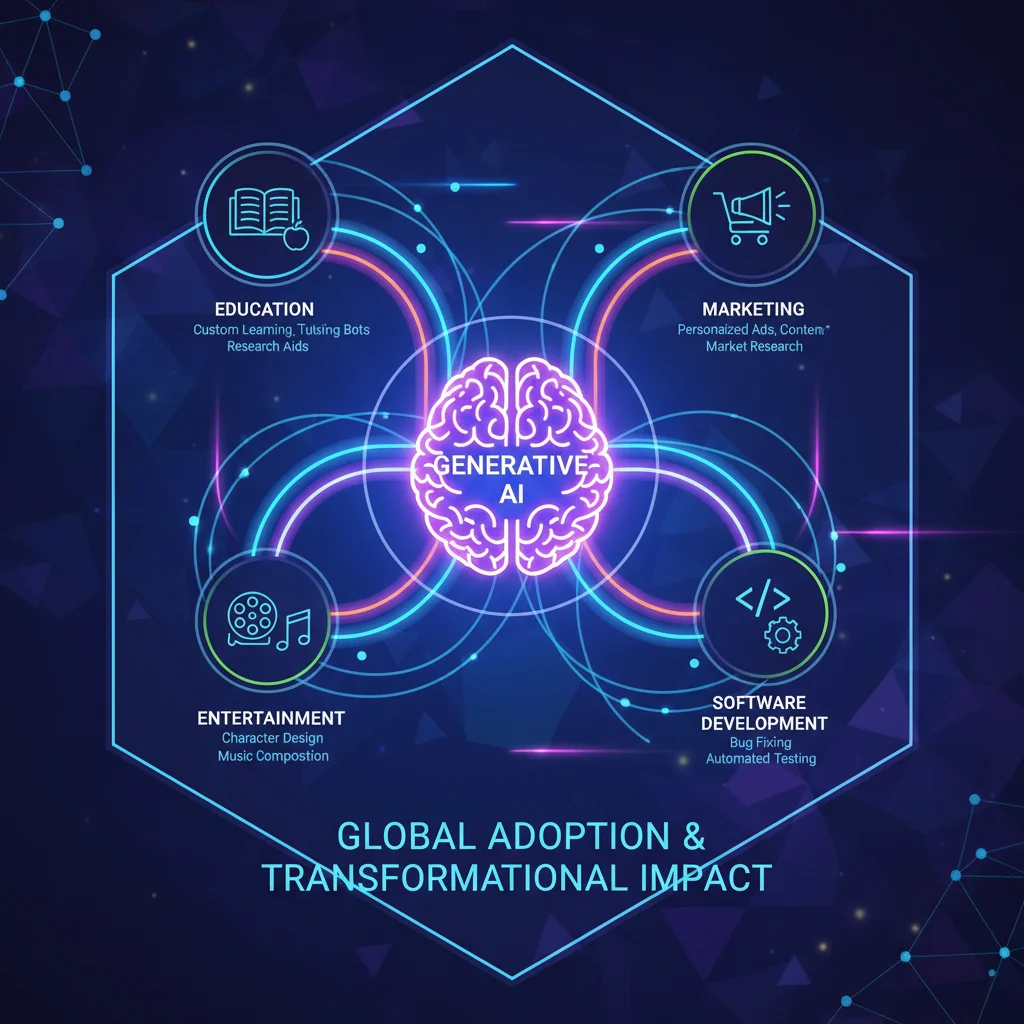
Integrating Generative AI into Your Content Workflow
For individuals and organizations in the US looking to leverage the power of Generative AI Content by 2026, strategic integration into existing content workflows is key. It’s not about replacing humans entirely, but about creating a synergistic relationship where AI augments human capabilities and streamlines processes.
Identify Repetitive Tasks
Begin by identifying areas in your content creation process that are repetitive, time-consuming, or require generating large volumes of similar content. This could include drafting social media posts, generating product descriptions, summarizing research papers, or creating multiple variations of ad copy. These are prime candidates for AI automation.
Start Small and Experiment
Don’t try to overhaul your entire workflow at once. Start with a single generative AI tool and integrate it into a specific, manageable part of your process. Experiment with different prompts, parameters, and use cases. Learn what the AI is good at and where its limitations lie. This iterative approach allows for gradual adoption and minimizes disruption.
Develop Prompt Engineering Skills
The quality of AI-generated content is highly dependent on the quality of the input prompts. Investing time in developing ‘prompt engineering’ skills—learning how to craft clear, specific, and effective instructions for the AI—will be crucial. This involves understanding how to guide the AI towards the desired tone, style, and content structure.
Establish Human Oversight and Review
Always maintain human oversight. AI-generated content should be treated as a first draft or a starting point, not a final product. Human editors, fact-checkers, and brand strategists must review, refine, and approve all AI-generated content to ensure accuracy, brand consistency, and ethical compliance. This is especially vital for Generative AI Content that will be widely distributed.
Train Your Team
Invest in training your content team on how to use generative AI tools effectively. This includes not just the technical aspects of the software but also understanding the ethical implications, best practices for collaboration with AI, and adapting to new ways of working. Empowering your team with these skills will foster a more innovative and efficient content environment.
Focus on Augmentation, Not Replacement
Frame AI integration as an augmentation strategy rather than a replacement strategy. Position AI as a tool that frees up human creators to focus on higher-value tasks, strategic thinking, deep research, and unique creative endeavors that AI cannot replicate. This fosters a positive attitude towards AI adoption within your team.
Monitor Performance and Iterate
Continuously monitor the performance of your AI-integrated workflows. Track metrics like efficiency gains, content quality, engagement rates, and ROI. Use this data to iterate on your approach, refine your prompts, and explore new ways to leverage generative AI for continuous improvement in your content creation efforts across the US market.
By thoughtfully integrating generative AI into your content workflow, you can unlock significant efficiencies, enhance creative output, and stay competitive in the rapidly evolving digital landscape of 2026 and beyond.
The Future is Now: Embracing Generative AI Content
The journey into the world of generative AI is not a distant future concept; it is happening now, and its acceleration will define the content creation landscape in the US by 2026. From automating mundane tasks to inspiring groundbreaking creative endeavors, the tools discussed in this article represent just the tip of the iceberg of what’s possible.
The ability to generate high-quality text, stunning visuals, immersive audio, and interactive experiences at scale will empower businesses and individuals like never before. It will democratize access to sophisticated content production, level the playing field for smaller entities, and push the boundaries of what consumers expect from digital interactions.
However, with great power comes great responsibility. The ethical considerations surrounding accuracy, bias, intellectual property, and the potential for misuse must be at the forefront of development and adoption. Proactive measures, thoughtful regulation, and a commitment to responsible AI practices will be essential to ensure that this technology serves humanity’s best interests.
For content creators, marketers, designers, developers, and entrepreneurs across the United States, the message is clear: embrace Generative AI Content. Learn to collaborate with these intelligent tools, develop new skills in prompt engineering and AI oversight, and prepare to navigate a dynamic and exciting new era of digital creation. The future of content is not just human-made or AI-made; it is a powerful synergy of both, leading to unprecedented innovation and efficiency.
The coming years will undoubtedly be marked by continuous breakthroughs in generative AI, transforming how we imagine, produce, and consume content. Those who adapt, learn, and integrate these powerful tools effectively will be the ones who lead the charge in shaping the digital experiences of tomorrow.